What makes a seasonal duck worth keeping after the decorations come down.
A Christmas duck is judged by what it will be in January, not by how it reads under a December shop light. A card is read once and recycled; a duck sits on a desk, in a kitchen window or on a shelf, and it keeps saying the same thing for as long as it stays there.
In short: Custom Christmas ducks work for branding when the seasonal idea is carried by the object rather than the packaging. That means a design with one clear seasonal sign, a logo placed where it can be read, a small series rather than a single duck, and a safety file that covers the way the duck will actually be given away. Get those four right and the duck earns its space after the tree is gone.
Why a Christmas duck outlasts a Christmas card
A card has one job and a short life. It is opened, read, stood on a mantel for a week and then stored or discarded. A duck has a second life because it is an object: it can be handled, moved, kept on a desk and given to a child. That second life is where the branding keeps working.
The catch is that the second life is not controlled by the sender. The duck goes where the recipient puts it, and the mark goes with it. A seasonal message that only makes sense in December becomes odd in March, while a duck with a clean mark and a small seasonal detail stays acceptable all year.
That is the design brief in one line: make a duck that belongs to Christmas without being trapped in it. The best seasonal ducks are recognisable at a glance in December and still plausible on a desk in February.

The design elements that carry the season
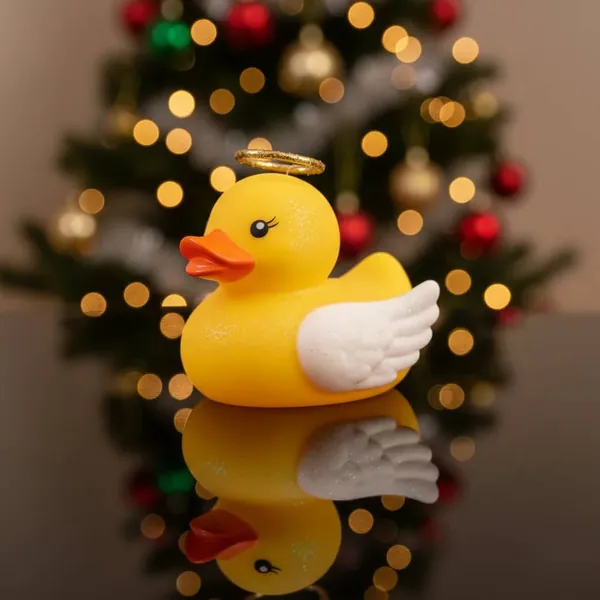
Four elements do most of the seasonal work, and they can be combined in different proportions. The first is the body colour: a red, green, white or deep blue body reads as seasonal before any detail is added. The second is a moulded feature, such as a hat, a scarf or a snowy base, which changes the silhouette.
Christmas leans on Santa, festive outfits and gifts, and the familiar palette is red, green, white and gold. That palette is a starting point rather than a rule: club colours, a brand colour or a single accent can carry the season just as clearly when the duck has to sit in a corporate campaign.
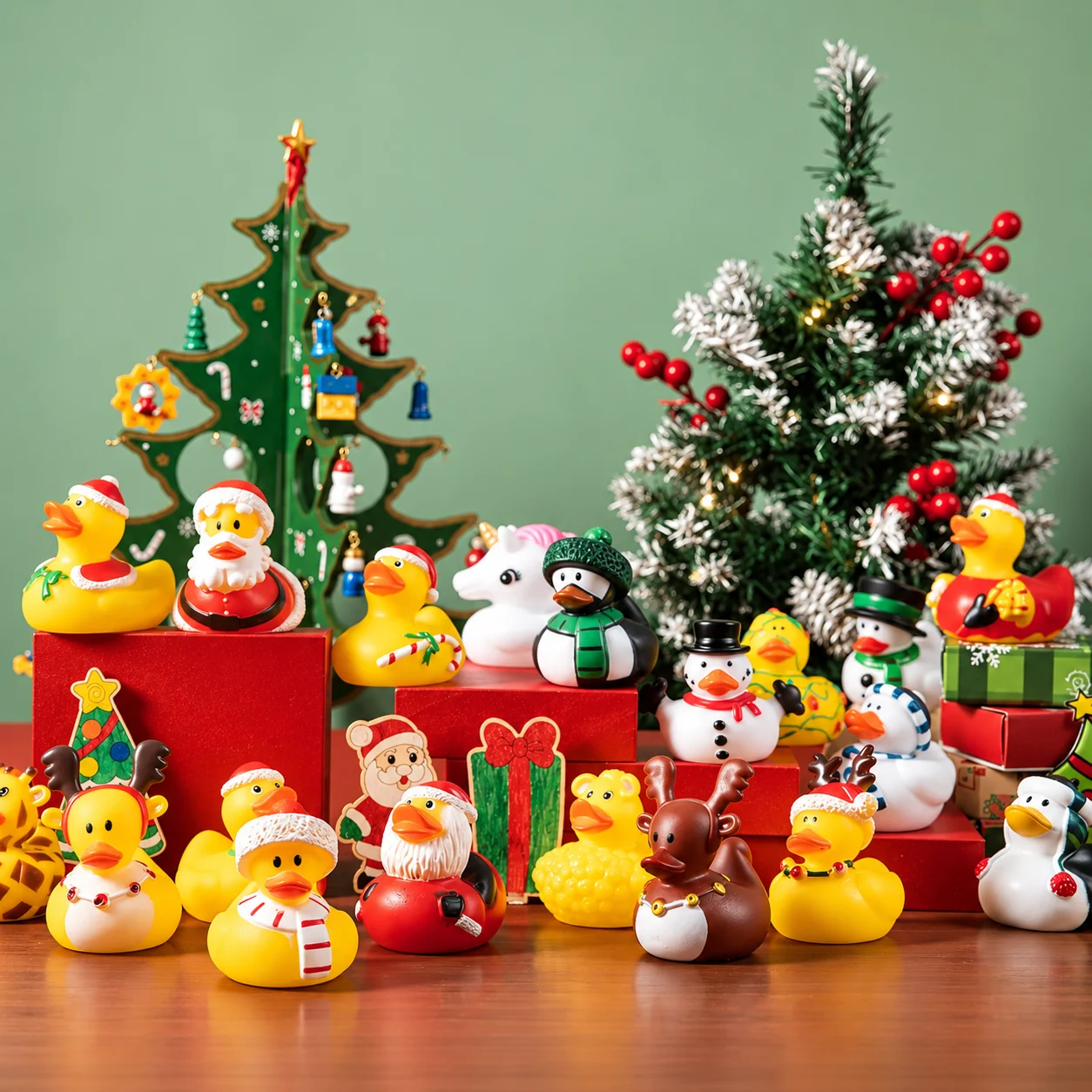
The third is the print: a snowflake, a star, a small pattern or a dated message. The fourth is the accessory, where a fitted piece adds a character without changing the body. A duck that uses all four at once usually looks crowded; a duck that uses one body colour and one moulded feature often reads more clearly.
The proportion also decides the tool. A moulded hat is part of the mould and cannot be changed for the next campaign; a print can. That is the fork to settle before the sketch: which part of the idea is permanent and which part is this year only.
| Seasonal element | What it carries | Can it change next year? |
|---|---|---|
| Body colour | The first read of the season | Yes, within the material colours |
| Moulded feature | The silhouette and the character | No, it is in the tool |
| The message, the date and the pattern | Yes, with a new plate | |
| Fitted accessory | A character without a new body | Yes, if the label allows |

Getting the logo onto a duck without spoiling it
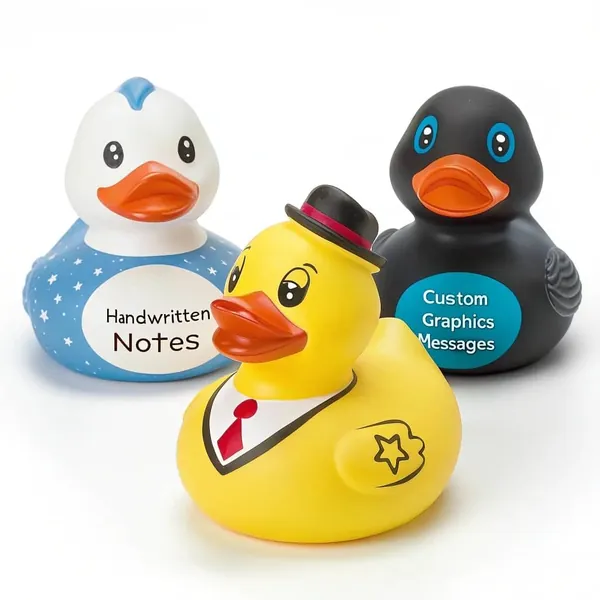
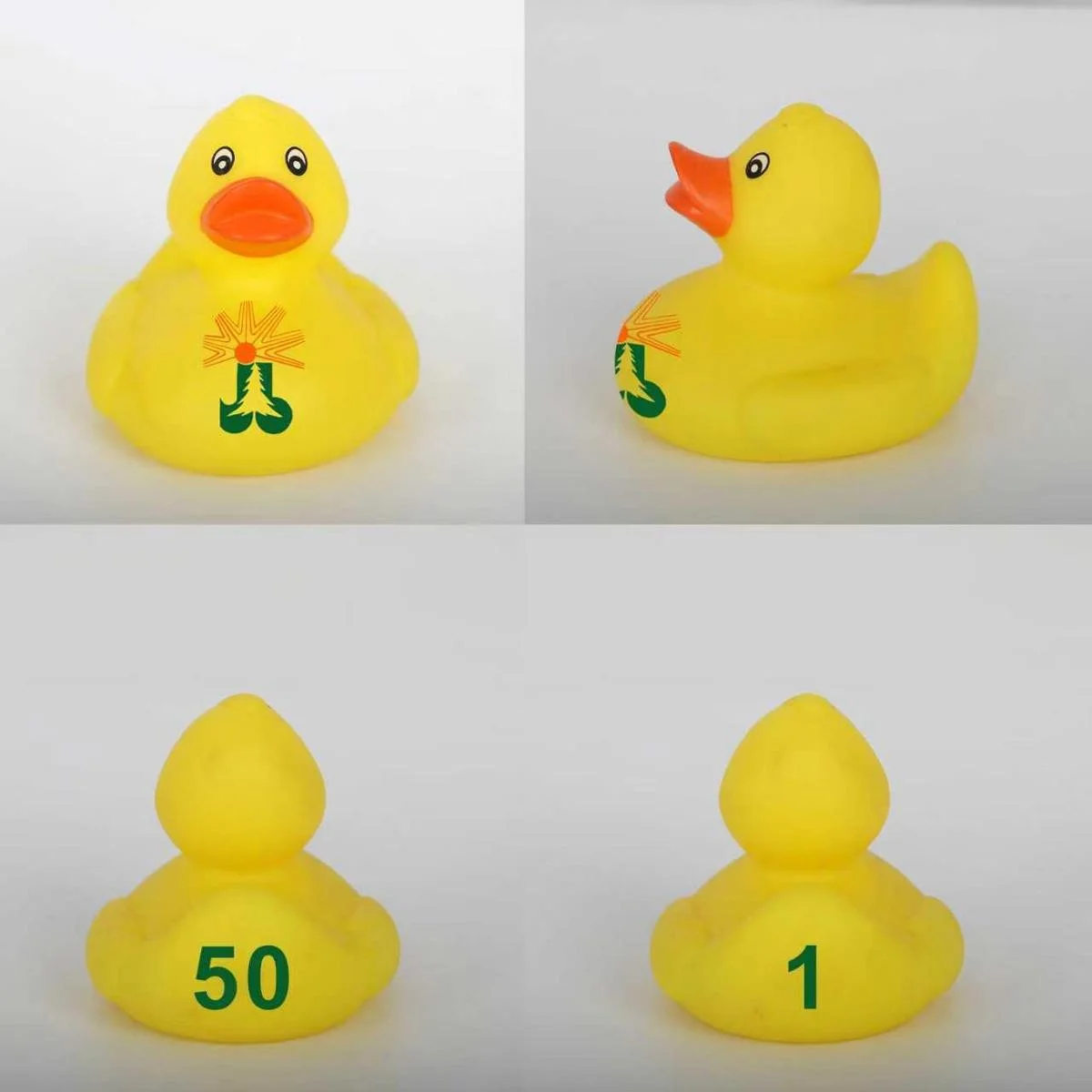
A logo on a Christmas duck is competing with the seasonal design for the same small surface. The mistake is to give both equal weight. The workable order is seasonal silhouette first, brand mark second, and the mark placed where it is read from a seated position rather than the top of the head.
The chest is the usual answer, but a Christmas outfit may already occupy it. The side and the base are the alternatives, and the base is where a dated message or a run number can live without competing with the design. The placement guide sets out what each surface can hold.
The mark itself should be the reduced variant, not the full lockup. A Christmas duck is a small object and the print area is smaller than the body suggests; a strapline that works on a box will fill in on a chest. The artwork file notes explain how to check the file at final size.
The holiday squad: one duck is not a series
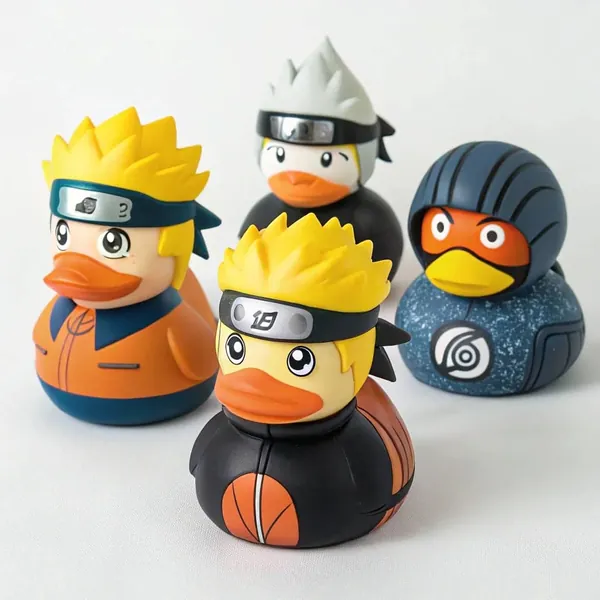
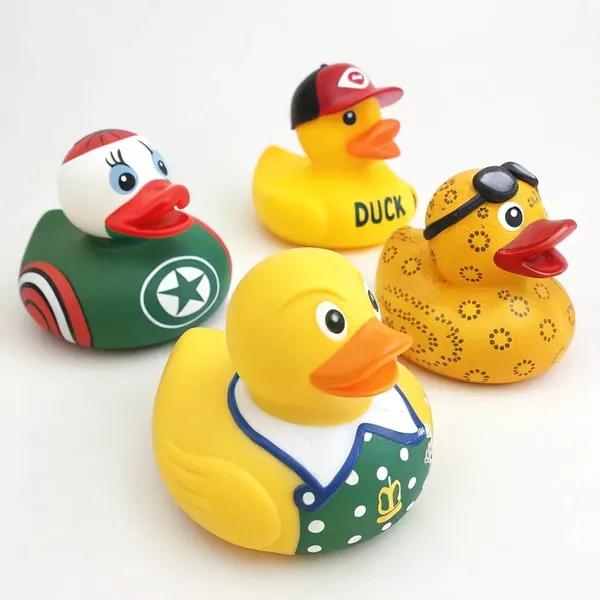
A single Christmas duck is a gift. A set of four to six is a campaign, because the recipient can compare them, collect them and talk about them. The set also gives the brand more than one surface: one duck can carry the mark, another the date, another the message.
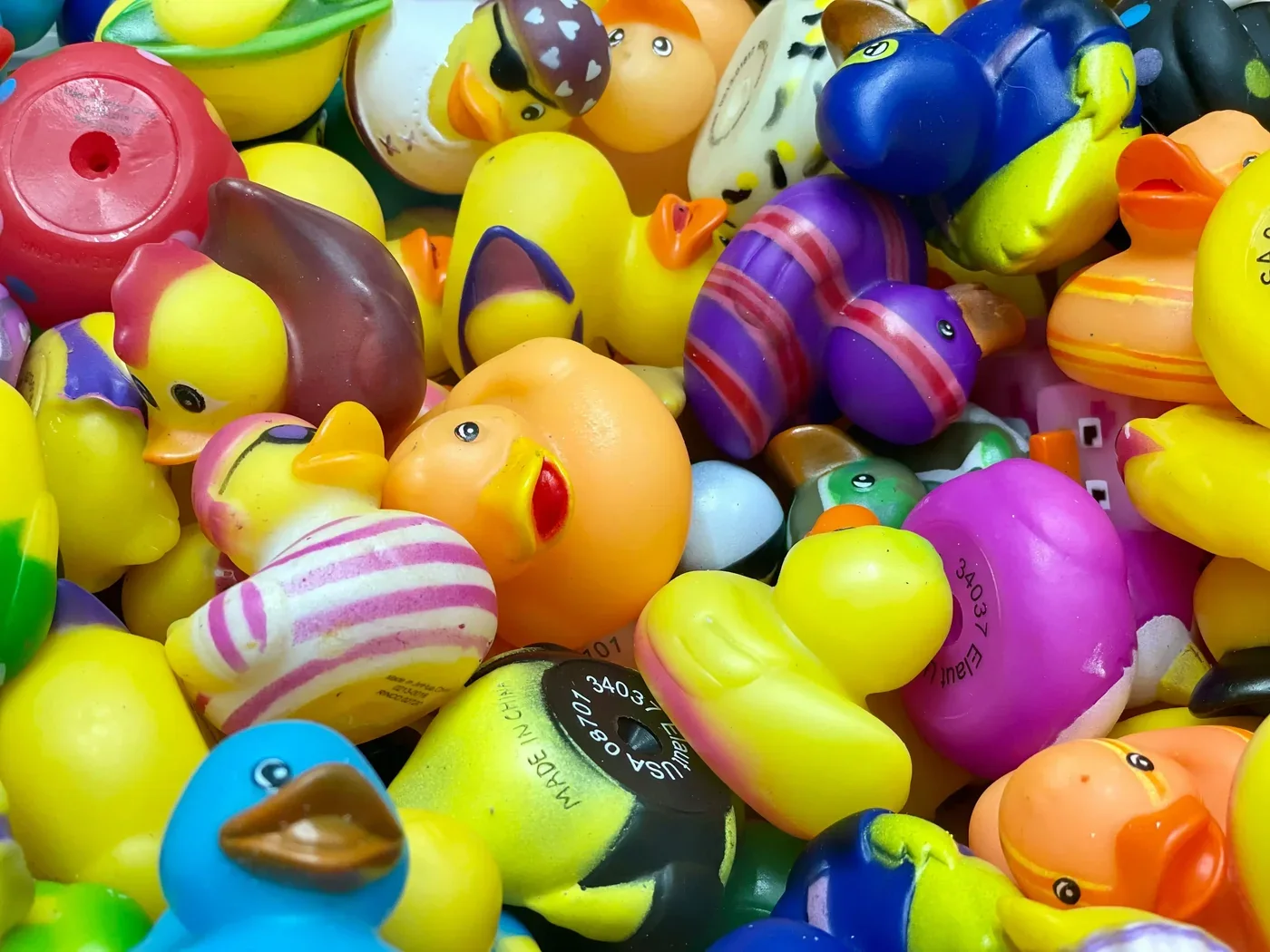
The series has to be designed as a set, not as four separate ducks. That means one body size, one body colour family and one print style, with the characters differing in the seasonal detail. When each duck is designed alone, the set arrives with four slightly different sizes and four slightly different reds, and it looks like a collection of leftovers.
The tooling fork matters here. Characters that share a body can come from one mould with different prints and fitted pieces; a character with a new silhouette needs its own tool. Deciding which characters need a new shape, and which can be carried by print, is the difference between a set that ships and a set that is still in design.
Campaigns where a duck earns its place
Three campaign shapes suit a seasonal duck. The first is the client gift: a small set sent to accounts in December, with a card that carries the personal line. The second is the staff gift, where the duck is part of a recognition moment rather than a standalone present.
The third is the retail or event promotion, where the duck is sold or given with a purchase. That shape needs a pack that survives a shelf or a table, and a story that a member of staff can repeat in one sentence. The seasonal calendar shows where Christmas sits against the other holiday campaigns.
The campaigns that fail are the ones where the duck is an afterthought added to an existing promotion. The object arrives without a reason, the card has no line, and the recipient reads it as leftover merchandise. A duck is a good seasonal object, but it cannot invent the campaign around itself.
Digital tie-ins and the claims that need a file
A seasonal duck is often paired with a digital layer: a QR code on the card, a landing page, a video or a social post. The duck is the physical hook and the digital layer is where the campaign continues.
The QR code is the part most often added late, and it is the part that fails silently. A code printed too small, placed on a curved surface or set against a busy design may not scan, and nobody discovers it until the campaign is live. The QR code duck notes cover the sizing and placement decisions; the seasonal brief only has to leave room for the code before the artwork is signed.
The claims need the same care. A line about recycled material, a safety claim or a charity promise is a statement the brand has to be able to support. If the claim is not in the file, it should not be on the duck or the card, because the object will outlast the campaign that made the promise.
The safety file behind a Christmas duck
A Christmas duck is often given to a child, even when the buyer is an adult. That possibility decides the safety file: the age grade, the warning where one is required, and the small parts question if the duck carries a fitted accessory.
The CPSC toy safety guidance explains that a product can become a children's toy through how it is designed, manufactured or marketed, so a seasonal gift marketed to families should be treated as a toy from the start. The label text then belongs in the artwork, not on a sticker added at packing.
Small parts are the second question. 16 CFR 1501.4 sets out the cylinder test: a toy or article covered by the rule may not be small enough to fit entirely inside the cylinder when tested. A moulded hat is part of the body and behaves differently from a fitted piece that can come loose, so the construction choice belongs in the safety conversation, not only in the design conversation. The toy safety label guide lists the marks that follow.

Five questions before the artwork
A seasonal brief can answer all five on one page, and the answers belong with the artwork rather than in a message thread.
- Which seasonal element is permanent in the tool, and which is this year only?
- Where does the mark sit when the outfit already occupies the chest?
- How many ducks make the set, and which characters share one body?
- What does the card say, and what does the QR code open?
- Could the duck reach a child, and what age grade and small parts answer applies?
Frequently Asked Questions
What can be printed on a custom Christmas duck?
A logo, a short seasonal message, a date, a snowflake or star pattern, and a small illustration. The limit is the print area, not the idea: a chest print that looks generous on a screen may lose its edges on the curve. Keep the message short and the mark simple.
How many characters should a Christmas duck series have?
Four to six is a workable set: enough to compare and collect, few enough to keep the tooling and the pack simple. The set should share one body size and one print style, with the characters differing in the seasonal detail rather than in the base shape.
Can a Christmas duck be made from recycled material?
It can, if the material is available and the claim can be documented. A recycled content claim is a statement the brand has to support with a file, and the duck has to be made from the material the file names. Decide the material before the artwork and keep the claim off the duck until the document exists.
Are Christmas ducks safe for children?
They can be, when the age grade, the label and the small parts question are settled. A duck given to a child is a children's product and follows the same rules as any other toy. A fitted accessory that can detach is the part to check first, because it changes the small parts answer.
Final Note
A Christmas duck is a small object with a long tail. It stays on a desk after the cards are gone, and it carries the brand into a month when nobody is thinking about the campaign. That is the reason to design it properly rather than order it in December.
The set, the mark, the card and the safety file are decided before the first sketch, and the duck that results is the one that survives January. Four ducks that belong together beat forty that arrived without a reason.
Key takeaways
- Why a Christmas duck outlasts a Christmas card: A card has one job and a short life.
- The design elements that carry the season: Four elements do most of the seasonal work, and they can be combined in different proportions.
- Getting the logo onto a duck without spoiling it: A logo on a Christmas duck is competing with the seasonal design for the same small surface.
- The holiday squad: one duck is not a series: A single Christmas duck is a gift.
- Campaigns where a duck earns its place: Three campaign shapes suit a seasonal duck.
- Digital tie-ins and the claims that need a file: A seasonal duck is often paired with a digital layer: a QR code on the card, a landing page, a video or a social post.
- The safety file behind a Christmas duck: A Christmas duck is often given to a child, even when the buyer is an adult.
- Five questions before the artwork: A seasonal brief can answer all five on one page, and the answers belong with the artwork rather than in a message thread.