Skip to content
A rubber duck in a child’s hospital room is never just a rubber duck. It is a distraction during a blood draw, a companion during a long afternoon, and a small piece of normalcy in an environment that feels anything but normal. Child life specialists have long understood the therapeutic value of play objects in pediatric settings, and among the most popular choices is the humble rubber duck. But when a hospital procurement team or a charitable foundation orders ducks for young patients, the stakes are higher than for any other buyer category. The product must be safe enough for infants to mouth, durable enough to withstand repeated sanitization, and compliant with a regulatory framework that leaves no room for error.
This guide walks through the specific requirements that pediatric hospital rubber duck gifts must meet, the materials and design choices that make them suitable for clinical environments, and how to source them from manufacturers who understand the healthcare context. Whether you are a hospital administrator, a child life specialist building a gift inventory, or a corporate donor looking to contribute, the information below will help you make a decision that is both compassionate and defensible.
The Regulatory Baseline: What the Law Requires
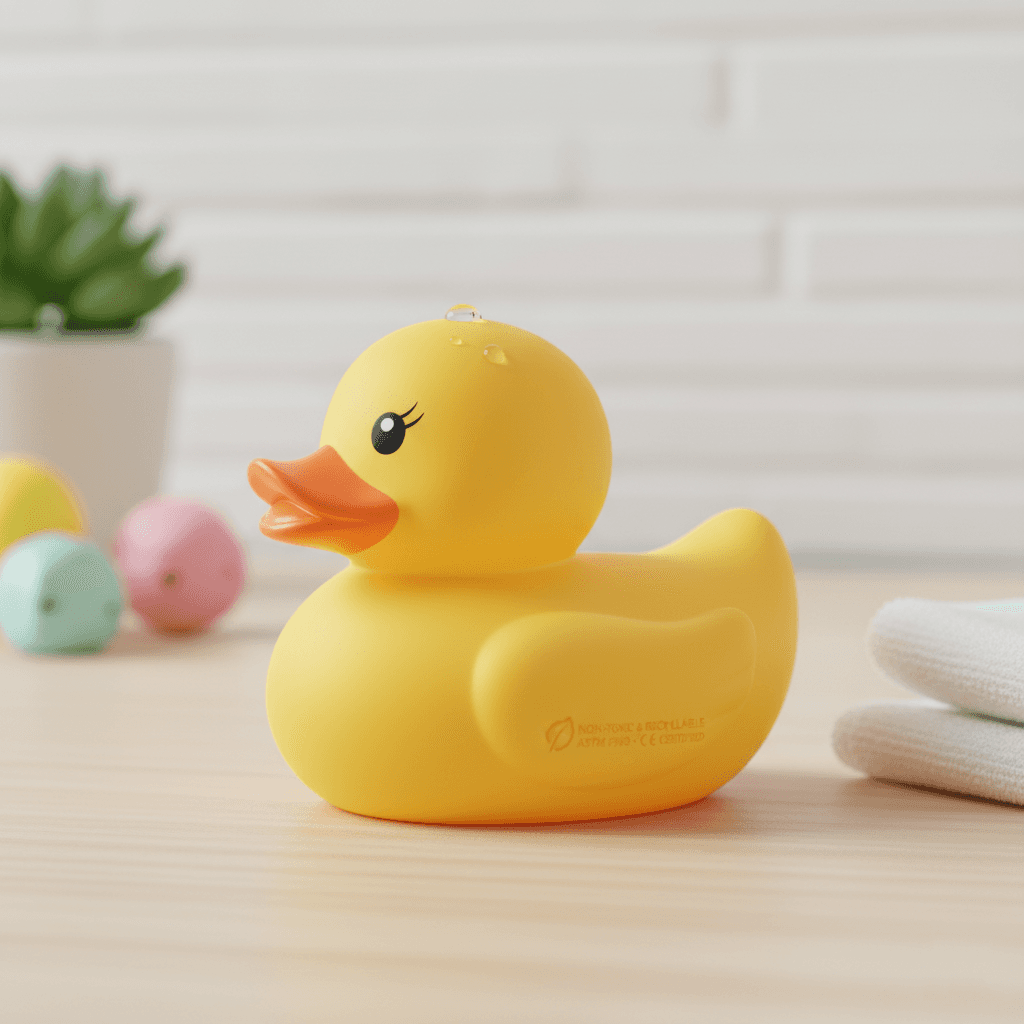
In the United States, any product intended for use by children under 12 is classified as a children’s product under the Consumer Product Safety Improvement Act (CPSIA). This classification triggers a chain of requirements that manufacturers must satisfy before the product reaches a hospital ward. The most critical of these is ASTM F963, the mandatory toy safety standard, which covers mechanical hazards (small parts, sharp edges, pinch points), chemical hazards (heavy metals, phthalates), and flammability.
For rubber ducks specifically, the chemical requirements deserve the most attention. CPSIA Section 108 limits eight specific phthalates to no more than 0.1% by weight in any accessible component of a children’s toy or child care article. Phthalates are plasticizers used to make PVC flexible, and while they are common in inexpensive vinyl products, several of them have been linked to endocrine disruption. For a product that may end up in an infant’s mouth, this is not a theoretical concern.
The compliance pathway requires testing by a CPSC-accepted third-party laboratory and issuance of a Children’s Product Certificate (CPC). The CPC must reference the specific test results, identify the testing laboratory, and confirm compliance with all applicable rules. Hospitals and charitable organizations purchasing these ducks should request a copy of the CPC before placing an order. Any manufacturer who cannot provide one should be disqualified immediately.
Material Selection: PVC, TPR, or Silicone
The material of a rubber duck determines its safety profile, durability, and how it can be cleaned. Three materials dominate the market for certified rubber ducks, and each has distinct advantages in a hospital context.
Phthalate-free PVC is the most common choice for pediatric-grade rubber ducks. Modern phthalate-free PVC formulations use alternative plasticizers such as DOTP (dioctyl terephthalate) or citrate-based compounds that pass CPSIA testing while maintaining the flexibility and detail reproduction that PVC is known for. The advantage of PVC is its smooth, non-porous surface, which can be wiped down with hospital-grade disinfectant between patients. A well-made PVC duck has no seams that can trap bacteria and no paint that can chip under normal use.
TPR (thermoplastic rubber) offers a softer, more rubbery feel. It is inherently phthalate-free and BPA-free, which simplifies the compliance picture. TPR ducks are a good choice when the tactile experience matters, such as for sensory therapy programs or for children who use the duck as a comfort object during anxiety-inducing procedures. The trade-off is that TPR is slightly less durable than PVC under repeated chemical sanitization.
Silicone is the premium option. Medical-grade silicone is biocompatible, autoclavable (it can withstand high-temperature sterilization), and inherently free of phthalates and BPA. For neonatal intensive care units or immunocompromised patient wards where sterilization standards are highest, silicone ducks are the safest choice. The cost is significantly higher: silicone ducks typically cost two to three times more than PVC equivalents. For most general pediatric wards, phthalate-free PVC provides an appropriate balance of safety and cost.

Design Considerations for Clinical Environments
Beyond material safety, the physical design of the duck affects its suitability for hospital use. The most important design rule is this: avoid any duck with a squeeze hole at the bottom. Squeeze holes allow water to enter the duck during bath time, creating an environment where mold and bacteria can grow internally. In a hospital setting, where infection control is paramount, a sealed duck with no opening is the only acceptable design. The duck should be a solid vinyl form, not a hollow bath toy.
Size matters too. For infants and toddlers, the duck must be large enough that it cannot be swallowed or lodged in a throat. The CPSC small parts regulation (16 CFR 1501) defines a small part as any component that fits entirely within a test cylinder simulating a child’s throat. Any duck smaller than 1.75 inches in any dimension fails this test. For pediatric wards serving children under 3, choose ducks that are at least 2.5 inches in their smallest dimension to provide a safety margin.
Surface decoration is another area where hospital-grade ducks differ from consumer products. Pad-printed logos and designs are more durable than hand-painted details and will not flake off if a child chews on the duck. UV printing offers even better abrasion resistance. Avoid any duck with glued-on accessories (eyes, hats, bows) that could detach and become a choking hazard.
Color selection, while seemingly cosmetic, has therapeutic relevance. Child life specialists often use color coding to help children identify their personal belongings in shared rooms. Ordering ducks in a range of distinct, bright colors allows staff to assign one color per patient, reducing conflicts and supporting a sense of ownership. Most custom duck manufacturers can match Pantone colors precisely, so hospitals can specify exact hues to fit their color-coding system.
Sanitization Protocols
Even the safest duck becomes a liability if it cannot be properly cleaned between uses. Hospitals need a clear sanitization protocol for any reusable comfort item, and the duck’s material and construction determine which methods are viable.
For phthalate-free PVC ducks, surface wiping with quaternary ammonium-based disinfectant wipes (commonly used in hospital settings) is effective and will not degrade the material under normal use conditions. The duck should be inspected regularly for cracks, discoloration, or surface degradation, and removed from service if any damage is detected.
For silicone ducks, autoclaving at 121 degrees Celsius for 15 minutes is possible without damaging the material. This is the gold standard for sterilization in clinical settings and eliminates virtually all biological contaminants. Not all hospitals will need this level of sterilization for comfort items, but for immunocompromised patient populations, it provides an important additional layer of protection.
Some hospitals choose to make the ducks single-patient-use items, assigning each duck to one child for the duration of their stay and then allowing the child to take it home. This approach eliminates cross-contamination risk entirely and adds a meaningful souvenir element to the gift. The healthcare marketing giveaways guide covers this model in more detail for organizations considering a branded duck program.
Sourcing for Hospitals: What to Ask the Manufacturer
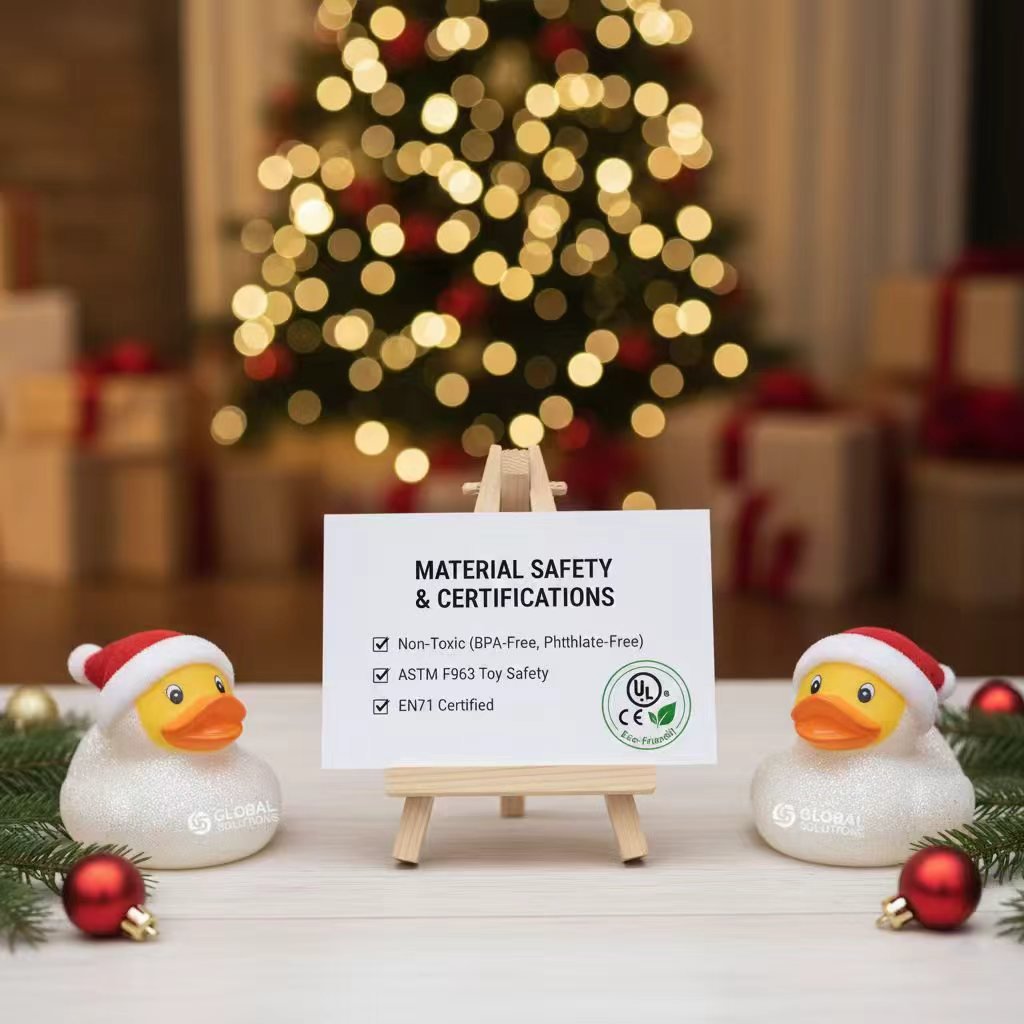
When evaluating manufacturers for custom rubber ducks intended for pediatric hospital use, the conversation should start with compliance documentation. Ask for the following before discussing design or pricing: a current CPC (Children’s Product Certificate), test reports from a CPSC-accepted laboratory confirming ASTM F963 and CPSIA Section 108 compliance, and material safety data sheets (MSDS) for the specific PVC, TPR, or silicone compound used.
For hospitals in Europe or for organizations that serve international markets, additionally request EN71 test reports (the European toy safety standard) and REACH compliance documentation. REACH regulation (EC 1907/2006) imposes its own restrictions on phthalates and other chemicals of very high concern, and compliance with REACH is a separate process from CPSIA compliance.
The rubber duck safety testing guide provides a detailed breakdown of what each test involves and how to read the resulting certificates. Understanding these documents will help you evaluate whether a manufacturer’s claims are backed by actual test data or merely marketing language.
Cost and Ordering Considerations
Hospital procurement operates under different budget constraints than corporate marketing. Many pediatric duck programs are funded by charitable foundations, volunteer auxiliaries, or corporate social responsibility donations. The good news is that certified rubber ducks are among the most cost-effective therapeutic comfort items available.
A 2.5-inch certified phthalate-free PVC duck costs between $0.35 and $0.90 per unit at order quantities of 1,000 to 5,000 pieces. The one-time certification testing cost (typically $300 to $800) is amortized across the entire production run, so larger orders reduce the per-unit certification cost to pennies. For a children’s hospital ordering 3,000 ducks annually, the total program cost including certification would be approximately $1,500 to $3,200, or roughly $0.50 to $1.07 per duck delivered.
Hospitals that participate in group purchasing organizations (GPOs) may be able to leverage negotiated pricing with established suppliers. Additionally, manufacturers like LZENGO offer sample programs that allow procurement teams to evaluate material quality and safety documentation before committing to a full production order.
The Bigger Picture: Why It Works
The evidence supporting therapeutic play in pediatric healthcare is substantial. Studies published in the Journal of Pediatric Psychology have shown that structured play interventions reduce pre-operative anxiety by up to 40% in children aged 3 to 7. While a rubber duck alone does not constitute a therapeutic play program, it functions as a low-cost, high-impact component of a broader child life strategy. It gives the child something to hold, something to focus on, and something that is theirs in a space where very little feels personal.
For hospitals, foundations, and donors evaluating how to allocate resources toward pediatric comfort initiatives, certified rubber ducks represent one of the highest-impact-per-dollar investments available. They are safe when properly specified, affordable at scale, and meaningful in a way that few other objects can match. The key is to insist on the certifications, choose the right material for the clinical context, and design the duck with the specific needs of young patients in mind.
Related reading: Lead-Free, Food-Grade and Non-Toxic Duck Claims: What Actually Backs Them