The Amazon file is written before the first carton is packed, because in a duck order the duck is rarely the thing that fails. What fails is administrative: a unit that scans as the wrong code, a carton that does not declare a second style, or a label that two parties each assumed the other had applied. Four physical decisions come first, and the packing follows them.
Written as a working method for an FBA duck order, with public toy safety guidance cited where a rule applies.
In short: An FBA duck order needs four decisions fixed before the first carton is packed: the listing that fixes size and theme, the unit pack, the scanner label on the unit, and the carton marks that tell a warehouse how to receive it. The factory can bag, label and carton from your data. The seller owns the label data, the destination and the safety file the listing depends on.
The listing decides the duck, the bag and the label
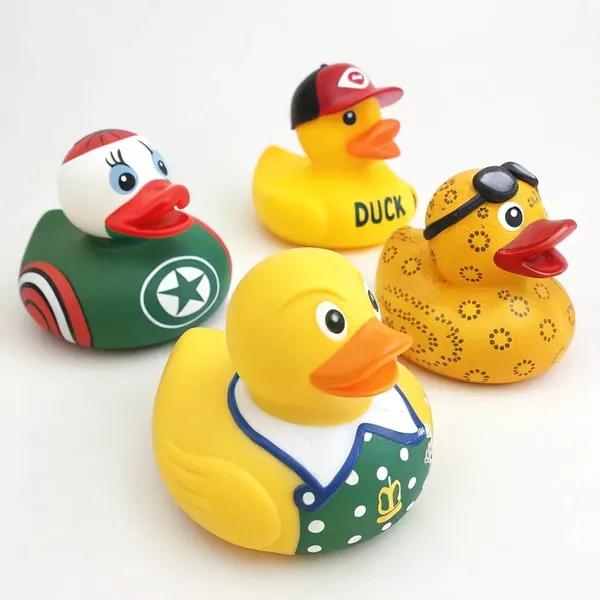
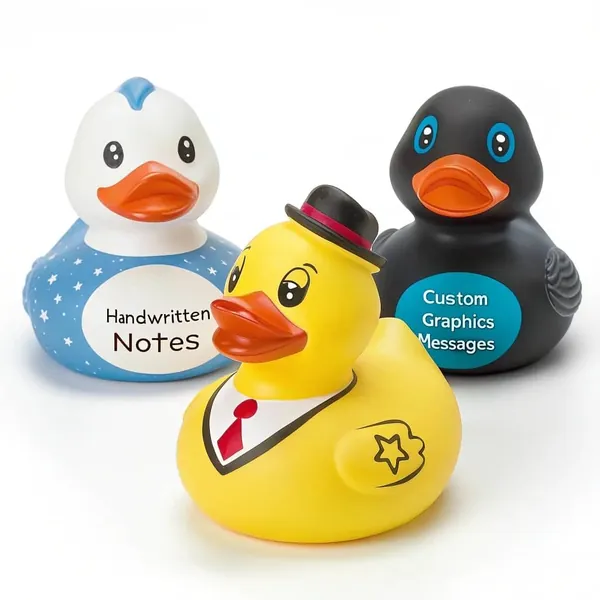
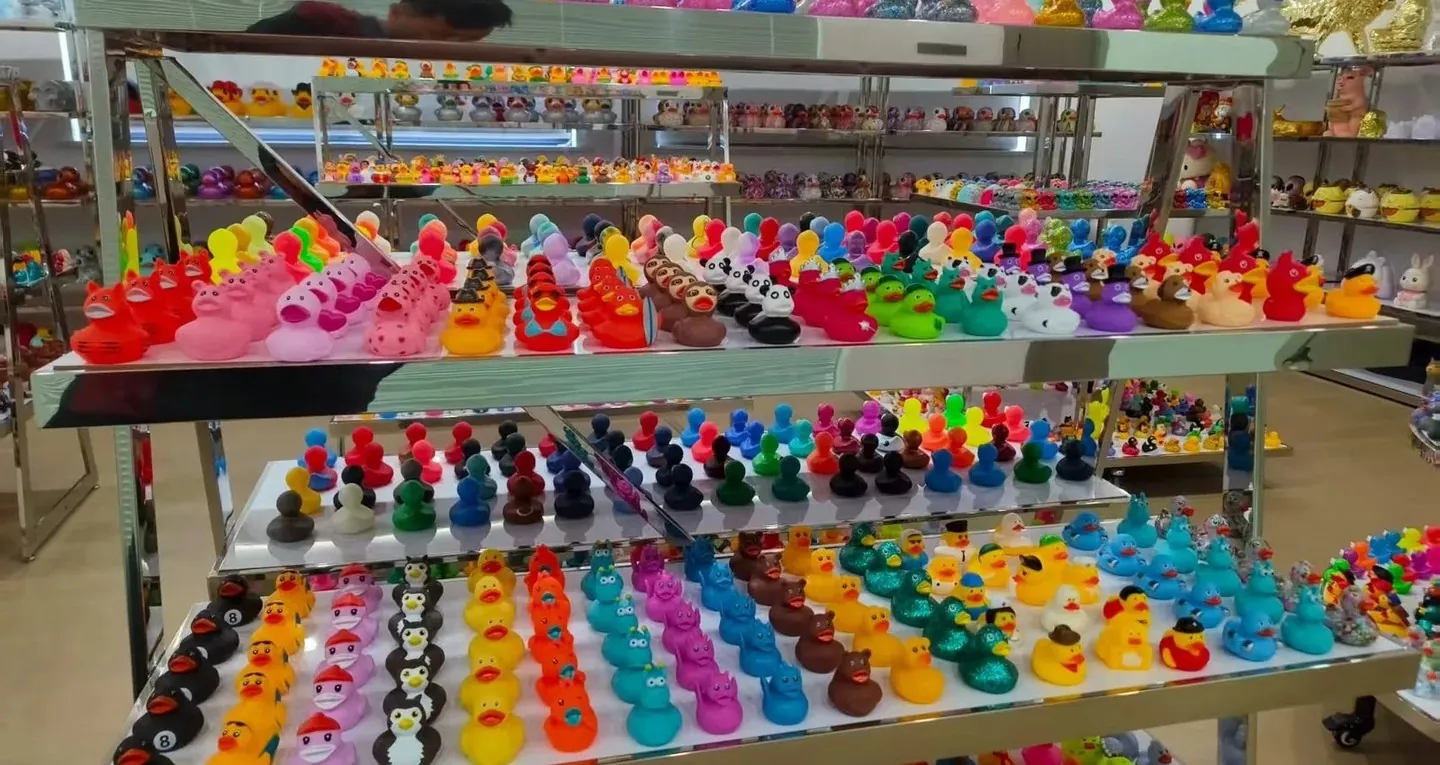
The listing is not marketing that happens after production. It is the document that fixes the physical unit, and it fixes it before the tool is cut. A duck sold as a dashboard ornament and a duck sold as a bath toy are not the same object: one is read at arm's length in a shelf photograph, the other is held by a child. The theme, the outfit and the size follow from that reading, and the bag or box follows from the size. The custom production walkthrough shows how late that decision becomes expensive once the tool exists.

| Decision | What it fixes | Who owns it | Where it is recorded |
|---|---|---|---|
| Theme and listing copy | The duck the SKU actually sells | Seller | Listing copy and approved sample |
| Size and unit pack | Bag or box, and the count per carton | Seller decides, factory packs | The specification sheet |
| Scanner label | Which code goes on which unit | Seller supplies, one party applies | The label file |
| Carton marks | How the box is received and split | Destination from the seller, print from the factory | The packing note |
| Repeat specification | What batch two is compared against | Both sides | The same SKU, label and carton record |
Read the right-hand column when something arrives wrong. A unit that scans as the wrong code is a label file problem. A carton held at the dock is usually a carton mark problem. Almost nothing on this list is a duck problem, which is why the first hour of an FBA project is better spent on the listing than on the mould.
Four marks on a unit before it can be sold
By the time a duck reaches a fulfilment centre it carries four marks, and each one answers a different question. The first is the pack itself: a bag or a box built to the listing specification. The second is the marketplace's scanner label on the outside of that pack, because the pack is what the warehouse scans. The third is the carton label and the carton marks, which belong on every box rather than on the pallet. The fourth is the destination mark, which tells the warehouse where the box is going.
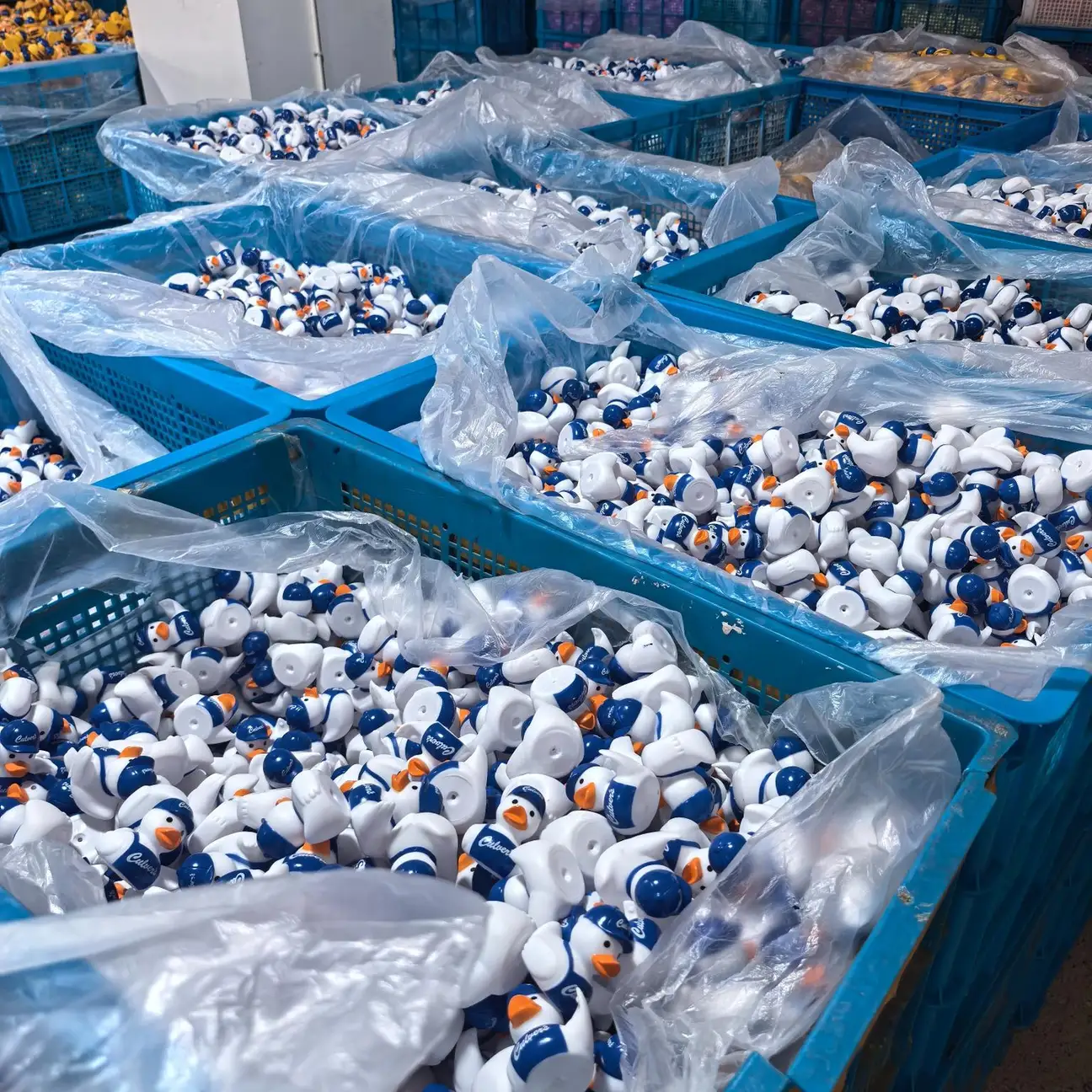
The bag is doing two jobs at once, protection and presentation, and the label has to sit on it without hiding either. That is why the unit belongs in a specification rather than in a photograph: a bag that is right for a gift box is not right for a crate, and a label position that works on a bag can cover the one detail a buyer needs to see. The marketplace publishes its own prep rules, and they differ between marketplaces and change over time, so the seller should treat the current rule set as a document to hand over rather than a detail to remember. The packaging note covers the bag and carton choices that sit under this rule.
The mixed carton is the delay nobody plans for
A carton that holds several styles is a normal way to ship a multi-style order, and for a small seller it is often the only way to keep a range together. The problem is not the mixed carton. The problem is the mixed carton that stays silent about its contents, because a warehouse expecting one code per box has to stop and find out what is inside before it can receive it.
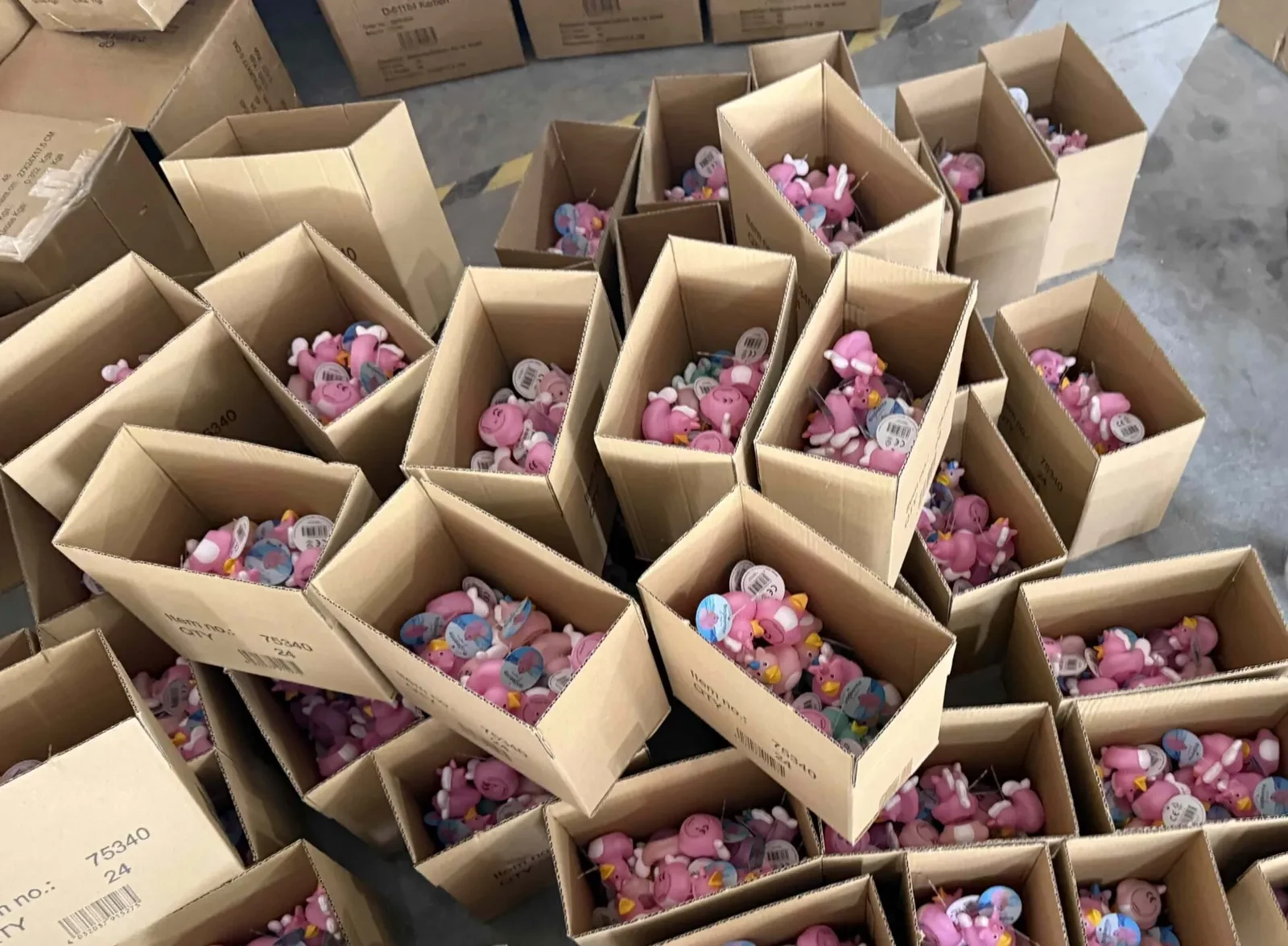
The fix is one printed line. If a carton holds more than one SKU, the carton says so, and the packing note lists which codes sit in which box. When the order is split by marketplace, region or channel, the carton marks follow the destination rather than the factory's packing convenience, so the boxes come apart on arrival instead of being reopened on the dock. This is the one place where the carton record and the packing plan have to agree, and the left hand often does not know what the right hand printed. The carton specification note sets out the dimensions, counts and marks that belong in that record.
Who labels what: the factory, the prep centre or you
The same order can be built three ways, and the difference is only who applies the label. In the first, the seller sends the label file with the order and the factory applies each label as the unit is bagged. In the second, the cartons go to a prep centre and the labels are applied there. In the third, the seller labels in house, which usually happens when the volume is small or the listing is new.
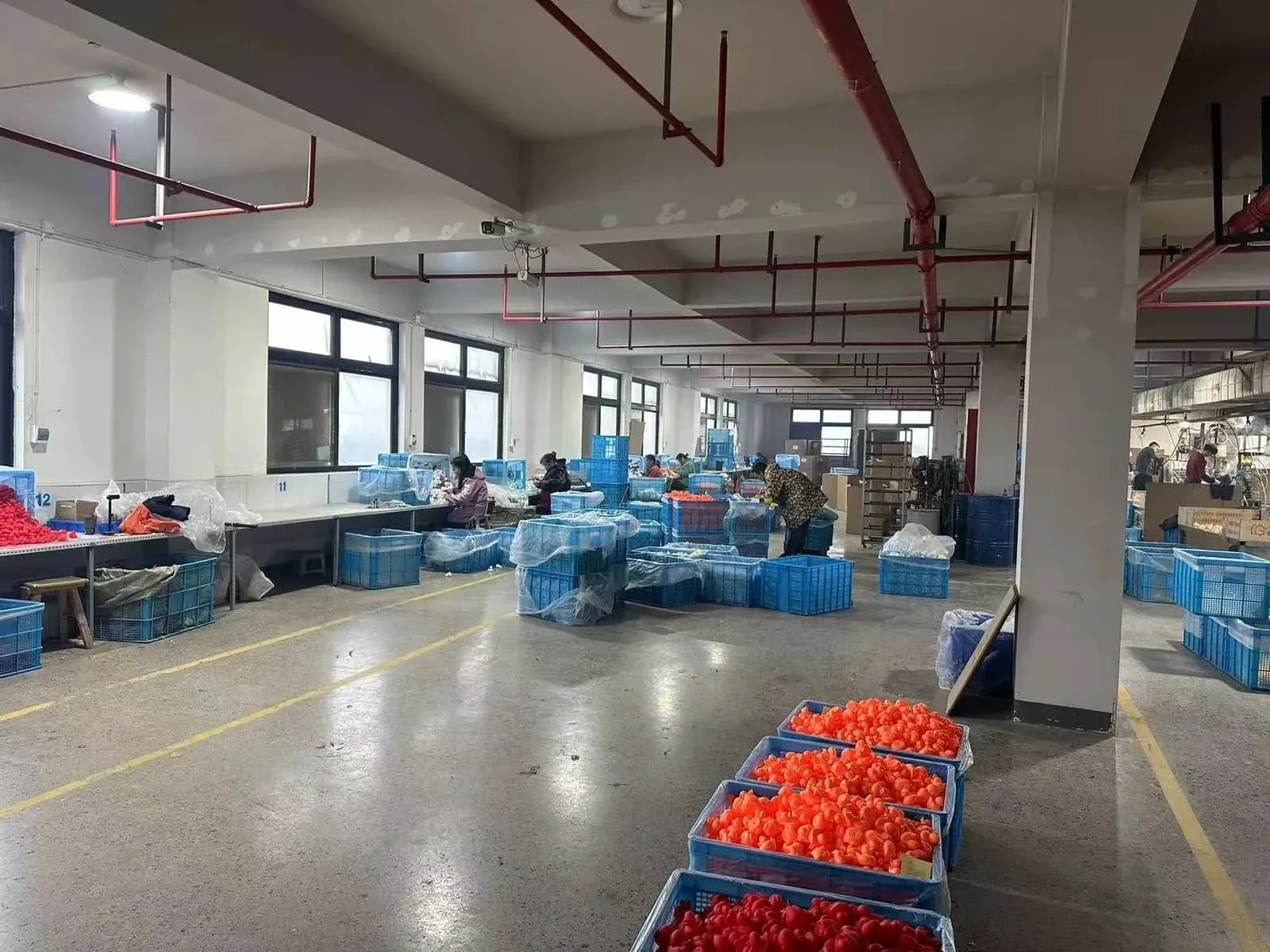
None of the three is wrong, and the mistake is leaving the choice implicit. If the factory knows who does what, the packing note follows that split and the cartons arrive ready for the next step. When a prep centre is involved, the useful question is not only who labels but who opens the carton first, because a box that has been opened, relabelled and taped again has a second packing job inside it. Whichever route you choose, write it into the packing note before the units are bagged, not after the cartons have been sealed.
The paperwork a duck listing needs
A duck sold to children is a children's product before it is a marketplace product, and that changes the file. The CPSC toy safety guidance defines a toy as an object designed, manufactured or marketed as a plaything for children under 14 years of age, and it explains that the testing and certification requirements apply to products designed or intended primarily for children 12 years of age or younger. The same guidance places the certification duty on manufacturers and importers, who issue a Children's Product Certificate for the rules that apply to the product.
The mark on the product is a separate duty from the test file. The CPSC tracking label guidance describes distinguishing marks that have to be visible and legible and permanently affixed to the product and its packaging, to the extent practicable, and it lists the information that has to be ascertainable from them: the manufacturer, importer or private labeler; the location and date of production; and detailed information on the manufacturing process such as a batch or run number.
Tracking-label duties are summarised in our toy label guide.
That sentence is the honest line between the two halves of the file. A tracking label is a traceability mark, not a certificate. The certificate and the declaration belong to the party placing the product on the market, and a factory page cannot hand those to a seller as a substitute for reading the rules of the destination market. The label guide shows how much of that content ends up printed on the pack.
What the factory can put in the file
A seller's file is only as good as the records behind it, so it is worth being precise about which records a factory can produce and which it cannot. On the production side, the records that matter are the approved sample and the version of the design proof it came from, the label proof and the label list the seller sent, the carton specification with its marks, and the batch record that was checked against the sample. None of these is a certificate, and none of them is a substitute for the safety file.
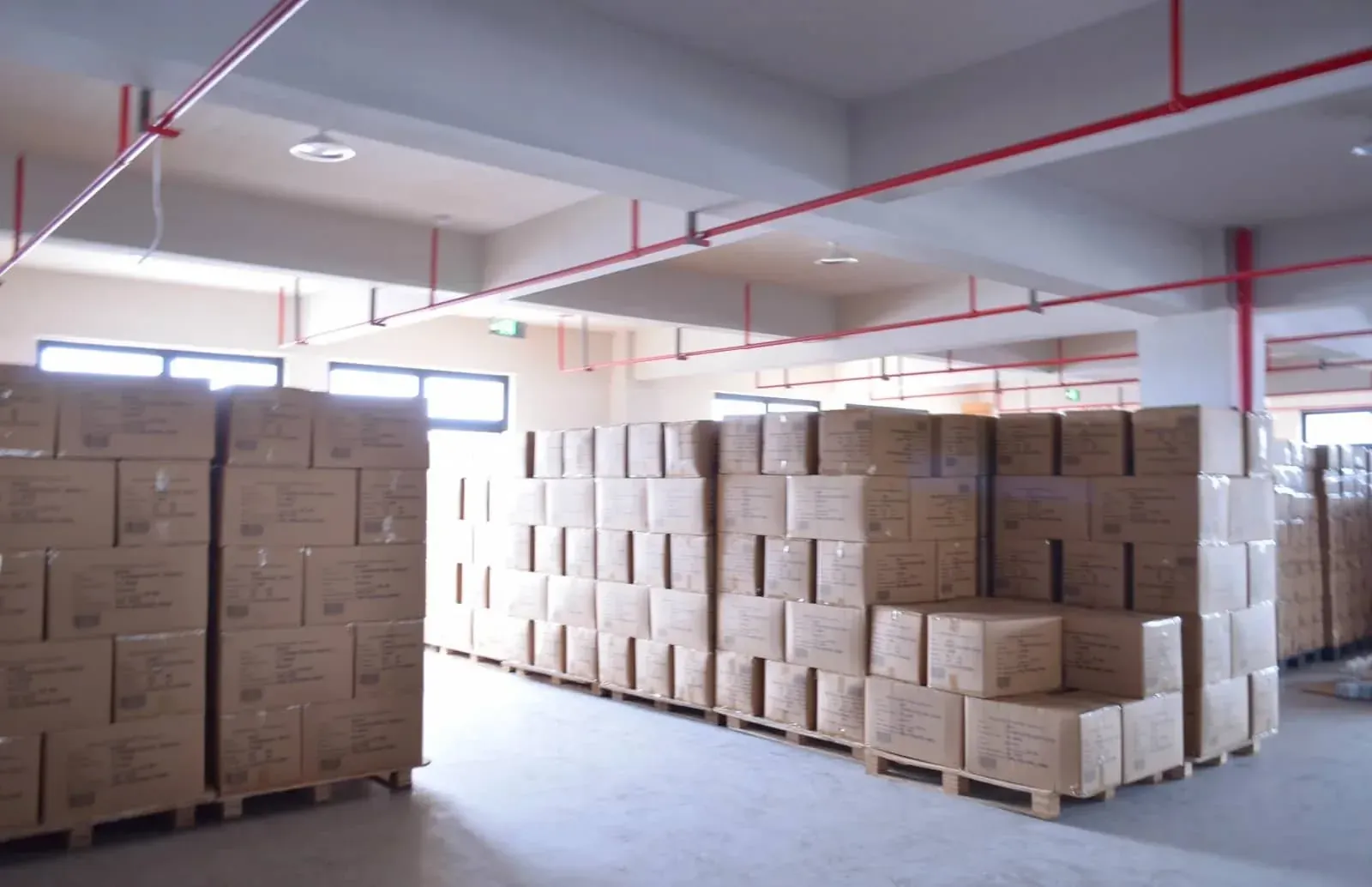
What a factory cannot do is invent a document for a market it has not been given. A safety file has to match the product as placed on the market, and that is a conversation about the destination and the channel rather than a PDF that comes with every carton. Ask for the record, not the reassurance: a dated sample approval, a label proof, and a packing note that names the destination are worth more than a page of claims. The sample approval record explains what a sample approval should contain.
The pack that survives the network
The unit is packed once, at the factory, and then handled by a container, a pallet, a dock and a parcel before it reaches a customer. That is a long chain for a light object, and the pack has to be chosen for the chain rather than for the photograph. Bag or box is the first decision, and it is a listing decision: a bag is the lighter pack and the easier one to scan, while a retail box is the unit a gift buyer expects to see.
The plastic film in that pack is also part of the toy file. The CPSC toy safety guidance states that certain plastic film, including packaging, must have an average thickness greater than 0.00150 in, or be perforated such that 1% of the surface is removed. That is a packaging measurement a buyer can ask for, and it belongs in the pack specification next to the bag dimensions.
What belongs here is the boundary. The pack has to satisfy the rules of the warehouse that receives it, and those rules are published by the marketplace and change by marketplace. A factory can pack to the rules you give it; it cannot promise a rule it has not been shown.
The repeat order is where FBA gets easier
The second batch is the one that proves the file. A repeat keeps the same SKU, the same label and the same carton specification, and because the tool stays with the factory the second batch can be compared against the first rather than against a new sample. That is a quieter advantage than it sounds. A marketplace listing is a page with a history, and a second batch that arrives with a new bag, a new label position or a new carton mark resets part of that history.
The file is what makes this possible. If the label proof, the carton specification and the approved sample are dated and kept, the repeat is a comparison. If they live in an email thread, the repeat is a reconstruction. The storage note covers what happens to the stock between the two batches, and the answer is usually less interesting than the question: the stock waits, but the specification has to be findable.
What I would put in a first FBA brief
Five lines are enough to start, and each one removes a question later. The first is the SKU and its theme. The second is the size and the pack, because those decide the bag or the box. The third is the label list with the label file, or the name of the prep centre that will apply it. The fourth is the destination or destinations, because the carton marks follow them. The fifth is the market the listing sells into, because that is the line that decides which safety documents the seller needs to hold.
A brief with those five lines lets a factory pack the first carton correctly. A brief without them produces a carton that is right about the duck and wrong about everything around it. Keep the same five lines in one document and send the document with every change, rather than describing the change in the body of an email that will be read by someone who was not on the first call.
Where an FBA duck order goes wrong
The failures are boring and they repeat. A carton that holds two SKUs and does not say so. A unit that carries no label because the list arrived late. A destination mark written for the seller's office when the shipment is going to a fulfilment centre. A specification changed after the labels were printed, which turns a labelling job into a relabelling job. And a first batch built to a listing that was never written down, so nobody can say which size the SKU actually sells. Read the duck sourcing check if you are still deciding who owns the floor, and the colour note if a colour change is part of the problem.
None of these is a mould problem, and none of them is solved by a better duck. They are solved by a file that exists before the carton does, and by a seller who knows which party owns each line.
- Which label goes on the unit, and who applies it?
- Does your carton say it holds more than one SKU?
- Which party owns the prep step, and does the packing note say so?
- What will you compare the second batch against?
Frequently Asked Questions
What does FBA prep mean for a duck order?
It means the unit, the bag or box, the label and the carton are built to the marketplace's rules at production rather than repacked later. For a duck that is four marks: the pack, the scanner label on the unit, the carton label and carton marks, and the destination mark that tells the warehouse where the box belongs.
Can one carton hold several duck styles?
Yes, if the carton says so. A mixed carton is a normal way to ship a multi-style order, and the packing note should list which codes are inside which box. A carton that stays silent about a second style is the one that gets held while the receiver works out what is inside.
Who applies the scanner labels?
It depends on the split you choose. The factory can apply them from the list you send, a prep centre can apply them after the cartons arrive, or the seller can label in house. The important thing is that the packing note says which party does what, so the cartons arrive ready for the next step.
Does a tracking label prove a duck is compliant?
No. The CPSC states that the tracking label requirement is not a safety rule that requires certification. The certificate and the declaration belong to the party placing the product on the market, so a tracking label should be read as one line of the file rather than as the whole file.
Final Note
Writing the FBA file before the first carton is packed beats repairing one after a dock rejection. The duck is the easy part on the factory side: a tool that is already cut, a line that runs it, and a sample that was approved. What a listing cannot survive is a file that lives in three inboxes and one photograph. Put the SKU, the pack, the label and the destination in one place, and the second batch becomes a repeat rather than a rebuild.
Key takeaways
- The listing decides the duck, the bag and the label: the physical unit follows the listing, not the other way round.
- Four marks on a unit before it can be sold: pack, scanner label, carton marks and destination all have an owner.
- The mixed carton is the delay nobody plans for: a silent second SKU is the one that gets held.
- The paperwork a duck listing needs: a tracking label is traceability, not a certificate.
- What I would put in a first FBA brief: five lines remove most of the questions later.