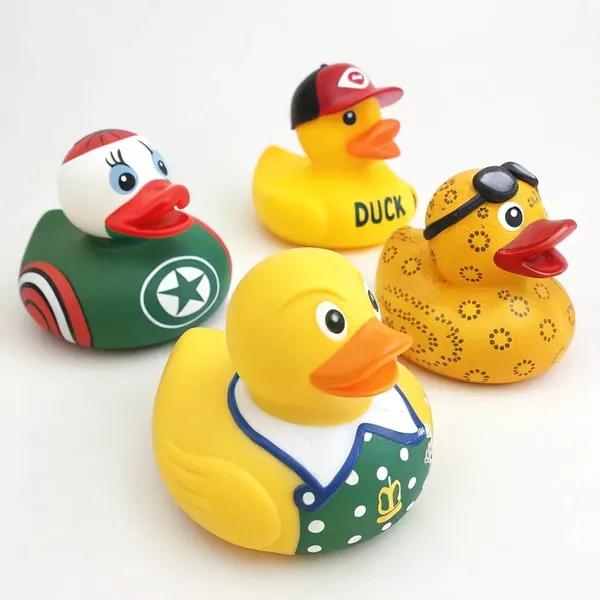
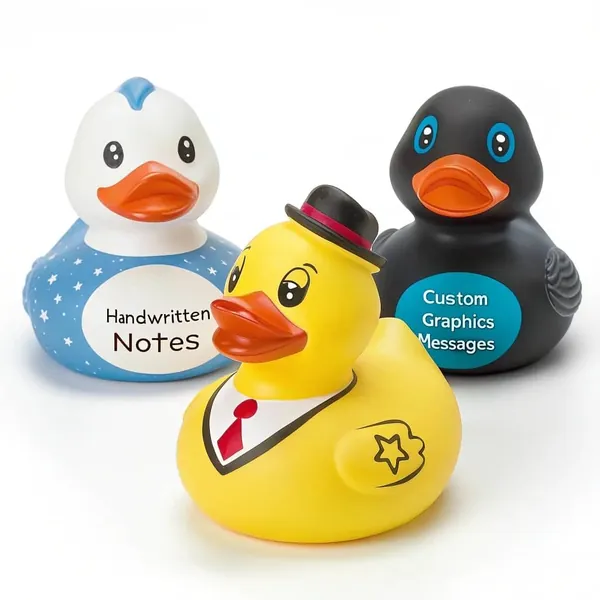
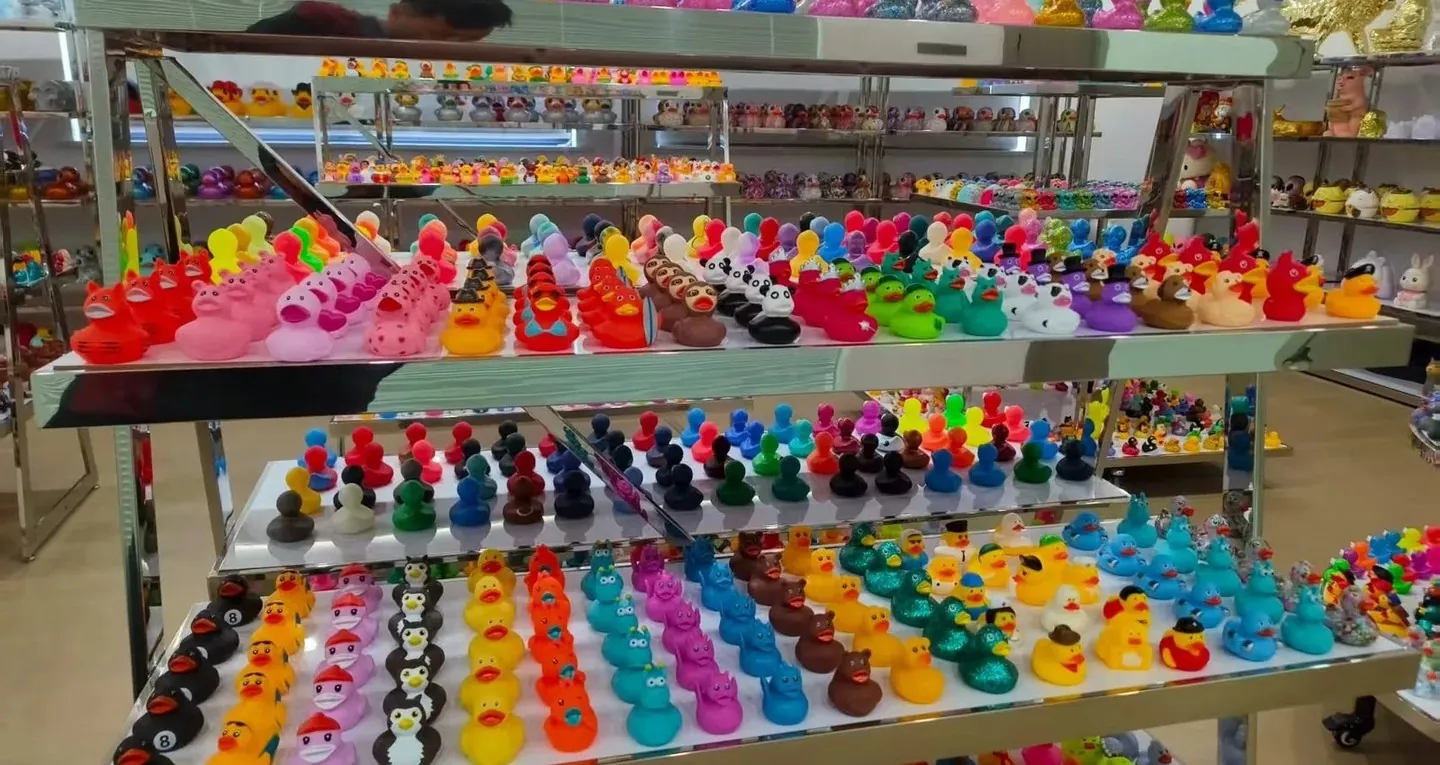
A duck request works as a design document rather than a message, because the reply can only be as specific as the fields it was given. A two-line request produces a two-line answer, and the missing part is filled in by whoever reads it first. Seven fields carry a request from an idea to a batch, and each one removes a round of questions that would otherwise arrive later.
In short: a usable duck request states the kind of job, the body and size, the colour and finish, the mark and its file, the pack, the market and its documents, and the approval route with a tolerance. Write all seven in one page, keep each field in one sentence, and the reply becomes a comparison rather than a guess.
A short request gets a short answer
The length of a reply is set by the request, not by the supplier's willingness. A message that says only a quantity and a colour has three unknowns behind it: what the duck will be printed with, what it will be packed in, and which market it must satisfy. Each unknown is a decision that has to be made by someone, and if the buyer does not make it in the request, the answer fills it with an assumption. That assumption is the part that gets corrected later, at the worst moment.
The fix is not a longer email. It is a request with a fixed set of fields, each answered in one sentence, so the reader can see at a glance what has been decided and what has been left open. A field that says "not decided" is useful, because it tells the supplier to ask rather than to assume. The custom duck overview is the place to check the vocabulary before the fields are filled in, so both sides use the same words for the same parts.
Field one: the kind of job you are asking for
Three kinds of job arrive in the same inbox and they need different answers. The first is a mark on a body that already exists: the shape is fixed, and the work is colour, print and pack. The second is a shape that does not exist yet: it needs a drawing and a tool, and the tool is the long item. The third is a repeat of a duck the buyer already owns: the shape and the mark are settled, and the question is whether the old specification can still be reproduced exactly.
Naming the kind of job first changes everything that follows. A mark on an existing body can be answered with colour and print choices; a new shape needs a drawing conversation before any of that is useful; a repeat needs the old reference rather than a new idea. The three kinds also decide how much of the request is design work and how much is confirmation, which is why this field sits first rather than at the end.

Field two: the body, the size and the material
The body field is where most requests are thinnest, because the buyer often names a duck by the idea rather than by the object. Write the size in inches, the material family (PVC or TPR, for example), and the parts that must be present: the squeaker, the base, the tail, any attached outfit. If a size is not fixed, say which range is acceptable and what the duck has to do at each end of it.
The material field is not a preference. It decides how the duck feels, how it floats, how the print sits and which tests apply, and a request that leaves it blank will get the answer the supplier makes most often rather than the one the buyer needs. The size chart notes give the vocabulary for the classes, and the point for the request is that a size and a material are decisions rather than adjectives.

Field three: colour and finish
Colour is the field where a photograph is not a specification. A request should name the reference, say whether it is a solid colour or a mixed one, and state the finish: matte, gloss, glitter, metallic, flocked or glow. Each finish changes the process, the surface and the risk, and a request that says only "yellow" leaves the choice to whoever mixes the batch.
The useful habit is to attach a physical reference or a named standard and to say what the reference is for. A colour chip describes a target, a finish describes a surface, and the two are separate approvals even when they arrive in the same message. The colour matching notes explain why a number on a screen and a number on a moulded duck are not the same claim, and the request is where that distinction should first appear.
Field four: the mark and its file
The mark field carries the artwork and the rules around it. State what the mark is, where it goes, roughly how large it should be, how many colours it uses and what file will be supplied. Placement is part of the field rather than a detail for later, because the same logo can be easy on a chest and difficult on a tail, and a mark that wraps around a curve is a different print from one that sits flat.
The file is the other half. A vector file with the colours named is a specification; a screenshot is a conversation starter. Say who owns the artwork, whether it contains licensed material, and which version is final, because a mark that is still moving will move the batch with it. The print method notes explain why the method and the artwork should be decided together, which is the point of putting them in one field.
Field five: the pack and the marks on it
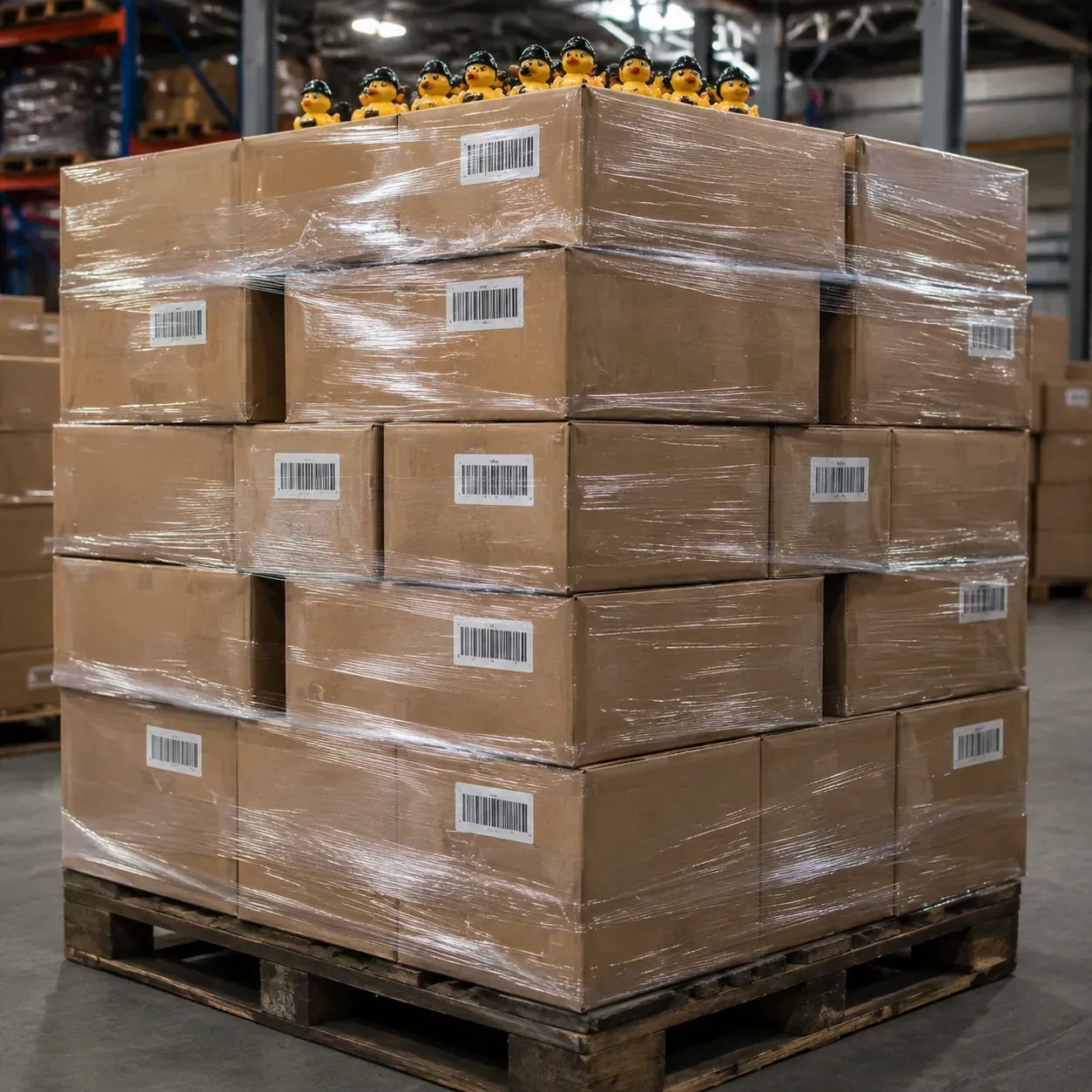
The pack field covers the bag, the carton and the marks that go on both. Write whether the duck ships in a polybag, a retail box, a hang tag or a display carton, how many go in a carton, and what has to be printed on the outside. The carton is a shipping decision and a storage decision at once, and a request that omits it will get a default pack that may not fit the channel the duck is sold through.
The marks on the pack are a legal field as well as a design one. For goods entering the United States, U.S. Customs and Border Protection states that every article of foreign origin must be legibly marked with the English name of the country of origin, and that the mark must be as permanent as the product allows. That requirement belongs in the request rather than in a conversation after the cartons are printed, because the artwork for the carton is approved once. The packaging notes cover the bag and carton choices in more detail.
Field six: the market and the documents
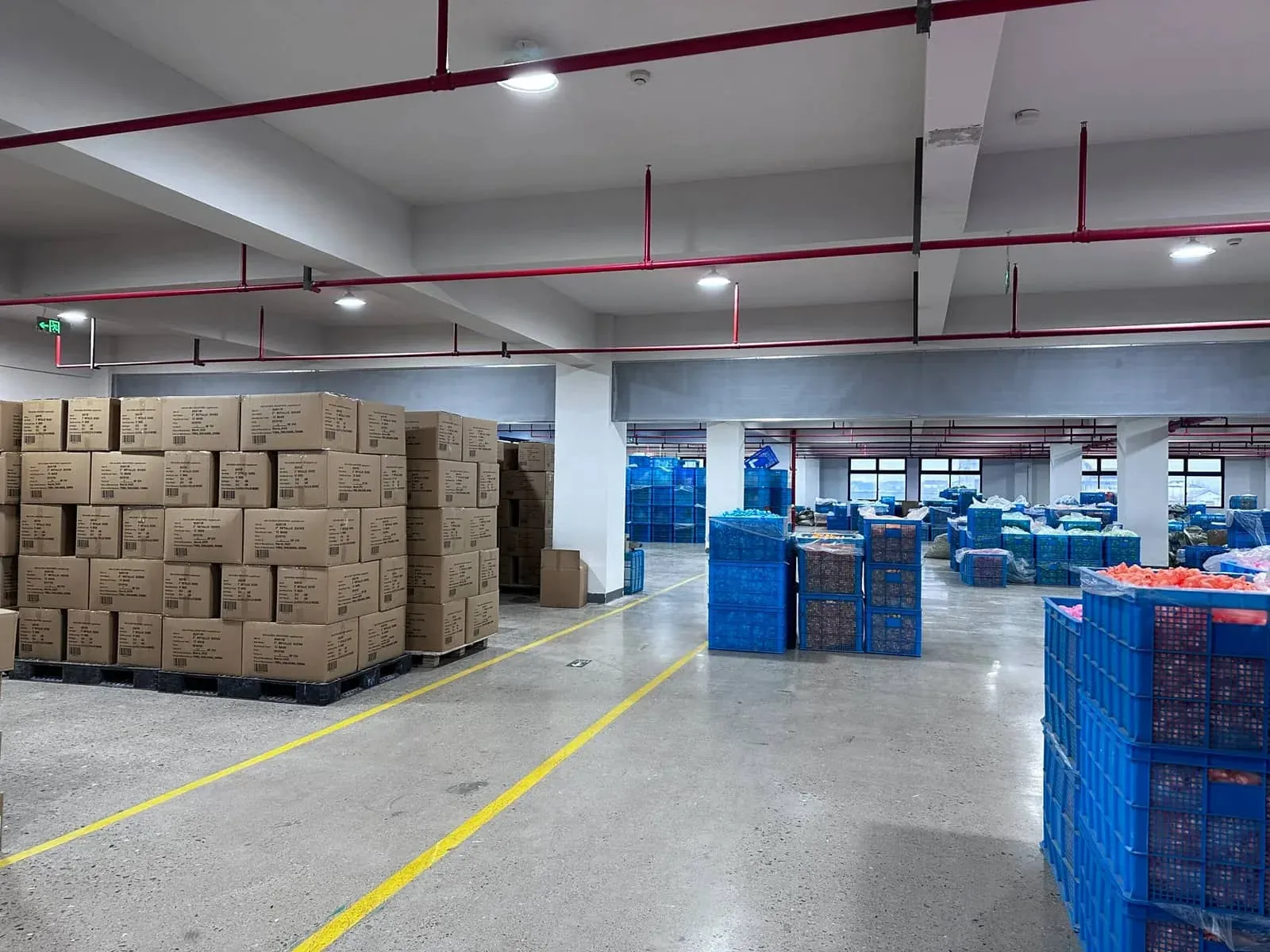
The market field says where the duck will be sold and who will be responsible for it. Write the destination country, the sales channel, the age grade the duck is intended for, and the documents the buyer expects to hold. A duck sold as a toy for young children carries a different document set from a duck sold as a promotional item for adults, and the request should say which one it is rather than let the supplier guess.
The document question is specific enough to be written down. For a children's product in the United States, the CPSC's children's product certificate guidance explains that the certificate must identify the product, cite each applicable safety rule and identify the manufacturer or importer and the testing laboratory. A request that names the market and the age grade lets the reply say which of those items the supplier can support, instead of promising a generic certificate that may not match the product.
Field seven: the tolerance and the approval route
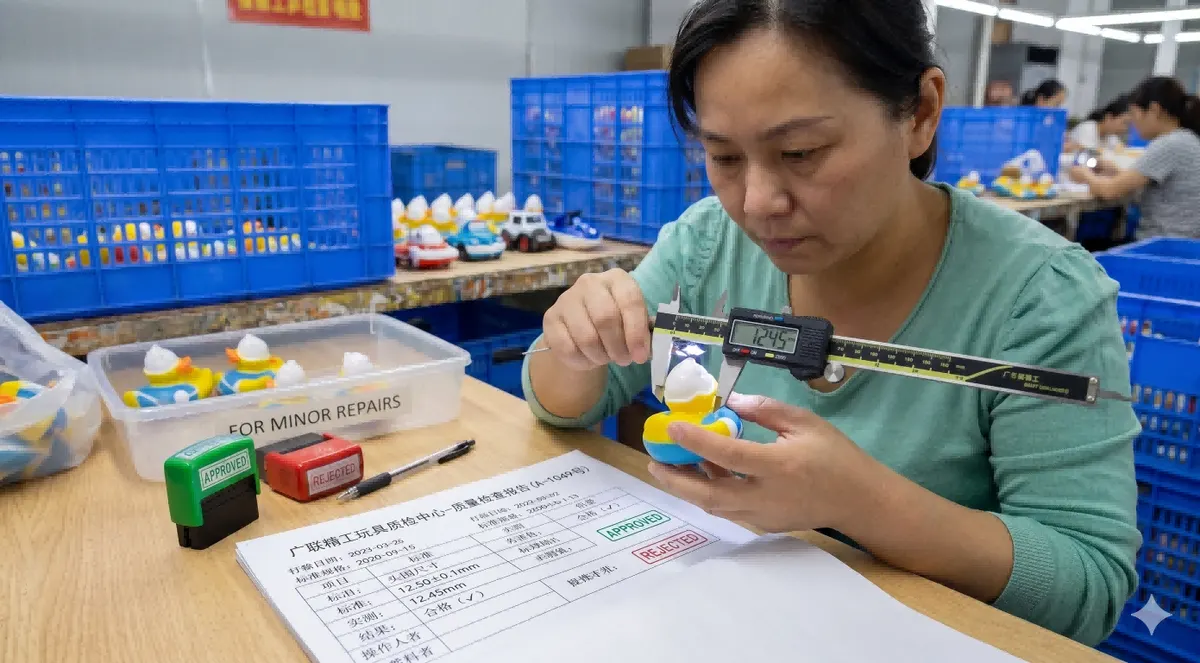
The last field is the one that decides what "match" means. A request should say how the first unit will be approved, who signs it, and what tolerance is acceptable on colour, size and print position. Without that field, a batch can be right by the supplier's reading and wrong by the buyer's, and both sides will be honest about it.
The approval route is a sequence rather than a moment: a drawing, a physical unit, a signed reference and a batch that is checked against that reference. Write who holds the reference, how it is stored and what happens when a second batch is compared with it. The mockup approval checklist turns that sequence into a list, and the request is where the buyer states which parts of it they will own.
The seven fields on one page
Seven fields fit on one page, and a one page request is read in full rather than skimmed. Keep each field to a sentence or two, attach only the files that are referenced, and mark anything undecided rather than leaving it blank. A request in this shape can be answered field by field, which makes the reply comparable with another supplier's reply instead of being a single opaque number.
| Field | What to write | Why it changes the answer |
|---|---|---|
| Job type | Mark on an existing body, a new shape, or a repeat | Decides whether the work starts with colour or with a drawing |
| Body | Size in inches, material family, required parts | Decides the tool, the process and the tests |
| Colour and finish | Reference, solid or mixed, surface finish | Decides the mixing, the coating and the approval |
| Mark | Artwork, placement, size, colours, file | Decides the print method and the proof |
| Pack | Bag, box, carton count, marks on the carton | Decides the packing line and the label artwork |
| Market | Destination, channel, age grade, documents | Decides which certificate set applies |
| Approval | Who approves, what tolerance, which reference | Decides when the batch is judged and by what |
Four questions before the brief goes out
- Which of the three job types is this, and does the request say so in the first line?
- Is every size written in inches, and is every material named rather than implied?
- Does the mark field include a final file, a placement and a colour count?
- Who signs the approval, and what reference will the second batch be compared against?
A request that answers all four is a brief. One that answers two is a message with a picture attached. The answers also decide how the reply should be read: a brief with a settled job type and a settled body can be compared on colour and pack, while a brief with an open body can only be answered with a drawing conversation. Send the brief with the open fields marked, and the reply will tell you which of them actually matter.
Frequently Asked Questions
What is the most important field in a duck request?
The job type, because it decides what the other six fields are for. A mark on an existing body can be answered with colour and print choices, a new shape needs a drawing and a tool before those choices mean anything, and a repeat needs the old reference rather than a new design. A request that names the job type first is answered more usefully than one that names it last.
Do I need a final artwork file before I send a request?
You need to say what state the artwork is in. A vector file with the colours named can be reviewed and proofed; a draft can still be discussed, and the reply should say what will change once the file is final. Sending a draft as if it were final is the more common problem, because the reply then treats a moving mark as a settled one.
Should the request include the market and age grade?
Yes, because the document set follows the market and the age grade. A duck intended for young children carries testing and certification obligations that a promotional duck for adults does not, and the supplier cannot tell which applies from the shape of the duck. Naming the market also tells the supplier which country marking rules apply to the carton.
What does the approval field actually cover?
It covers who signs, what they sign against, and how close the batch has to be. That includes the colour reference, the physical unit that was approved, the tolerance on size and print position, and where the reference is kept. Without it, a batch can be correct by one reading and wrong by another, and the disagreement is expensive to settle after the cartons are sealed.
Final Note
A duck request is a short document with a long reach. Each of the seven fields removes an assumption, and the assumptions are what turn a simple order into a series of corrections. The buyer who writes the seven fields before sending anything gets a reply that can be compared, questioned and approved, and the buyer who sends two lines gets a reply that has to be renegotiated later.
None of the fields needs a long paragraph. The job type is one line, the body is one line, and the approval route is two. What makes the request work is that all seven are present and that the open ones are marked as open. The design revision notes and the large size notes are the next places to look if a field cannot be answered yet, because a field that cannot be answered is the first thing the request has taught you.
Key takeaways
- A request is answered in the detail it was written.
- Name the job type first: existing body, new shape or repeat.
- Write size in inches and name the material rather than implying it.
- Colour and finish are separate approvals even when requested together.
- The pack and its marks, including the country of origin, belong in the request.
- The market and age grade decide which documents apply.
- Say who approves, against which reference, with what tolerance.
- A page of seven fields is read in full; a paragraph is skimmed.