Conference swag bag ducks are decided at the stuffing table, not in the meeting where the order is approved. Volunteers stand in a hall against a clock, take a duck from a carton and put it into a bag, and every earlier choice about size, bagging and carton labels is tested at that table. The order that survives is the one designed backwards from that hour.
In short: buying ducks for conference swag bags is a packing decision more than a product decision. One duck per bag, a count that matches the bag count plus a stated number of spares, a carton marked for the venue dock rather than a warehouse aisle, and sponsor artwork approved before the ducks are printed. Get those four right and the stuffing table is boring, which is what it should be.
The bag is built before the hall opens
A swag bag is assembled in one short window, usually the day before the doors open, often by people who have never packed a giveaway before. That window decides the shape of the order. Anything that needs sorting, matching or counting at the table is a delay paid on the worst possible day.
The merged advice from the trends side of this topic is the same advice, stated as a rule: fewer items, each with a reason. A bag with six forgettable items is remembered less than a bag with two that suit the audience. A duck earns its place when the audience is likely to keep something small on a desk or give it to a child at home, and it loses its place when the bag already carries three objects of the same size.
So the first decision is not which duck. It is how many objects the bag holds and what each one is for. Once that is settled, the duck's size and print are easier, because a duck that has to sit beside a notebook and a lanyard is competing for the same cubic space.
The keep test, applied to a duck
An event item is kept or binned in the first hour after the attendee gets home. The items that survive that hour tend to share three properties: they are useful, they photograph well, and they carry one name rather than four.
Useful is a low bar for a duck. It sits on a desk, floats in a bath, rides on a dashboard, and survives being dropped. It does not need a battery, an app or an instruction. That is why a duck keeps turning up in bags that are otherwise full of things people already own.
Photograph well matters more than it used to. An attendee who posts a picture of the bag is doing the sponsor's work, and a duck is photogenic in a way a cable tidy is not. The print has to survive that photograph: a mark that reads at arm's length in a phone picture is doing more work than a beautiful mark that needs a close up.
One name matters at the packing stage. A bag sponsored by four organisations, with a duck carrying four logos, reads as nobody's gift. The single name rule is also a print decision, because a crowded mark is harder to print on a curved body and harder to approve when four parties each want their logo larger.
One duck per bag, and spares get their own carton
The count is where conference orders most often go wrong, and the error is almost never arithmetic. It is that the number of bags and the number of ducks are treated as the same number, when the bags always need a margin.
A stuffing table loses units. A bag is dropped, a duck is handed to a visitor who asks, a sponsor takes a handful for their own team, a reporter wants one for a photograph. None of that is a mistake; it is the normal life of an event. The order should carry a stated number of spares, packed in their own carton and marked as spares, so that the table can absorb the losses without opening a carton that was counted for the bags.
Keeping the spares separate also protects the count on the dock. A carton of bags is a known quantity; a carton of spares is a buffer. When both are mixed, the receiving check has to open every carton to find out which is which, which is exactly the work the carton marks were supposed to save.
Packing for a stuffing line, not a warehouse
A warehouse pack is designed to survive storage. A stuffing line pack is designed to be opened fast, in a hall, without a knife, by someone holding a bag in the other hand. Those are different requirements, and they change how the duck is bagged.
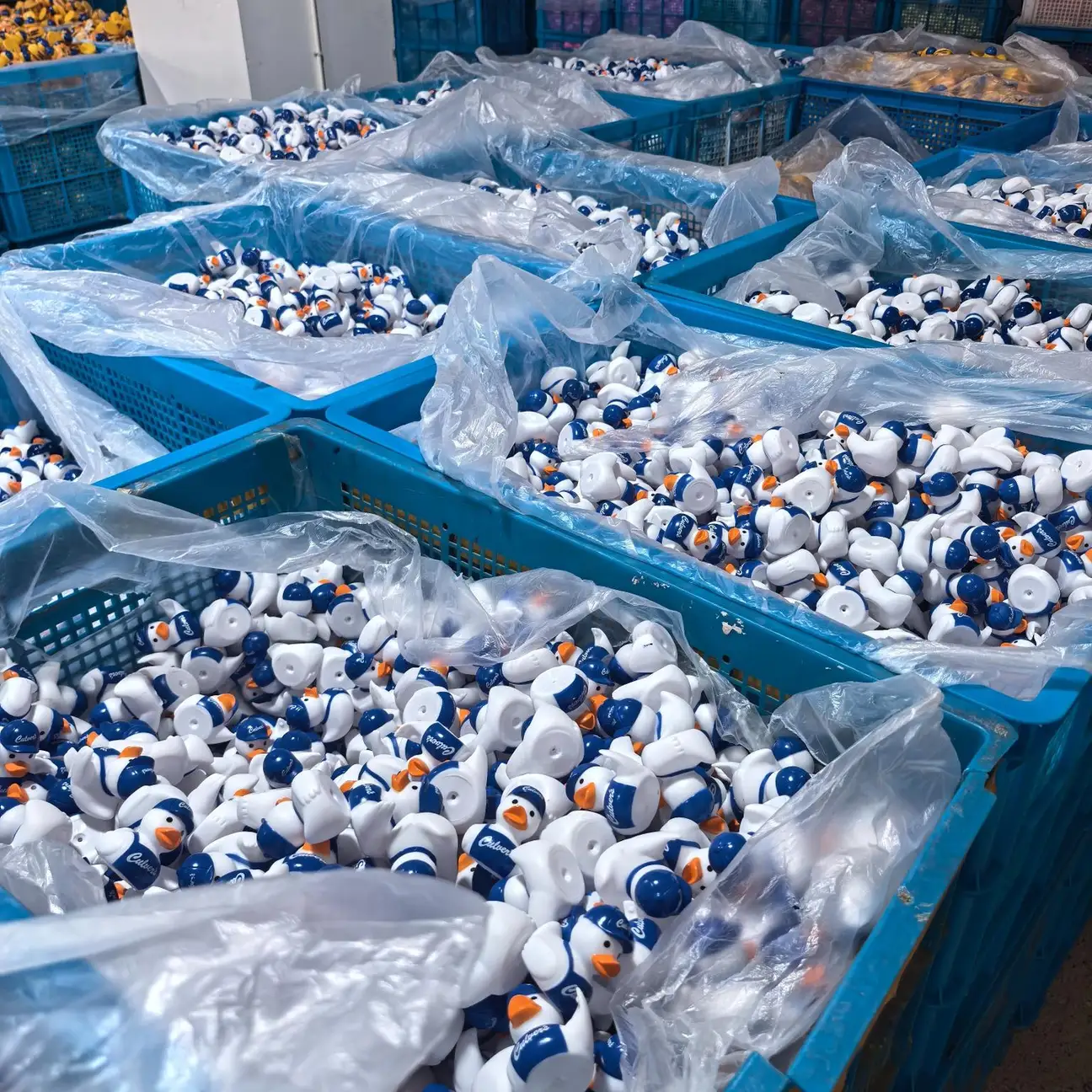
Loose ducks in a carton are the fastest to handle and the worst to count, because they roll and they are indistinguishable at a glance. Individually bagged ducks are slower to open and much easier to count, because each unit is one object and the bag can be dropped straight into the attendee bag. A duck in a printed header card sits between the two: it reads as a gift, and it adds a step at the table.
| Unit format | What it does at the table | Where it strains |
|---|---|---|
| Loose duck in a carton | Fastest to unpack | Counting and design matching stay slow |
| Bagged duck | One countable object each | Slower to open, film to clear away |
| Bag with printed card | Reads as a gift in the hand | One extra step for every bag |
| Pre filled attendee bag | The table is bypassed completely | No change possible after the seal |
The practical answer for most conferences is a bagged duck with the bag serving as the unit, plus a carton that opens cleanly and a count that is visible on the outside. The carton specification notes cover the box itself; the stuffing line only cares that the box opens without tools and that the count on the outside is true.
What the carton has to say at the venue dock
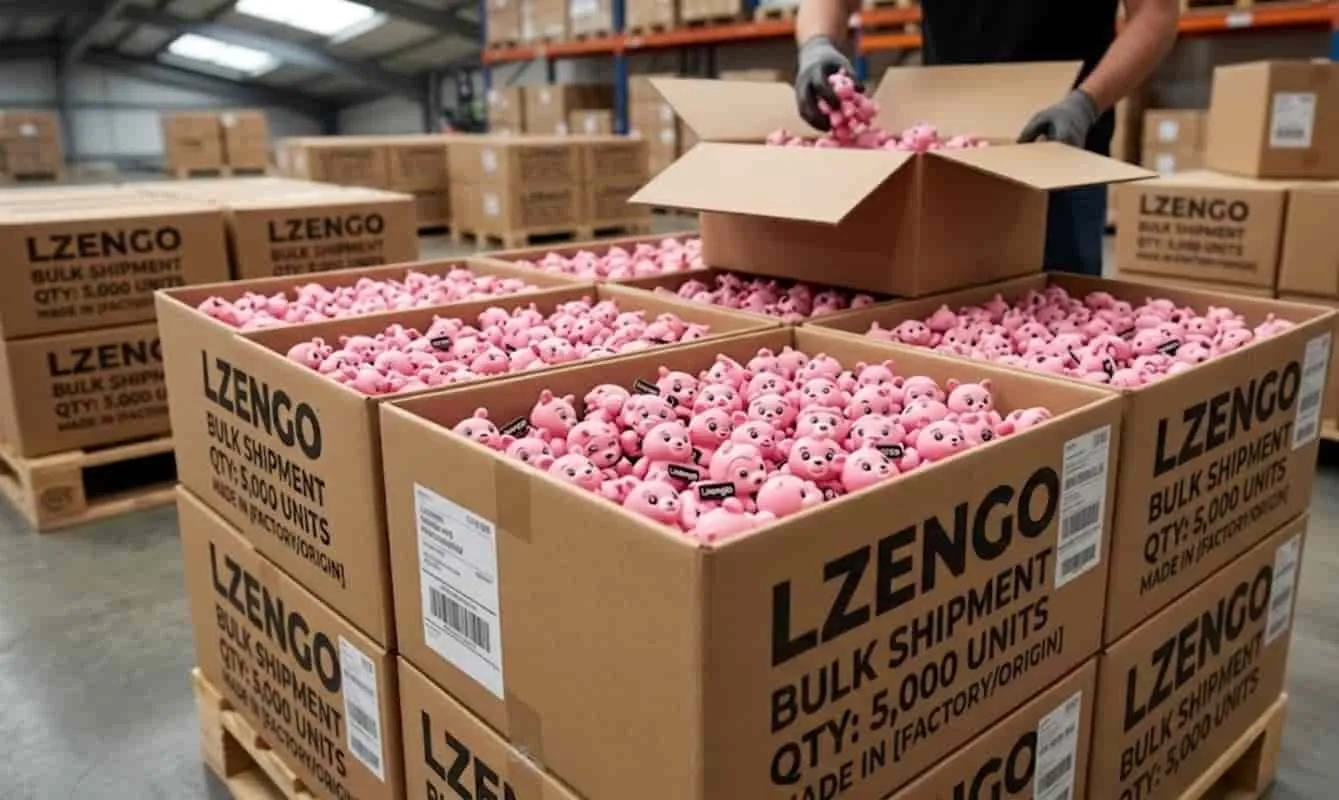
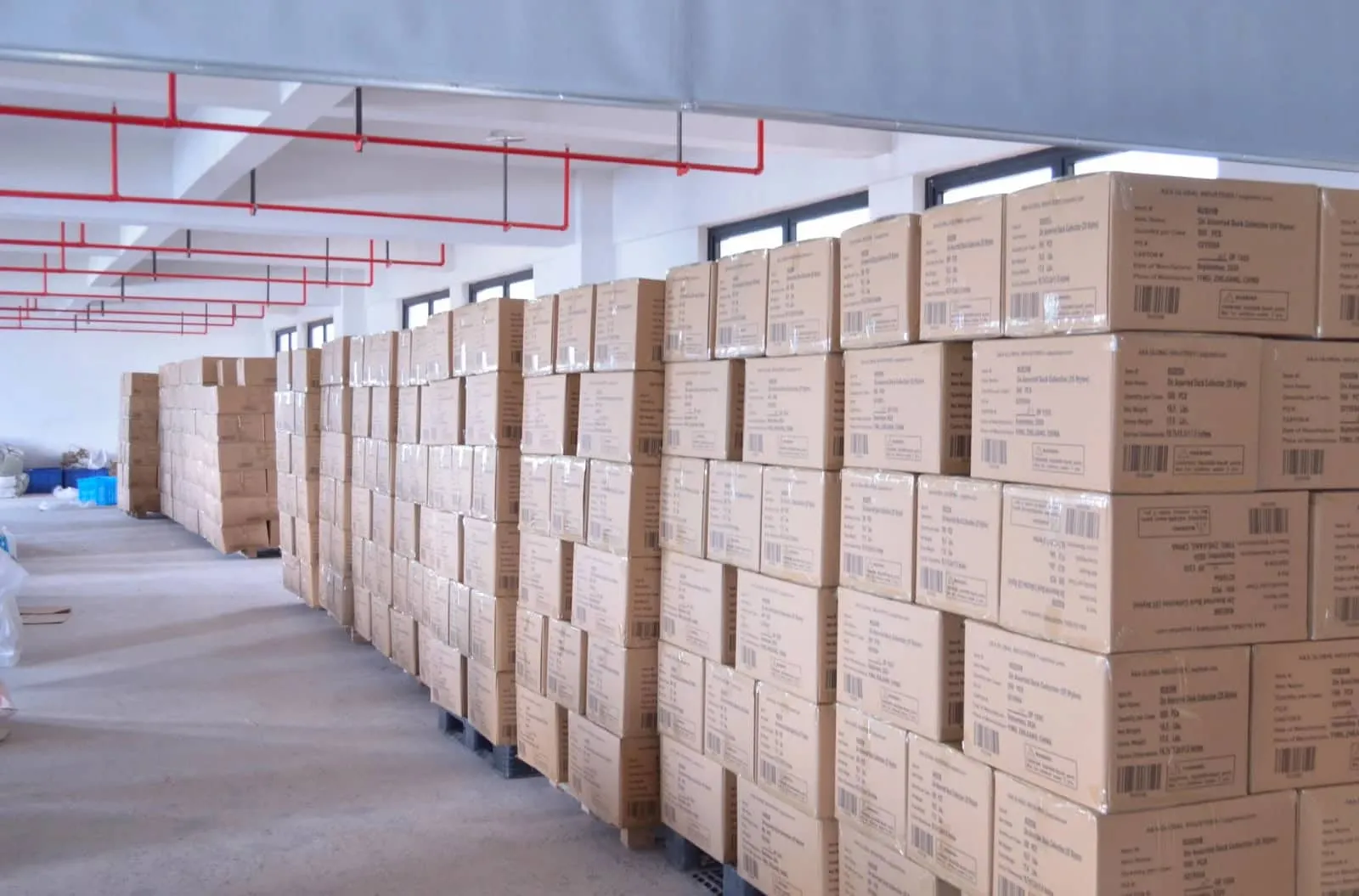
A venue dock is not a warehouse. It has a delivery window, a loading bay shared with other exhibitors, and staff who are matching cartons to an exhibitor list rather than to a stock system. A carton that cannot be identified at a glance is a carton that will sit on the wrong pallet while the hall is being built.
So the carton mark should name the event, the booth or organiser, the count and the contents. It should be readable from the side that faces out on a pallet, not only from the top. And it should match the delivery paperwork exactly, because the dock check is a comparison between two documents and a box.
The other half of the carton question is the trip itself. Distribution testing bodies publish procedures that reproduce what a parcel goes through, and the ISTA test procedure library is where the family of packaged product tests is described. A carton going to a venue usually travels with other freight over a short route, which is a different risk profile from a parcel going to a home; the sea and air freight notes cover the longer routes and what they do to a carton.
The sponsor logo, and who owns the artwork
A sponsor logo on a duck raises two questions that are easy to separate and often merged. The first is approval: who signs off the mark, at what size, on which surface. The second is ownership: who owns the artwork file after the event, and whether the duck can be reprinted next year.
Approval is a timing problem. A logo that arrives three weeks before the show can still be printed if the file is clean and the placement is settled. A logo that arrives as a screenshot and a brand guideline PDF cannot, because the mark has to be redrawn, and a redraw is a second approval. The artwork file notes explain what a usable file looks like; the conference version of the rule is to ask for it at the same time as the bag count.
Ownership is a records problem. The artwork file, the approved proof and the print plate belong to the order, and the sponsor should know which of those they hold. A mark that is reprinted from a changed file is a new mark even when it looks identical, which is the same chain described in the logo fading notes.
A dated duck is a print, not a tool
Event dates move. A show is rescheduled, a tour adds a night, a sponsor joins late and the date on the creative changes. A date that is printed can be changed until the proof is approved; a date that is moulded into the duck cannot be changed without a tool, which is a different decision entirely.
That is the practical reason to print the date rather than mould it. Printing gives the organiser a late window and gives the buyer a way to run one design across several stops when the venue changes. Moulding gives a raised, permanent date that reads as part of the body, and it starts to make sense when the date is not a date at all but an anniversary or a permanent mark.
The same logic applies to themed outfits. An outfit attached to a duck is a design decision with its own tooling, while a printed outfit is a print decision that can change between editions. The custom duck design notes and the size chart are the two references a buyer needs before committing either way.
Ducks that have to be mailed, not handed over
Hybrid events split the audience: some attendees collect a bag in the hall, and some watch from home. The mailed duck is a different product line, even when it is the same duck, because the unit now travels as a parcel and arrives at an address.
Three things change. The pack has to survive a parcel network rather than a pallet. The unit has to carry its own identification, because there is no stuffing table to match it to a badge. And the mailing list becomes the project, with addresses collected, checked and cut into a file that a fulfilment house can use.
The most common failure in a mailed run is the address list arriving after the ducks. The second most common is a carton packed for the hall being broken down into individual parcels by hand, which is slow and produces units that were never designed to travel alone. The trade show giveaway notes cover the booth side of the same decision, and the hang tag notes cover the small printed piece that travels with a mailed duck.
When the bag reaches a child
A conference bag goes home, and a home has children. That is not a hypothetical: it is the normal route for a duck, and it turns an adult giveaway into a toy in a child's hands within a day.
That changes the paperwork. A toy that carries small parts has labelling duties, and 16 CFR 1500.19 is where the small parts warning requirements for toys sit. A duck that could break into a small piece is not the right duck for an audience that includes families, and the age question is settled before the print, not after the complaint. The toy safety label notes cover what the label has to carry.
The decision for most conferences is not to avoid the family audience; it is to choose a duck with no small attached parts and to state its age range in the bag copy. A one piece moulded duck with a printed mark is the simplest object to put in a bag that may reach a child, which is one reason the plain body keeps winning over the elaborate one.
The duck that outlives the bag
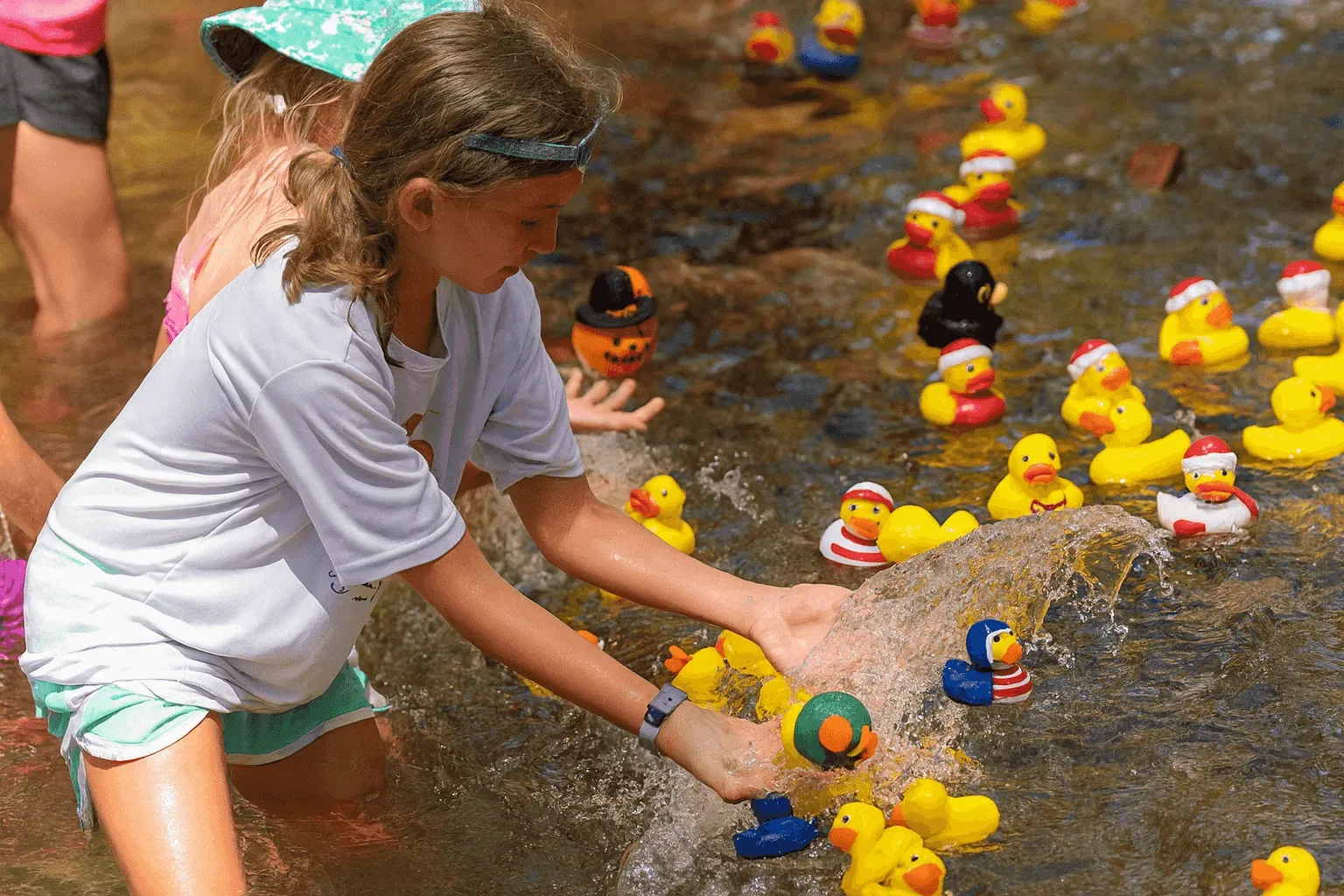
The measure of a swag item is what is still on the desk six months later. A duck has an advantage there that is easy to underestimate: it is small, it is cheerful, and it does not need to be charged, updated or explained.
That is also why the print matters after the event. A duck that sits on a desk is a duck that sits in daylight, and a mark that fades in a window turns a keepsake into a reminder of the wrong thing. The UV stabiliser notes cover the body side of that question, and the fading notes cover the print side.
The usable rule for the buyer is simple: choose a duck you would be happy to see again in a photograph taken six months later, on a desk, in a window, next to somebody's keyboard. That is the object the bag is actually buying.
Leftover cartons are the start of the next run
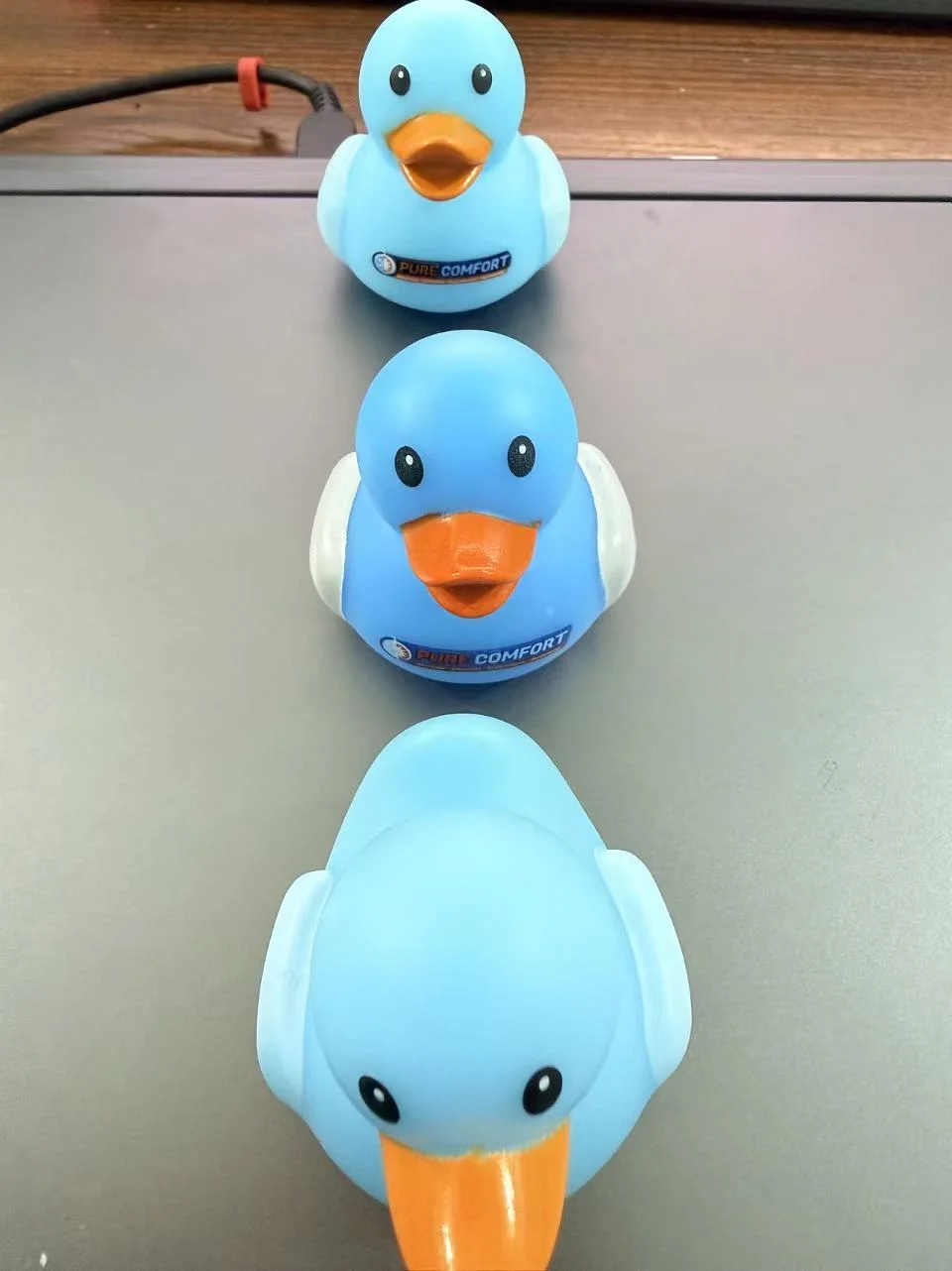
Every conference order ends with leftover cartons, and how they are stored decides whether next year's order starts with a search or with a count. A sealed carton kept dry and labelled is stock; a carton opened and left in a corridor is waste with a delay attached.
Three lines on the carton do the work: what is inside, when it was packed and where it should be stored. A spare carton that carries those three lines can be used for the next event, a staff giveaway or a partner's booth without anybody reopening it to find out. The storage and shelf life notes explain what heat, light and pressure do to a stored duck over a season.
The leftovers also carry a decision about whether the design is dated. A duck printed with this year's show date is a collector's item and a liability at once: it cannot be used next year without looking stale, and it cannot be thrown away without waste. A duck with a permanent mark and no date is more reusable, which is a reason to keep the date on the carton and off the duck.
Where this page stops
This page covers the bag, the count, the carton and the sponsor decision. It is not the page for the duck's print method, the safety file or the booth plan, and those pages exist. The print side belongs to the UV and pad comparison, the safety side to the toy safety label notes, and the booth side to the trade show giveaway notes.
What is left here is the stuffing table. If the count, the bag and the carton mark agree, the table runs itself and the bag arrives in the hall assembled. If they do not, the table becomes a sorting station, and the sorting happens in front of the attendees.
The questions I would settle before the ducks are packed
- How many bags are being filled, and what number of spares is written into the order?
- Does the duck go into the bag as a unit, or does it need a printed card to read as a gift?
- Which carton mark lets a venue dock match the box to the exhibitor list at a glance?
- Who signs the sponsor artwork, and who holds the file after the show?
- Is the date printed, or is the design reusable for the next edition?
No carton should be packed until the first two have answers, and no sponsor mark should be printed until the fourth does. The remaining question is the one that decides whether the duck is a keepsake or a dated object, and it is easier to answer before the tooling than after.
Frequently Asked Questions
Should the duck arrive loose or in individual bags?
Individually bagged for a stuffing line, loose only when the ducks are handed out one at a time by a person. A bag makes each duck one countable object and lets a volunteer drop it straight into an attendee bag. Loose ducks are faster to unpack and much slower to count, and a table that has to count loose ducks loses time it does not have.
Can the duck go straight into the attendee bag at the factory?
It can, if the attendee bag is printed and supplied before the packing window and the factory is set up to fill it. That moves the stuffing work into the packing house and removes the table entirely, at the loss of flexibility: the bag is sealed before anybody knows how many attendees will actually arrive, and a late change to a sponsor or a date cannot be absorbed.
What should the carton label say for a venue delivery?
The event name, the booth or organiser, the count and the contents, placed where a person on a pallet can read it. It should match the delivery paperwork exactly, because the dock check compares the two. A carton marked only with an internal stock code is a carton that gets opened at the dock to find out whether it belongs to the show.
Can a sponsor logo go on the duck?
Yes, when the file is clean, the placement suits the surface and one party signs it off. The limit is not legal but practical: a crowded mark is harder to print on a curved body and slower to approve. A single sponsor mark on one surface reads better at arm's length than four marks sharing the same face.
Final Note
A conference duck is a small object with three lives: freight, table, home. Most of the disappointment around event giveaways comes from planning the first life carefully and the other two not at all. The hall is the easy part. The table and the desk are where the order is judged.
An hour on the count, the carton mark and the spare cartons is worth more than a day at the venue fixing them. The duck is the part everyone photographs. The packing is the part that decides whether anyone gets one.
Key takeaways
- Plan from the stuffing table backwards, not from the booth.
- Fewer items with a reason beat a full bag of forgettable ones.
- Order a stated number of spares, packed in their own carton.
- Bagged ducks count faster than loose ducks at a table.
- The carton mark has to match the venue dock's paperwork, not a stock system.
- One sponsor mark, one sign off, and a file the buyer keeps afterwards.
- Print the date, mould the design: dates move and tools do not.
- Assume the bag reaches a child and choose a duck with no small parts.
- Store leftover cartons with contents, date and location on the outside.