The safety file belongs in front of the design every time a school asks about ducks, before the first colour is discussed. Not because schools are difficult buyers, but because a school duck is handed to a child by an adult who has to answer for it. The order that goes wrong is rarely the one with the wrong Pantone; it is the one with the wrong age grade on the carton.
A sourcing order that starts with the paperwork, because a school purchase has to survive a committee as well as a playground.
In short: Buy a school duck in this order: the safety file, the age grade, the design, then the pack. A duck that passes the first two can be made in school colours. A duck that skips them cannot be rescued by a better logo.
A school programme is a compliance purchase first
A school buys a duck for spirit, but it signs for a toy. That gap is where most programmes lose time. The committee that approves the spend will ask what the product is, who certified it and what happens if a parent complains, and those three questions are answered by documents, not by a design proof.
Treat the compliance question as the first line of the brief. Name the age group that will receive the duck, name the market it is sold or given in, and state whether the duck is a toy or a promotional item that is not intended for children. Each answer changes the file, and the file changes which duck can be offered. A programme that settles this in week one spends the rest of the timeline on design instead of on rework.
The file a district will ask for
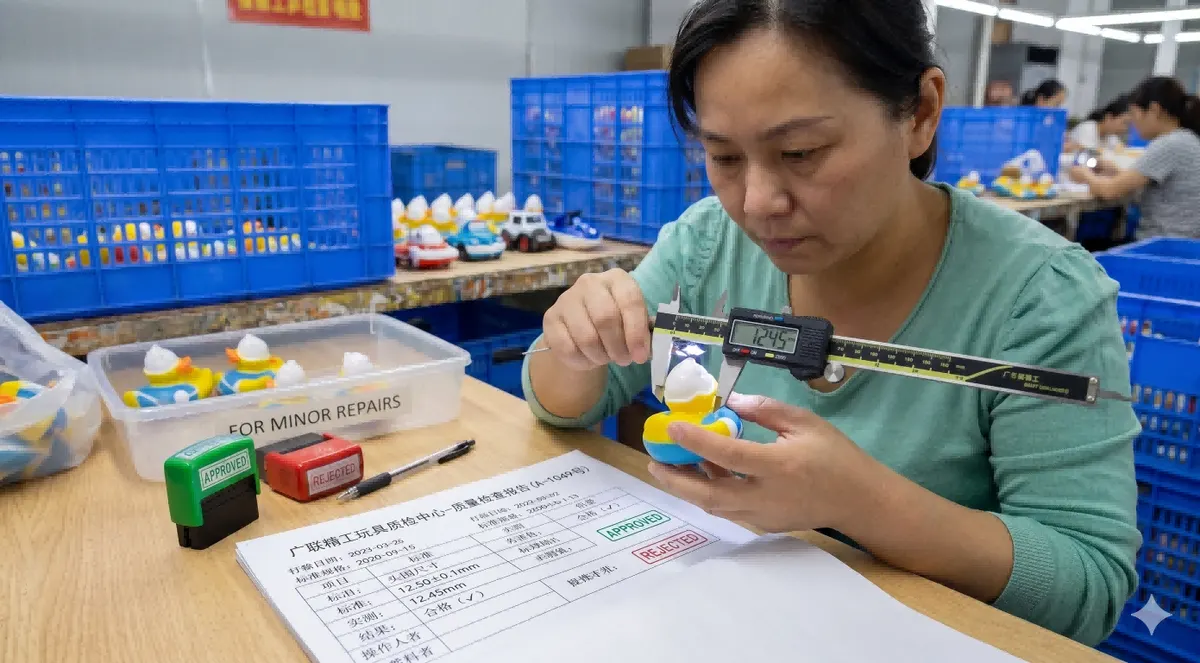
For a duck sold into the United States as a children's toy, the file rests on a mandatory standard rather than on a supplier's promise. The CPSC toy safety guidance explains that section 106 of the CPSIA made ASTM F963 a mandatory consumer product safety standard for children's toys, and that the manufacturer or importer certifies compliance by issuing a Children's Product Certificate.
The safety testing record is the folder this becomes, and the same folder usually carries the labels and age grade the pack has to print.
Two more sheets usually belong in the same folder. One is the small parts test. The regulation is blunt about the method: a toy subject to the rule "shall be small enough to fit entirely within a cylinder with the dimensions shown in Figure 1" is a failure, and the test is a physical drop into a cylinder, not a judgement call (16 CFR 1501.4). The other is the phthalate limit for plasticised parts, which reaches the body of a soft vinyl duck and not only the paint.
Small-parts duties under 16 CFR 1501 are summarised in our toy safety guide.
A school programme should ask for the report, the scope, the laboratory and the name that will sign. If the duck is decorated in a school colour, ask that the report cover the decorated part as well as the bare body, because the two are not always tested together.
Age grading decides what the duck can be
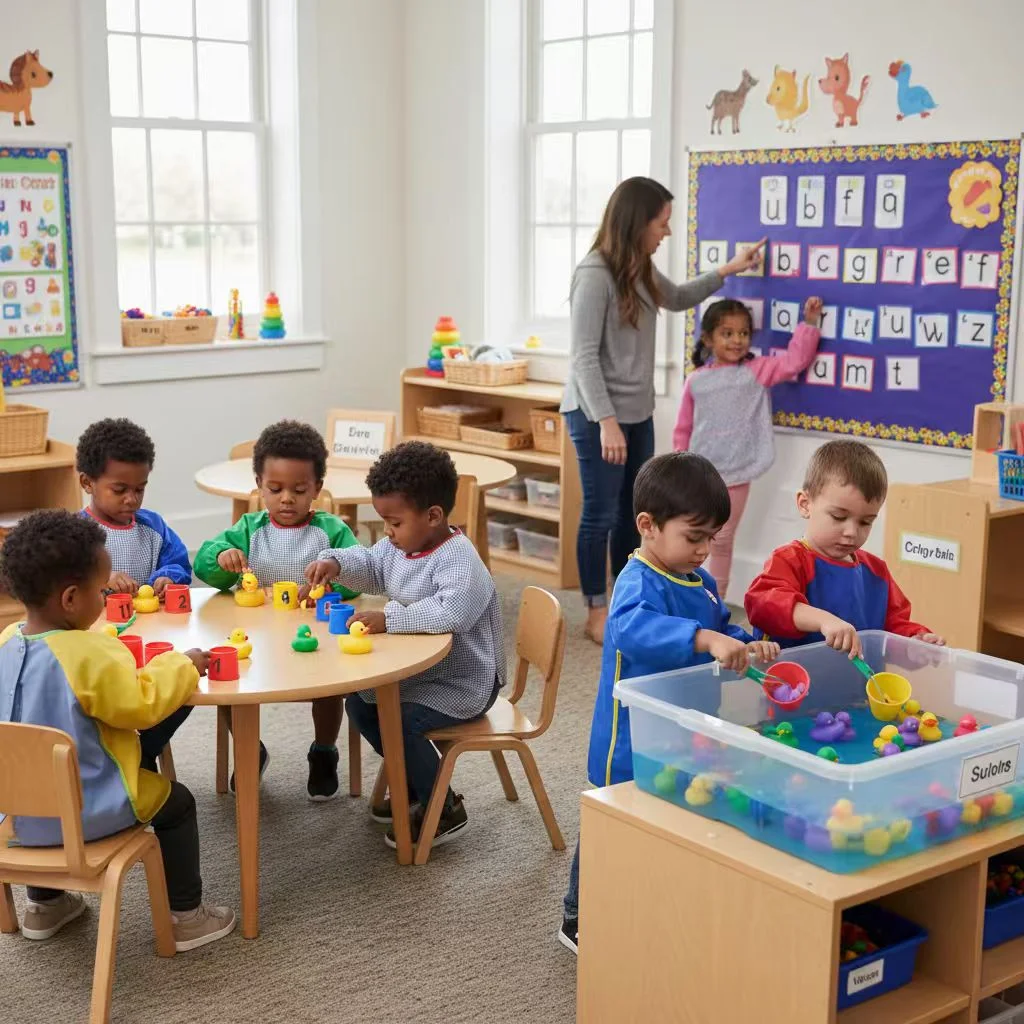
The age on the pack is a manufacturing instruction. A duck for a nursery class has to pass the small parts rule, which usually pushes the design toward a one piece body with no inserted squeaker, no glued eye and no detachable tag. A duck for a middle school spirit event sits under a different labelling rule and can carry a name printed on the chest without a choking hazard statement attached to it.
The line between the two is drawn in regulation rather than in taste. Toys for children of at least three and under six that include a small part have to carry a specific cautionary statement under 16 CFR 1500.19, so a duck handed to a five year old is a different document from the same shape handed to a twelve year old. Deciding the age group late means either reprinting the pack or refusing the youngest class, which is why the age grading question comes before the sample round.
School colours and a mascot that still reads as a duck
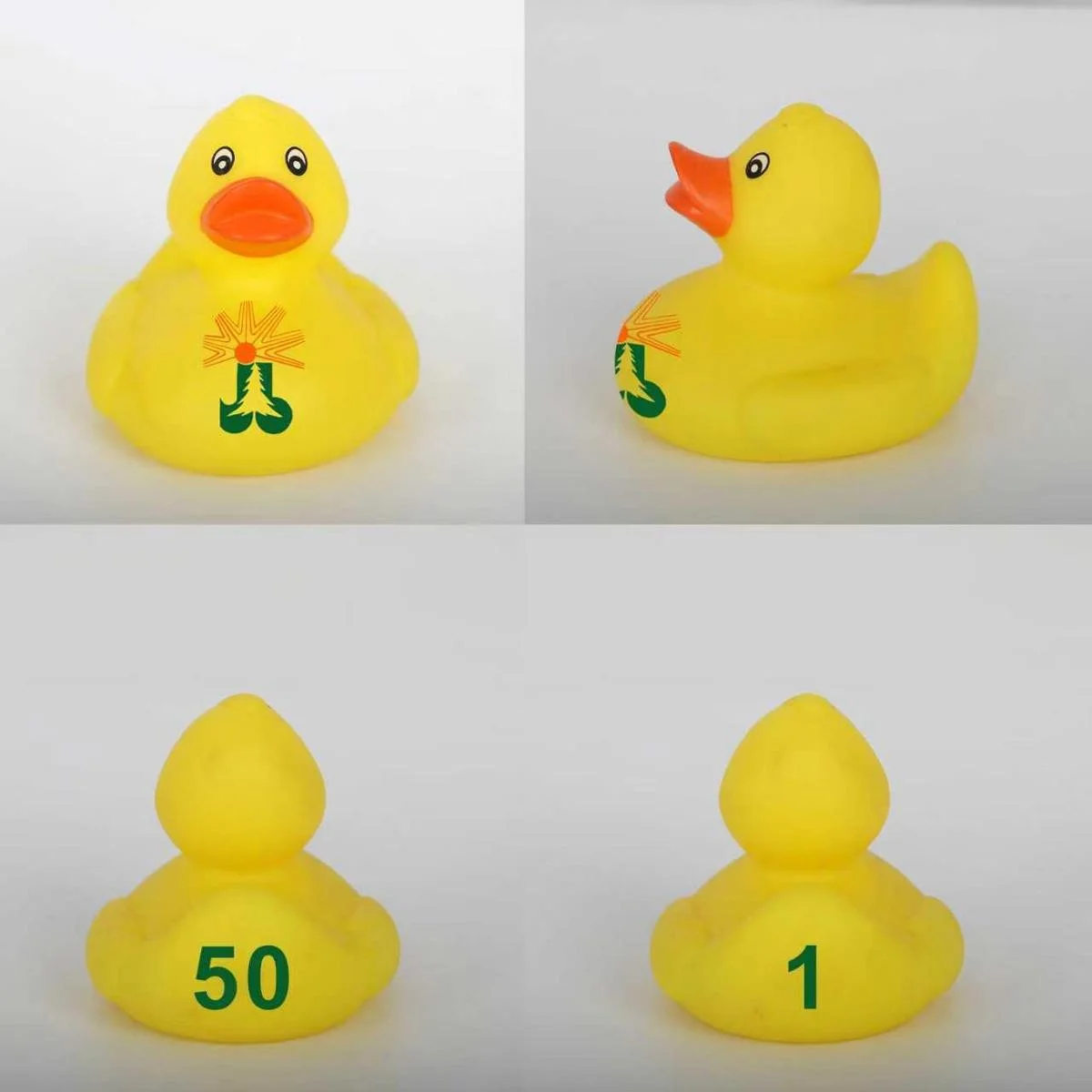
School colours are easy to specify and hard to keep on a curved, glossy body. A duck has no flat face, so a two colour crest can lose its edge on the chest and a thin outline can break where the body curves away from the print head. The practical route is to build the design from the shape outward: one strong block colour for the body, one contrasting print face for the mascot, and a third colour only if the print method can hold it on the curve.
A mascot has a second constraint, which is that the duck must still read as a duck at arm's length. School mascots are often built from a helmet, a beak and a badge, and a duck cannot carry all three without turning into a figurine. Choose the one feature the school is known for, put it on the body, and leave the rest to the colour, then check the colour list against what the body can actually hold. The Pantone matching step is where that decision gets tested on a real surface rather than on a screen.

Names, numbers and the pack that goes to a classroom
A class set is a personalisation job before it is a print job. The names arrive in a spreadsheet, the numbers arrive in a second column, and the job becomes a sequence of one off prints that has to land in the right bag for the right child. The practical questions are how many print faces the duck has, whether the name goes on the chest or under the base, and whether each duck is bagged individually so a teacher can hand them out without sorting.
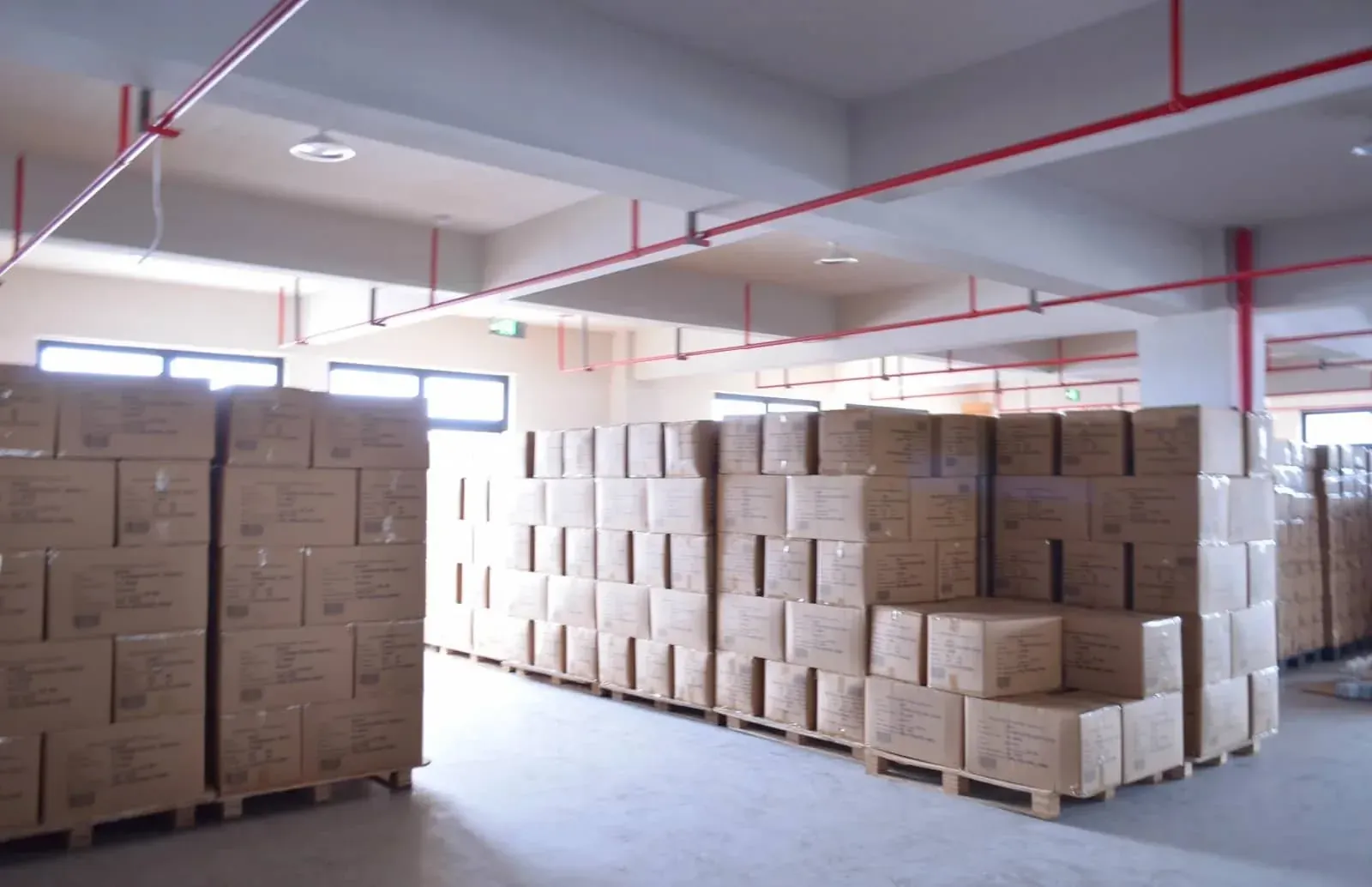
Packing is the part that decides whether the programme works on the day. A bulk carton is fine when one teacher hands out forty ducks from a box, and it is the wrong answer when forty classrooms each need their own bag. For a toy, the film itself has a legal floor: the CPSC guidance on the toy standard records that certain plastic film, including packaging, must average more than 0.00150 in. in thickness or be perforated so that one percent of the surface is removed.
Four ways schools actually use the ducks
A spirit giveaway is the simplest pattern: one duck per student, one colour set, no personalisation. The order is wide and shallow, and the design has to survive being looked at by a thousand teenagers rather than by a committee.
| Programme | Order shape | What decides the design |
|---|---|---|
| Spirit giveaway | One duck per student, few styles | One strong block colour and a readable crest |
| Fundraiser | Many styles, sold at a table | Colour variety and a duck that reads at arm's length |
| Reading or behaviour reward | Small batches, handed out one at a time | Individual bagging and a repeatable design |
| Staff thank you gift | Small personalised batch | Name print and a date that will not move |
A fundraiser differs in one respect that matters to the print: the duck has to sell itself on a table, so colour variety carries more weight than a crest. A reading programme or a behaviour reward works in the opposite direction, with a smaller number of ducks that are given out one at a time across a term, which makes the packing more important than the design.
A staff or volunteer thank you gift is the fourth pattern, and it is the one where a small personalised batch makes sense. It also tends to be the order with the tightest date, because it hangs on an event that will happen whether the ducks arrive or not. Themed ducks work well here only when the theme is chosen before the date is fixed.
Four questions settle which pattern a school is buying:
- Does every student receive a duck, or only the ones who finish something?
- Is the duck given away, sold at a table, or handed out one at a time across a term?
- Does each duck carry a name, a number, or only the school crest?
- Does the handover happen from one carton or from forty classroom bags?
Frequently Asked Questions
Can a school put its mascot on a rubber duck?
Yes, within the limits of the print method. A crest with two or three colours and a clear silhouette holds up on a duck body. A mascot built from fine lines, gradients or small type usually has to be simplified before it can be printed on a curved, glossy surface.
What age grade suits a school giveaway duck?
The age of the youngest child who will receive it decides the grade. A duck for a primary school programme is graded for children under three years or for three and over, and the choice between those two changes the body, the squeaker and the label on the pack.
Does a school fundraiser duck need the same file as a classroom duck?
It needs the same file if it is sold or given to children. A duck sold to adults as a collectible sits under a different set of rules, and the buyer should say which case applies before the design is approved.
How many ducks does one school programme need?
The count comes from the number of handovers, not the number of classrooms. A programme that gives one duck per student and one per teacher needs both numbers on the same sheet, and a programme that gives ducks to volunteers needs a third line.
Final Note
Every school programme should start with the age grade written on the brief, because it decides more of the product than the logo does. The colours and the mascot are the part everyone remembers, and the file is the part that lets the memory happen at all. A programme that orders the file first buys a duck twice: once in the carton, and once in the parent who keeps it on a desk for years. The rest of the order is ordinary work: choose the size the hand can hold, keep the print to what the surface can carry, and pack for the handover rather than for the pallet. None of that is glamorous, and all of it is what the committee is really approving when it signs the purchase.
Key takeaways
- A school programme is a compliance purchase first: A school buys a duck for spirit, but it signs for a toy.
- The file a district will ask for: For a duck sold into the United States as a children's toy, the file rests on a mandatory standard rather than on a supplier's promise.
- Age grading decides what the duck can be: The age on the pack is a manufacturing instruction.
- School colours and a mascot that still reads as a duck: School colours are easy to specify and hard to keep on a curved, glossy body.
- Names, numbers and the pack that goes to a classroom: A class set is a personalisation job before it is a print job.
- Four ways schools actually use the ducks: A spirit giveaway is the simplest pattern: one duck per student, one colour set, no personalisation.