A themed series is a set project before it is a duck project, because the set decides the tooling, the print and the shelf.
A themed duck series is judged as a set, because that is how the buyer sees it. The ducks sit in a row, and the eye compares them before it looks at any one of them. A set that is consistent sells; a set of near misses looks like a mistake.
In short: A themed rubber duck series holds together when the characters share one body and one dimension sheet, when colour is decided across the lineup rather than per duck, when the set is approved as a group and when each character's safety is settled before the tool is cut. Consistency is what makes a buyer reorder, and it is decided in the files, not on the shelf.
A themed series is judged as a set, not as a duck
A single duck is judged on its own charm. A series is judged on the relationship between the ducks: the same height, the same body, the same colour family, the same print style. When one of those drifts, the set reads as several separate orders that happened to arrive together.
The buyer's eye looks for a family resemblance first. If the fourth duck is slightly taller, the set looks unfinished even when each duck is fine. That impression is paid for at the reorder, because a buyer who is unsure whether the set will match again orders once and stops.
The fix is not visual discipline on the shelf; it is discipline in the files. One dimension sheet, one colour standard and one approval record are what keep the fourth duck in the same family as the first.
One body, many characters: the tooling fork
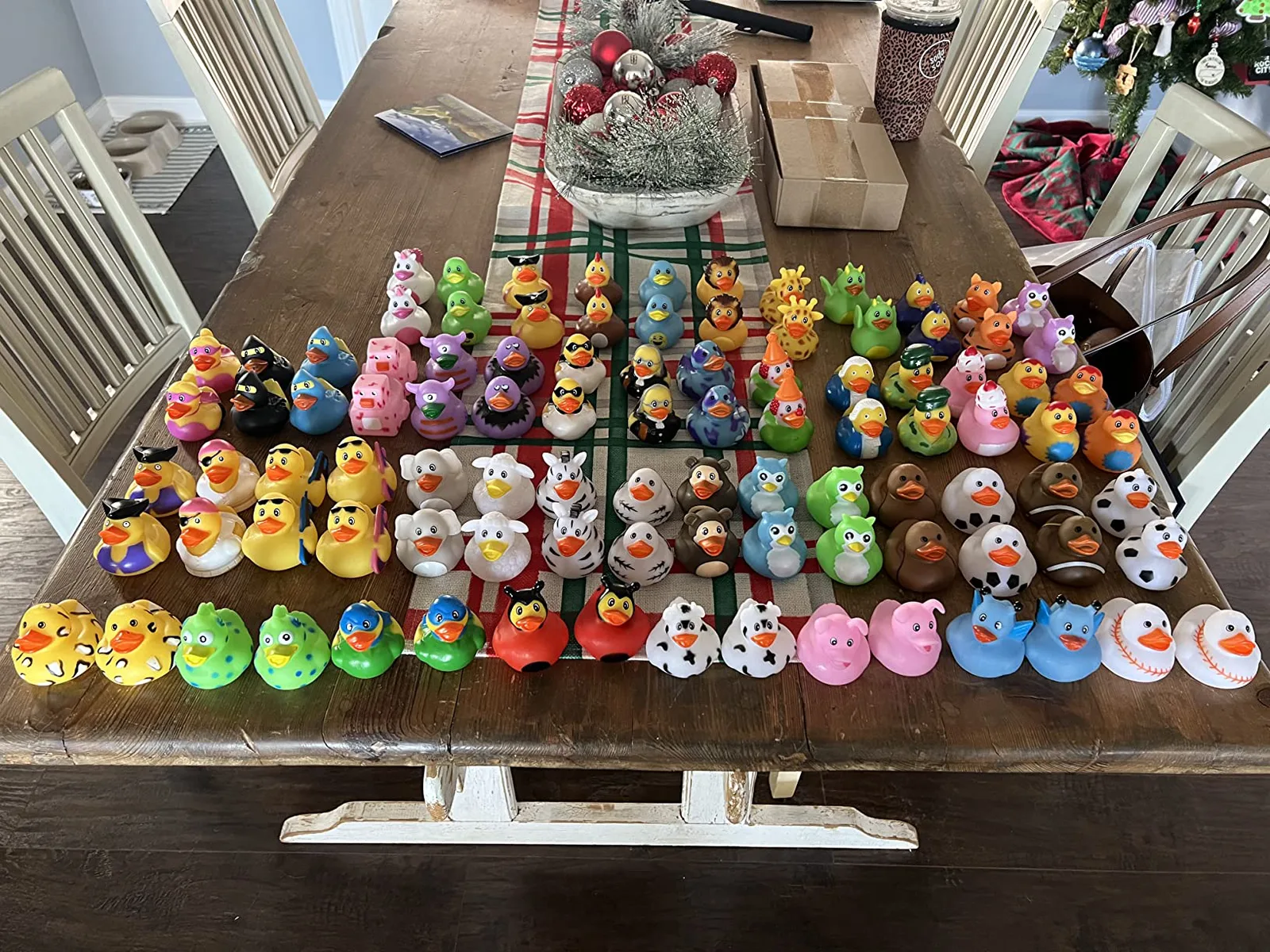
A series starts with the fork: the characters either share a body or each gets its own tool. Shared bodies are simpler to produce and easier to keep consistent, but they limit the silhouette. New bodies give each character its own shape and multiply the tooling.
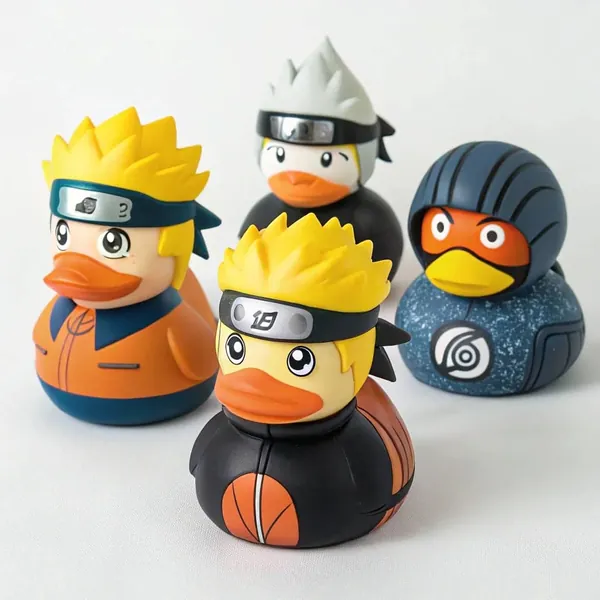
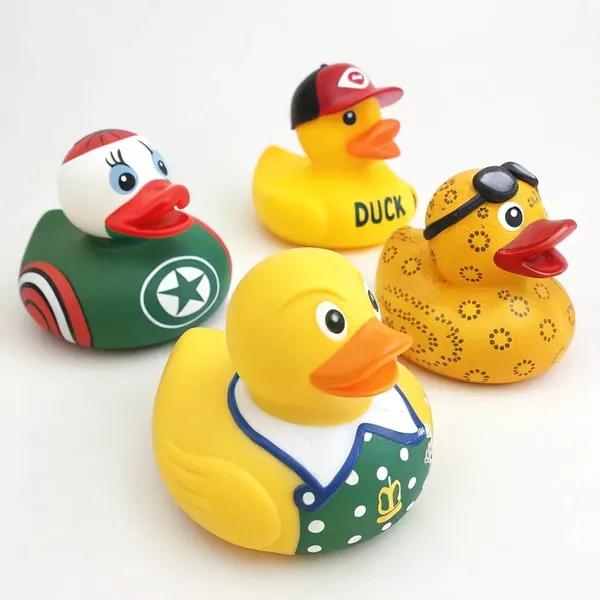
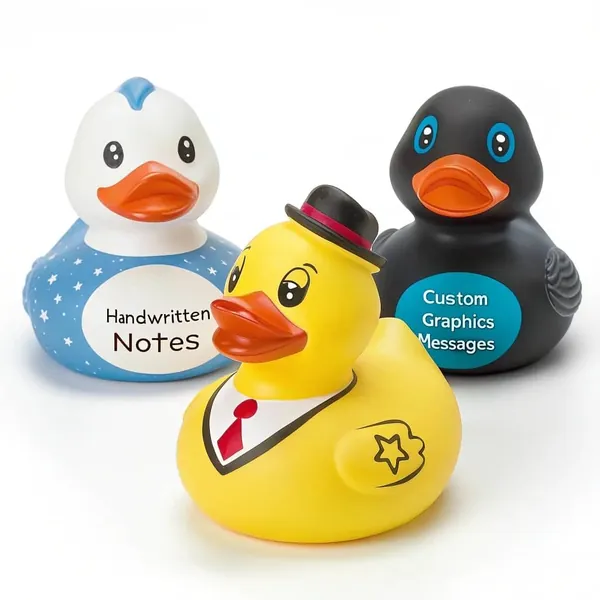
Most series work as a mixed set. Two or three body shapes carry the range, and the characters are differentiated by print, colour and fitted accessories. A hat, a scarf or a prop can change a character without a new mould, and that is usually enough for a themed set.
The fork has a second consequence: the characters that share a body also share its limits, including where the print can go and how much detail the surface holds. The accessories notes show how far a shared body can be pushed before a new tool is the only answer.
| Element | Shared across the series | Re-decided per character |
|---|---|---|
| Body | The base shape and size | Nothing, if the body is shared |
| The print style and placement | The artwork itself | |
| Colour | The palette and the reference | Which colour each character uses |
| Accessory | The material and fit | The shape and the theme |
| Label | The label position | The character name, if any |
Agree one dimension sheet before the first tool
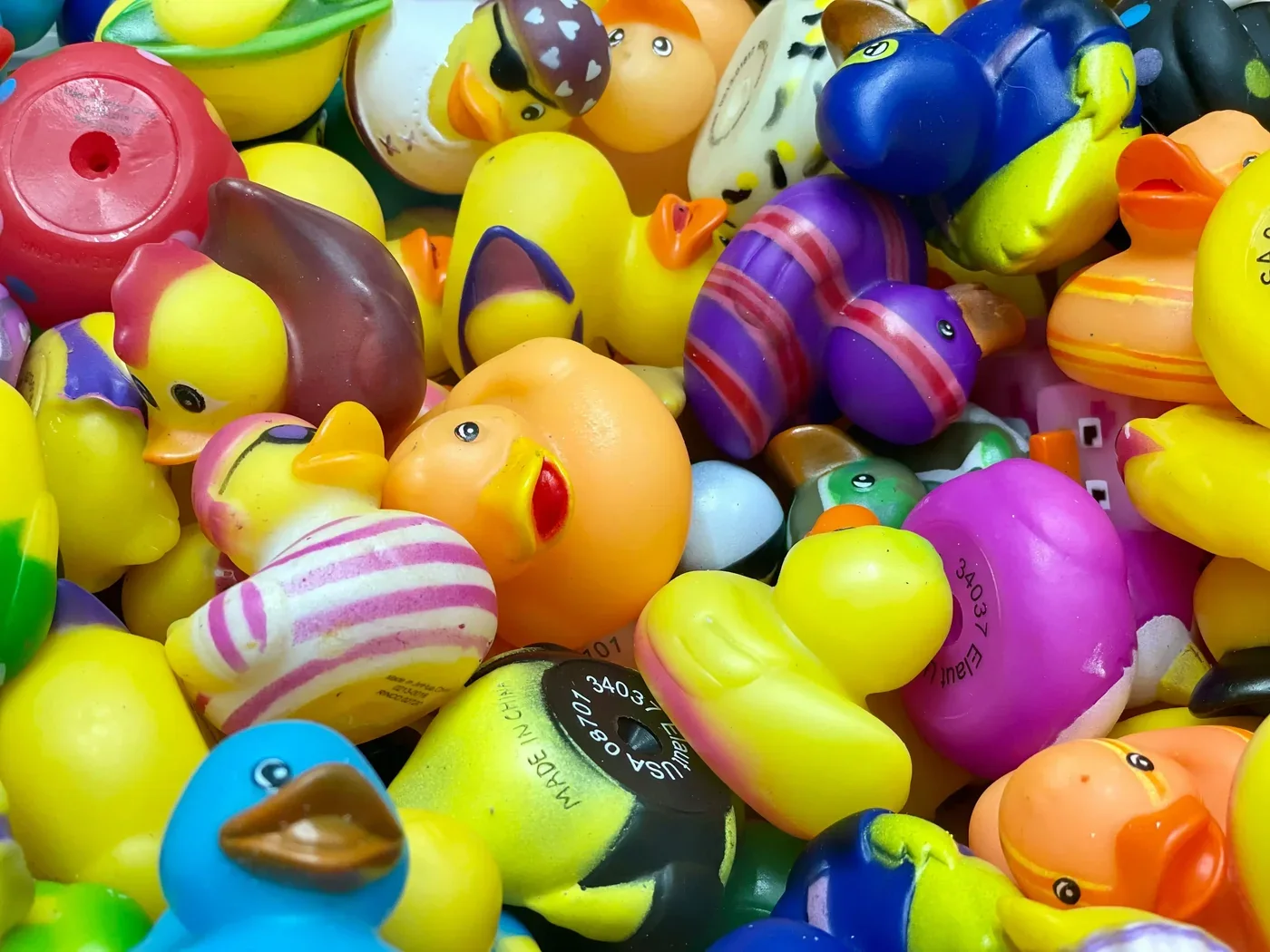
The dimension sheet is the document that keeps the series consistent across tools, batches and seasons. It fixes the length, height and width in inches, the base diameter, the position of the print areas and the size of any fitted accessory.
One sheet should cover every character, even the ones that use a new body. The shared values are the family resemblance; the character-specific values are the exception, and each exception should be written down rather than left to the toolmaker.
The sheet is also the handover document for a second season. When the series is reordered, the sheet plus the retained samples is what lets a new batch match the old one without a meeting. The scaling notes show how the same design behaves across sizes, which is the same logic applied to a series.
Colour across the lineup is a material decision
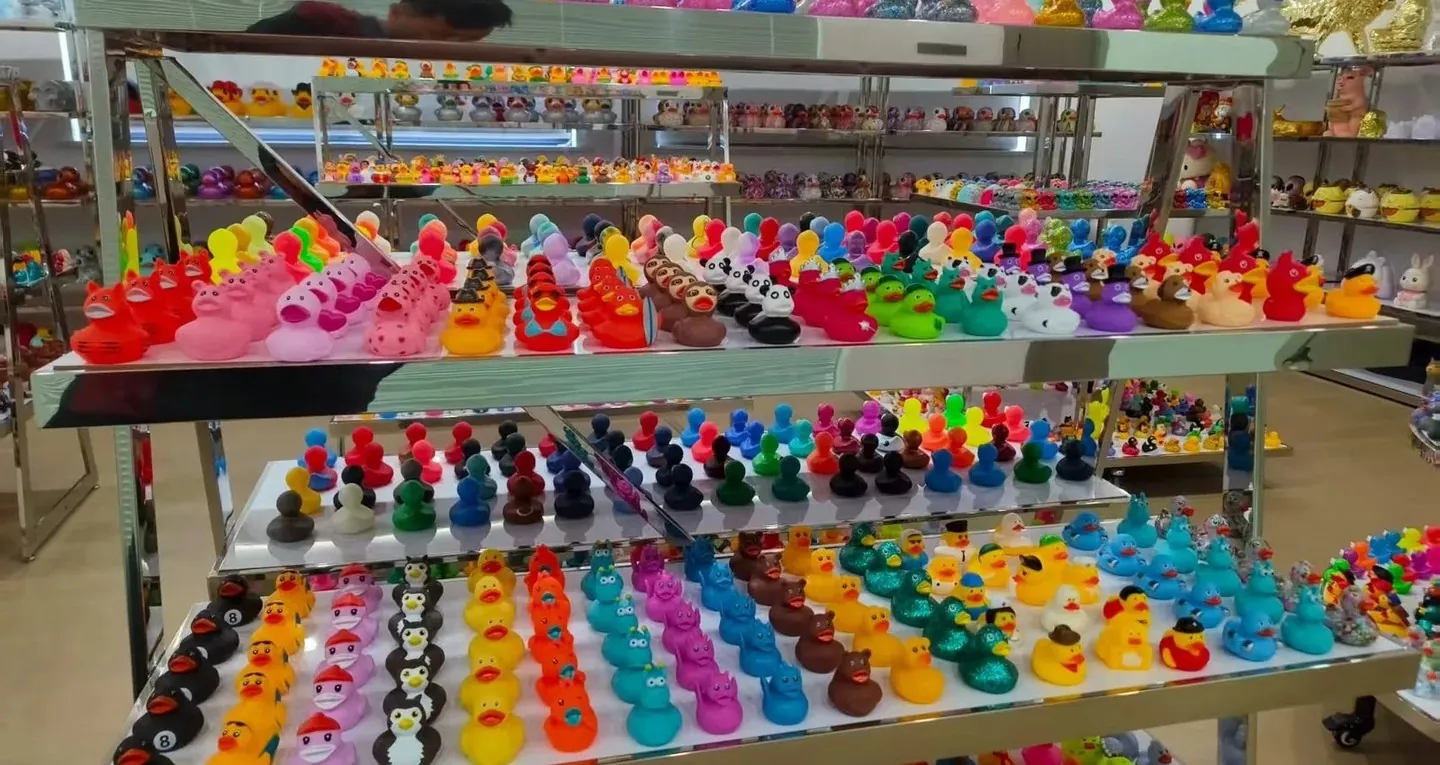
A series needs a palette, and the palette has to be decided as a set. Choosing each character's colour on its own produces a lineup that is technically colourful and visually noisy, because the ducks do not share a reference.
The workable approach is a small palette of body colours plus one print colour, with the characters differentiated by which combination they use. That keeps the set coherent and makes the colour references manageable, because each body colour is a material decision with its own batch.
The material decision has a compliance edge. 16 CFR 1307.3 prohibits the sale of a children's toy containing more than 0.1 percent of DEHP, DBP or BBP, so each colourway is its own material batch with its own limit. The colour matching notes and the colour range notes cover how the palette is set and kept.
Approve the set, not the duck
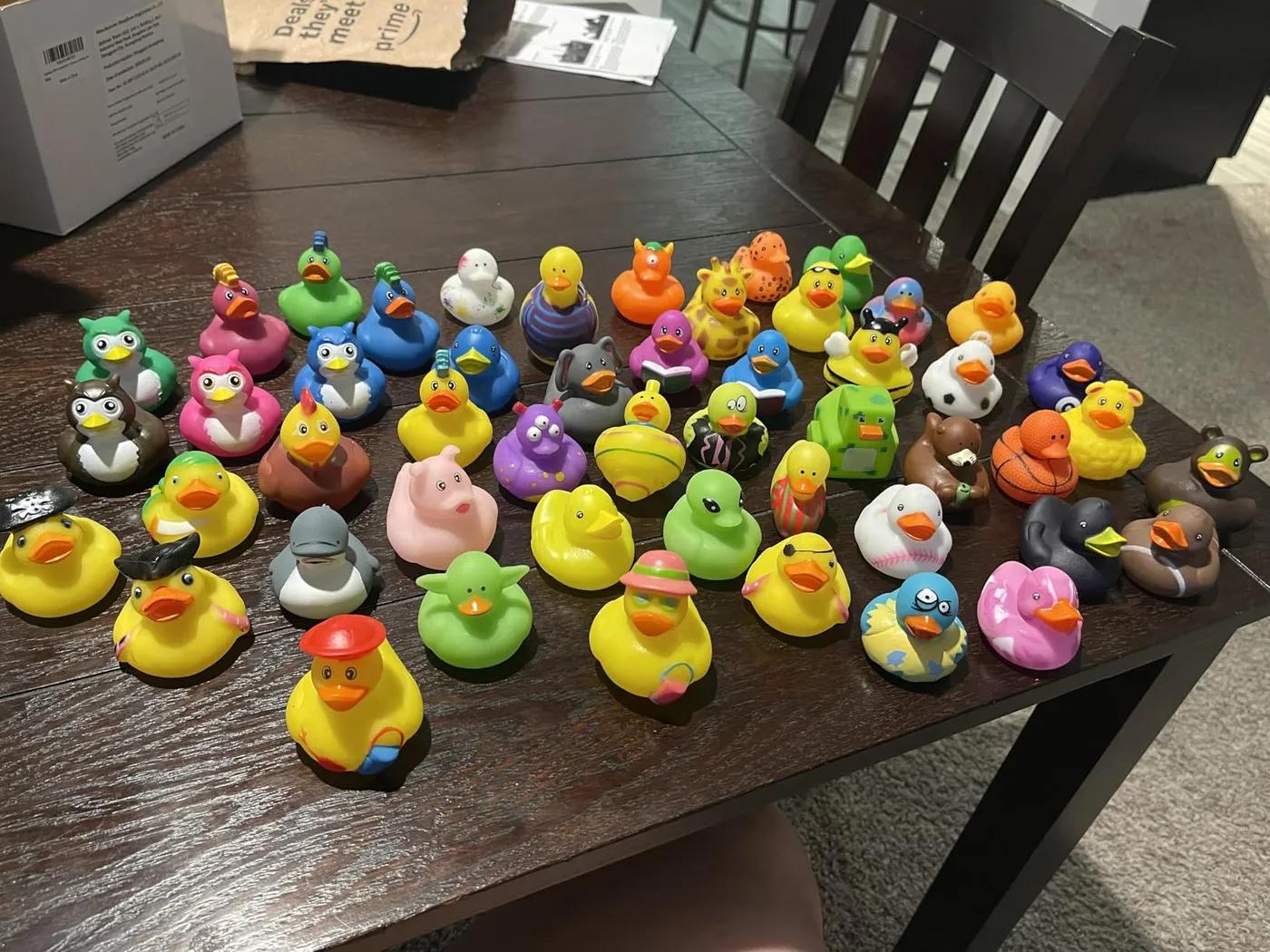
A series approval is a group decision. Approving each duck on its own produces a set that is individually acceptable and collectively wrong, because the comparison only happens when the ducks are side by side.
The approval should happen on a table, with all the characters present, under one light. The record should include the group photograph, the dimension sheet and the list of exceptions, so the next person can see what was approved and what was allowed to differ.
The physical set matters more than the files here. A buyer who keeps one duck from the approved set has a reference for that character but not for the family, and the family is what the reorder is buying. The mockup approval checklist covers the record; the series needs the group view.

Where a series becomes a safety question
A series multiplies the safety questions, because each character may add an accessory, a print or a colour that the others do not have. The age grade applies to the set, and the weakest character decides it.
The CPSC toy safety guidance explains that section 106 of the CPSIA made ASTM F963 a mandatory consumer product safety standard for children's toys, so a series sold as a toy needs a file that covers every character, not just the base duck. A fitted accessory that can detach is the usual place where one character differs from the rest.
The label is part of the set design as well. If each character carries a name or a number, the label position has to be reserved in the artwork before the print is laid out. The toy safety label guide lists the marks, and the series sheet should show where each one sits on every character.
A series has to survive season two
A themed series is usually bought with a second season in mind, even when the first order is small. The second season is where consistency pays: the buyer reorders the same characters, expects the same colours and compares the new batch with the old one.
The reorder is easier when the tool record, the dimension sheet and the retained set are kept together. It is harder when the series was built from separate orders, because the second season has to reconstruct the first from photographs. The mould ownership notes explain why the tool record matters for a reorder.
The series also needs a retirement plan. If a character is dropped, the tool and the artwork should be archived rather than lost, because the buyer may ask for it again. A series that can be reopened is more valuable than one that has to be redesigned.
Five questions before the first tool
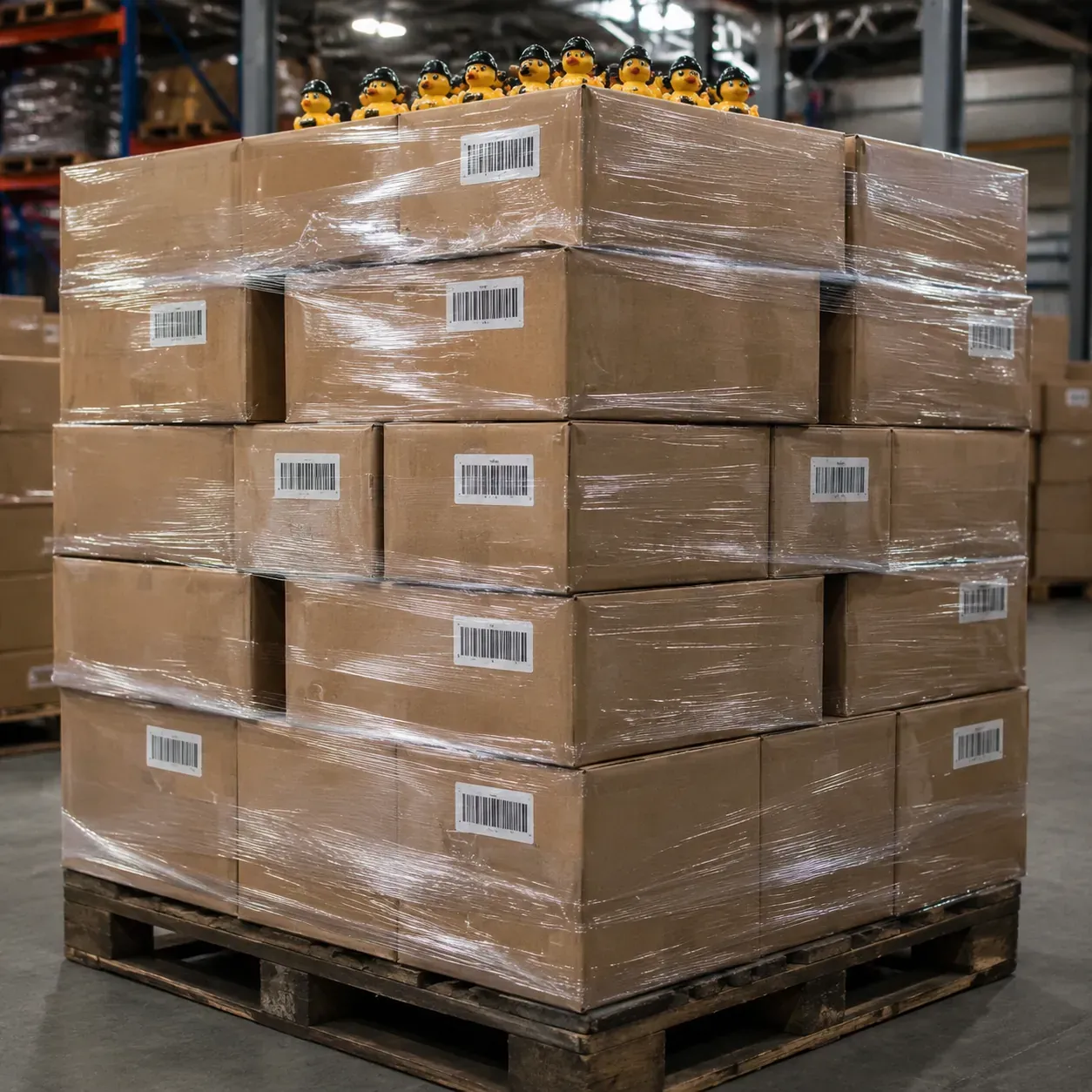
A series can be briefed in one page if these five answers are fixed before the first tool is cut.
- How many characters share one body, and which ones need a new tool?
- What does the dimension sheet fix, and what is allowed to differ?
- Which palette covers the whole set, and who keeps the colour references?
- How is the set approved, and what is kept as the family reference?
- Which character is the weakest on safety, and does it set the age grade?
Frequently Asked Questions
What makes a themed rubber duck series look consistent?
One body family, one dimension sheet and one print style. The characters can differ in colour and accessory, but the shared values have to be identical across the set. Consistency is a file decision, not a shelf decision.
Can several characters share one mould?
Yes, and sharing is usually the better choice. A shared body keeps the size and the base identical, and the characters are differentiated by print, colour and fitted accessories. The limit is the silhouette, which is why some series use two or three bodies.
Why do the ducks in one series end up different sizes?
Because each character was tooled or specified separately, or because the dimension sheet did not cover the whole set. A shared sheet with stated tolerances is what prevents the drift, and it should be agreed before the first tool is cut.
Do the characters in a series each need their own safety test?
The set needs a file that covers every character, and a character that adds a new material or accessory may need its own evaluation. The age grade is set by the weakest character, so the accessory is the first thing to check.
Final Note
A themed series is a small family of objects, and the buyer is really buying the family. The duck that looks best on its own can still weaken the set if it does not share the sheet, the palette and the approval.
The sheet, the palette and the group approval are the whole discipline. Keep the sheet with the retained set, and the next season starts from a reference rather than a guess. Four characters that belong together beat six that each need explaining. The set is the product, and the second season is where the discipline pays.
Key takeaways
- A themed series is judged as a set, not as a duck: A single duck is judged on its own charm.
- One body, many characters: the tooling fork: A series starts with the fork: the characters either share a body or each gets its own tool.
- Agree one dimension sheet before the first tool: The dimension sheet is the document that keeps the series consistent across tools, batches and seasons.
- Colour across the lineup is a material decision: A series needs a palette, and the palette has to be decided as a set.
- Approve the set, not the duck: A series approval is a group decision.
- Where a series becomes a safety question: A series multiplies the safety questions, because each character may add an accessory, a print or a colour that the others do not have.
- A series has to survive season two: A themed series is usually bought with a second season in mind, even when the first order is small.
- Five questions before the first tool: A series can be briefed in one page if these five answers are fixed before the first tool is cut.