A race logistics note for organisers who have to explain where every duck went.
A duck race is mostly a logistics project, and the ducks are the smallest part of it. The numbering, the recovery and the ledger belong before the first duck is printed, because the event day only rewards the parts that were decided weeks earlier. The race itself lasts minutes; the paperwork around it decides whether the fundraiser can be explained afterwards.
In short: a race needs a duck that floats upright, a number that stays legible in water, a flock that can be counted back in, and a ledger that reconciles numbers to ducks before the drop. Get those four right and the event is a logistics exercise. Get any one wrong and the finish line becomes an argument.
The duck is the event, and it has to float upright
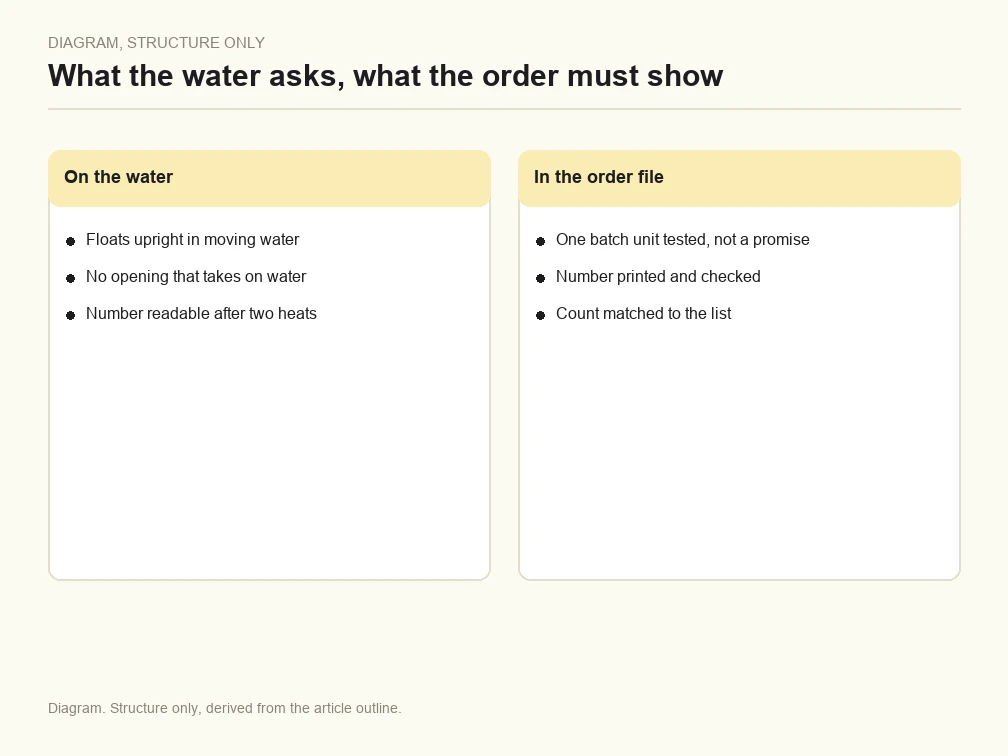
The ducks are the race, so their behaviour in water is the first thing to settle. A body that sits too low takes on water at the seam, and a body that sits too high turns sideways in any current. What the race needs is a duck that floats level in moving water and keeps its face up long enough to be read from the bank.
That is a design and a ballast question, not a decoration question, and it is settled before the numbering. The float balance note explains what moves the centre of gravity, and the float testing page shows how a batch unit is checked in a tank rather than assumed from a drawing.
One practical point decides most races: test a duck from the batch that will actually race, not a nicer unit kept in the office. Water finds the difference between the two.
The number is a record before it is a decoration
A number on a race duck has two jobs. It identifies the duck at the finish line, and it records which ticket the duck belongs to. The first job is decoration; the second is the fundraiser, and the second one is why the number has to survive water, handling and two or three heats without lifting at an edge.
Print is chosen for that, not for looks. A pad printed number sits in the surface, a label sits on it, and a label is only as good as its adhesive on a wet body. The quality inspection page covers what a batch check looks for, and the same check applies to the number: rub it, soak it and read it from a few steps away.
The number range also has to be decided before print, because the list is the thing that gets sold. A race that prints numbers first and sells tickets later is a race that will one day have two tickets for one duck.
A race duck is also a family toy
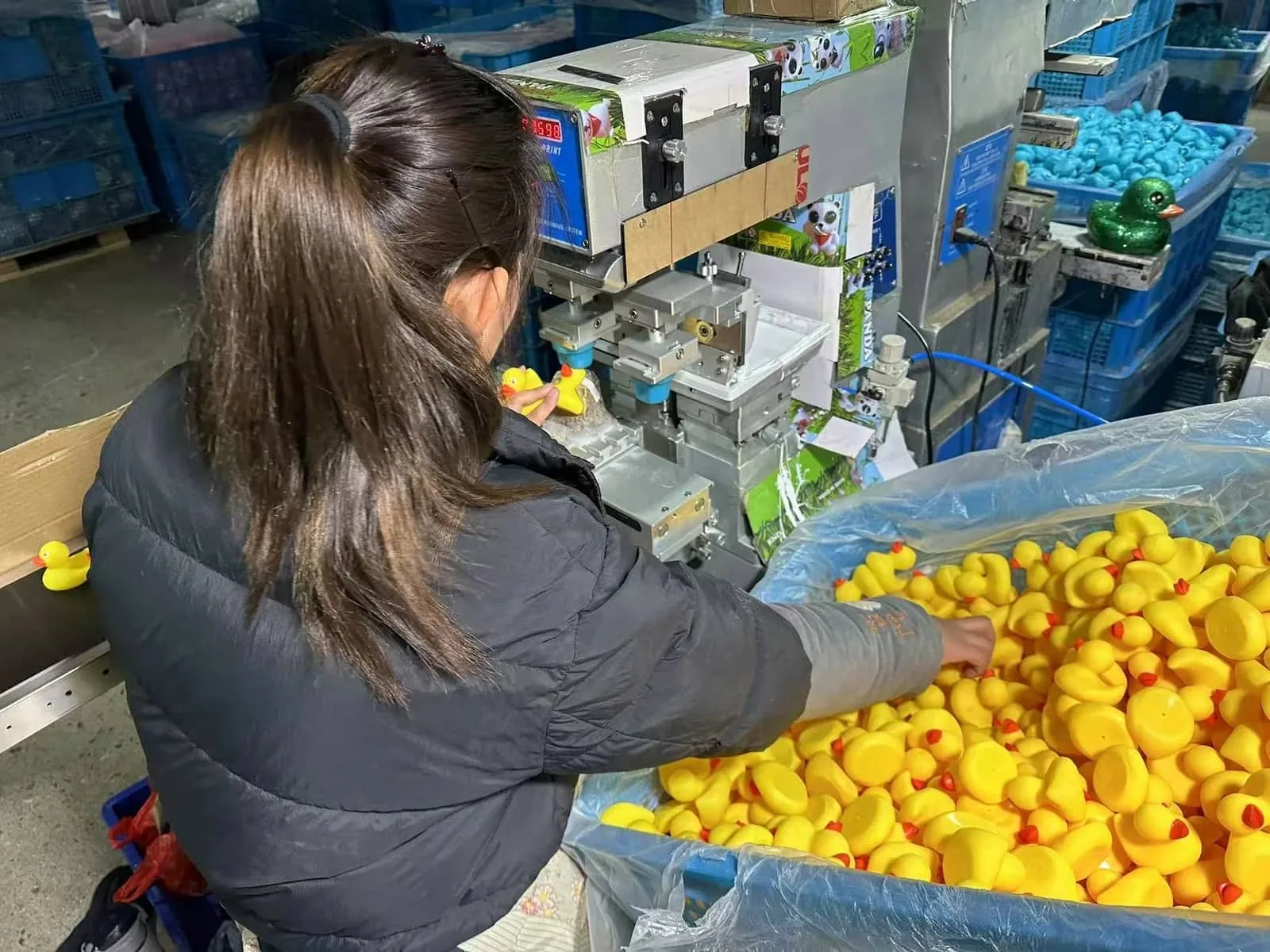
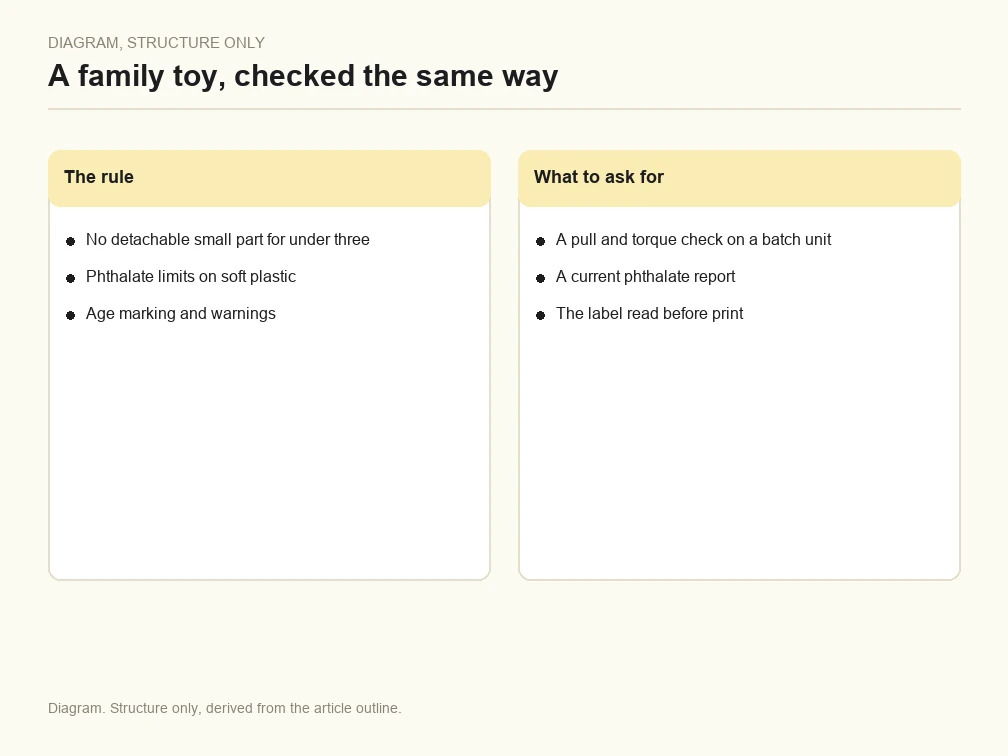
Most race ducks go home with a child, so the duck is a toy and is judged as one. The two rules that come up most often are about what can come off and what the soft plastic contains. A toy intended for children under three falls under the small parts rule at 16 CFR 1501, so an eye, a beak or a hat that can be pulled free becomes a defect rather than a detail (Cornell LII).
Soft plastic brings the phthalate rules into play, and a current report is the only thing that answers it (CPSC). A race committee that has not asked for either document is planning to answer the question after the event, when the ducks are already in homes.
None of this changes the race. It changes the specification that goes to the supplier, and it belongs in the same conversation as the number range.
The water and the recovery plan decide the permit
The venue decides more of the race than the ducks do. A stream, a canal and a pool each need a different start, a different finish and a different recovery method, and the recovery plan is usually what the permitting body reads first. A race that cannot say how every duck leaves the water is a race with an environmental question attached.
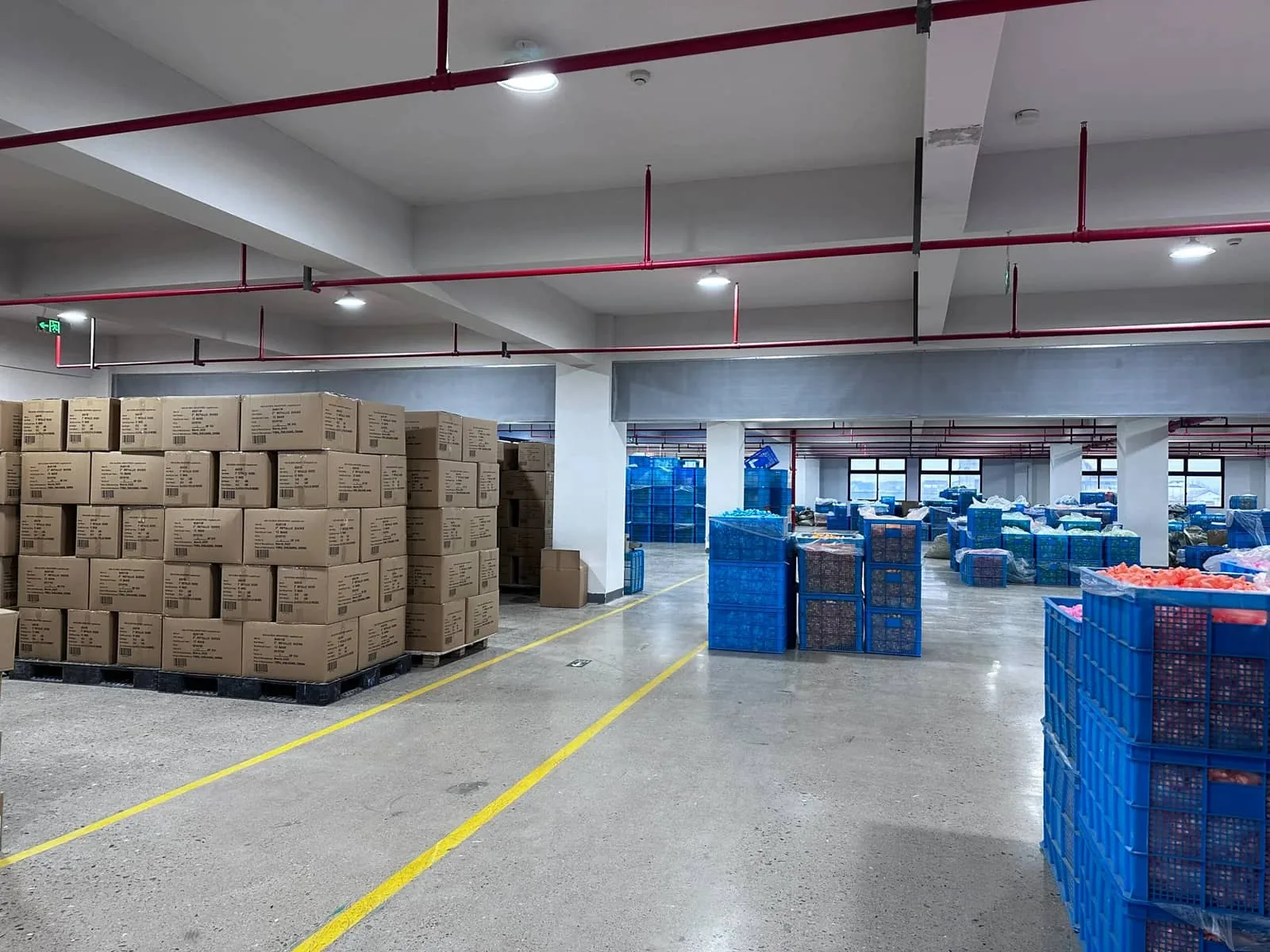
The recovery plan has three parts: where the flock is stopped, who collects it, and where it is dried and stored. A net or a boom at the finish line handles the first. Volunteers handle the second, and they need a count to work against. The third is the part organisers forget, because a thousand wet ducks need space and air, not a stack of bin bags in a van.
The fundraising page covers the event side, and the rubber duck guide covers the body itself for a committee choosing its first flock.
Reconcile the ledger before the drop
The ledger is the part that decides whether the committee can explain the event to its own treasurer. Three numbers have to agree before the first heat: the numbers printed, the ducks in the water and the tickets sold. If the first two disagree, the race has a duck with no owner. If the second and third disagree, the race has an owner with no duck.
The reconciliation should run in public, with the count sheet open, before the start. It takes ten minutes and removes the one question nobody wants to answer at the finish line.
| Step | When | What it closes |
|---|---|---|
| Number list signed | Before print | Which numbers exist and which were printed |
| Batch counted | On delivery | Ducks against numbers, with spares held back |
| Tickets reconciled | Before the drop | Tickets against numbers in the water |
| Finish readings logged | Each heat | Which duck arrived and in what order |
| Flock recounted | After collection | Ducks back against ducks dropped |
The table is not administration for its own sake. It is the only way to answer a sponsor or a participant without guessing, and it is the reason a second race is easier than the first.
After the last heat: dry, count and return
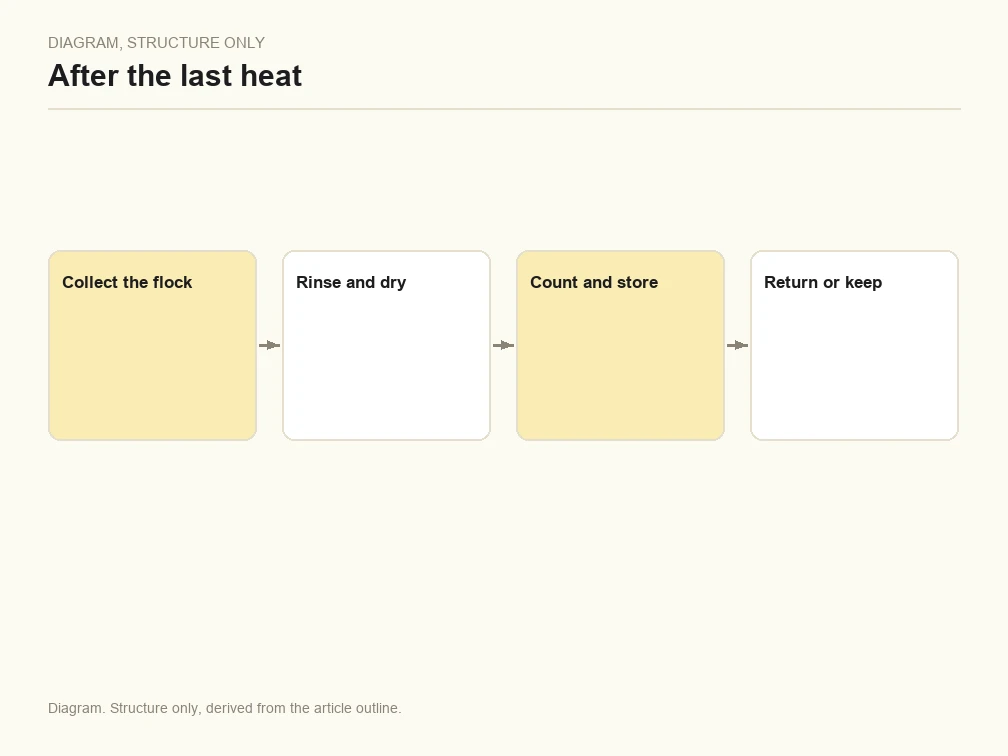
The race ends when the ducks are dry, not when the last heat finishes. Wet ducks that stay bagged go mouldy at the seam within a day, and a duck with a bloom of mildew cannot be sold, stored or given away. Drying needs air and space, which means the recovery plan has to name a dry room before the event is approved.
Then the count. The flock that came out is compared with the flock that went in, and the difference is either a duck still in the water or a duck that went home early. Both need a line in the ledger, and neither is a crisis if the plan expected it.
The last decision is what happens to the flock afterwards. Some committees keep it for the next year, some give it to the volunteers, and some sell it as a second fundraiser. Each choice is fine, as long as it was made before the event rather than at the cleanup.
Frequently Asked Questions
How are race ducks numbered?
Usually by pad printing a number on the base or the back, in a range agreed before print. The number has to survive water and handling, so it is printed rather than labelled where the budget allows, and each number is logged against a ticket before the race.
How many ducks does a first race need?
That depends on the venue and the ticket target, not on a fixed rule. The useful approach is to set the number from the finish line capacity, the recovery crew size and the number of heats, then print the full number range in one batch so the list stays continuous.
What happens to the ducks after the race?
They are dried, counted and either stored for next year, given to volunteers or sold again. What matters is that the decision is taken before the event, because wet ducks stored in bags will not survive a year.
Do race ducks have to meet toy safety rules?
They are toys, so yes, whoever takes them home is buying a toy. That means the small parts rule for under three and the phthalate limits on soft plastic, both of which are answered with a test on a batch unit and a current report, not with a claim.
Five questions before the drop
- Will the ducks float upright in moving water, and has that been tested on a unit from this batch?
- Is the number permanent enough to read at the finish line after two heats?
- Does the flock have a recovery and drying plan, and does the permit depend on it?
- Are the ducks safe for the children who take them home, with nothing that pulls off?
- Does the number list reconcile to the ducks before the drop rather than after?
Five answers, written down, are the difference between an event and an incident.
Final Note
A duck race looks like a hundred small decisions made on the day. It is really four large ones made weeks before: the body that floats, the number that lasts, the recovery plan and the ledger. The ducks are easy to replace and hard to explain.
A race planned from the ticket page backwards is the version to refuse. The ticket page is the last thing that should change, and the ledger is the first thing that should exist. A committee that starts with the ledger has already answered the awkward questions, and a committee that starts with the tickets will meet them on the bank with a microphone in its hand.
Key takeaways
- The duck has to float upright: the body is the race, so test a unit from the batch.
- The number is a record: it belongs to a ticket before it belongs to a duck.
- A race duck is a family toy: the small parts rule and the phthalate report follow the flock home.
- Reconcile before the drop: three numbers have to agree before the first heat.
- Dry, count and return: the race ends when the ducks are dry, not at the finish line.