A duck range assembled one catalogue page at a time is not a product line, because a list of things a factory can make has no jobs in it. The buyers who reorder cleanly are the ones who sorted the range before the first brief, so every duck in it has a job, a band and a packing answer written down. That sorting runs on three axes, and it is the work this page sets out.
In short: sort every duck by three axes before the first brief. Size decides the carton and the freight, theme decides the palette and the finish, and use decides the body, the material and the file. Build the range as a map of rows rather than a catalogue of pages, approve it one band at a time, and count how many of each band fill a carton before the first tool is cut.
Three axes before the catalogue
A duck catalogue is a list of things a factory can make. A duck range is a set of jobs with a duck assigned to each one, and the three axes are how the jobs get separated. Size decides what the duck can physically do. Theme decides what it looks like and how many colours the print has to hold. Use decides whether it sits on a desk or in a bath, which is where the body, the material and the safety file come from.
The order matters, because each axis constrains the next. Decide the use first and the size follows, since a bath duck for a toddler has a band that works and a display duck does not. Decide the theme first and the palette follows, because a muted corporate family and a high saturation party range are printed differently on the same body. Decide the size first and everything else has to fit around the carton, which is the axis that punishes late changes hardest.
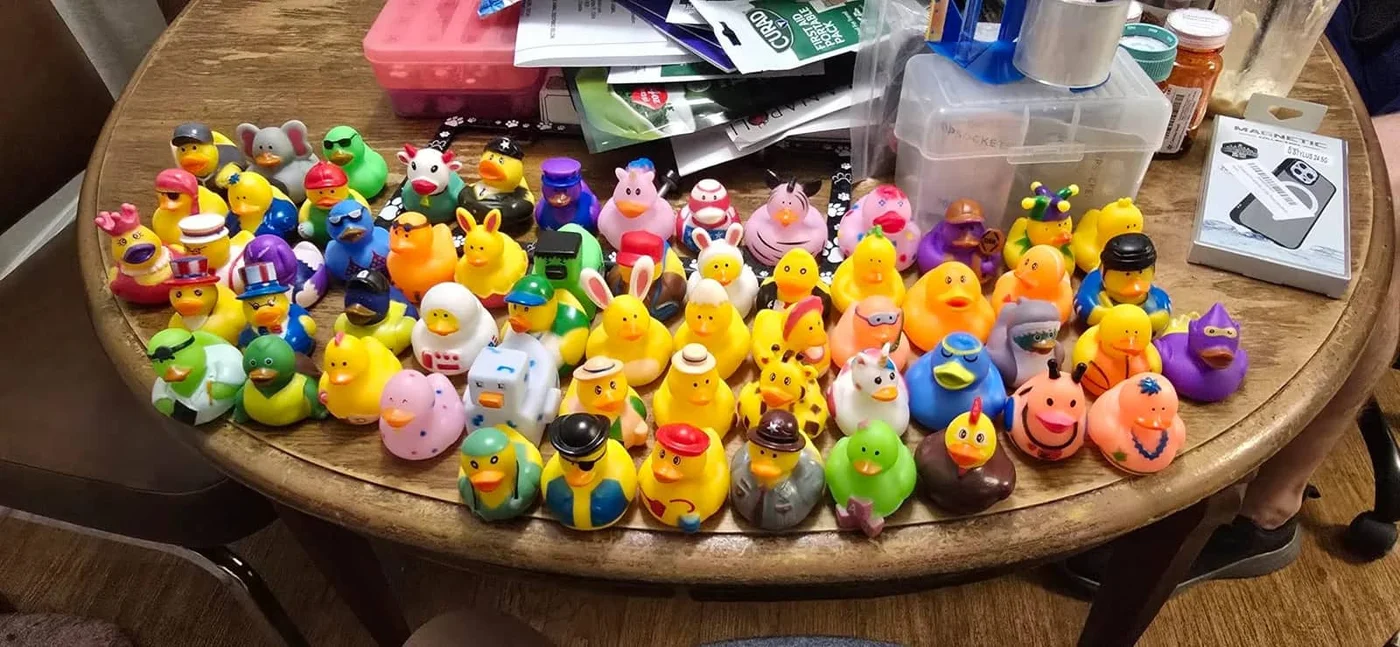
The reason to do this at the brief stage rather than at the sample stage is that a sample is a repeatable object and a tool is not. A resized duck is a new tool. A recoloured duck is a new proof. A re-sorted range is a conversation, and a conversation is the least complicated thing on the list. Our range notes for gift shops work through the same sorting from the retail side.
Size: the band is a job, not a measurement
Buyers talk about size as a number on a ruler, but the bands that reach a purchase order are job descriptions. A duck that has to read from across a shop is not the same object as a duck that has to fit in a party bag, and the drawing that suits one is wrong for the other.
| Band | The job it does | Packing note |
|---|---|---|
| Keychain and mini | Charms, mail inserts and volume items | Compresses, so a carton holds a large count |
| Small | Party bags and prize bins | Mixed cartons, light single weight |
| Standard | Bath duck, logo programmes and retail | The default custom shape for most ranges |
| Large | Corporate gifts and shelf displays | More print area, fewer per carton |
| Jumbo | Display pieces and photo props | Packed more like plush, often crated |
The standard band is where most logo programmes live, because it holds a readable print, it sits in a hand and it packs in useful numbers. Volume is what makes size consequential rather than height: a duck that doubles in every dimension takes eight times the space, because the body grows in three directions at once. That is also why the height line alone is not enough, since a tall narrow duck and a tall long duck are different cartons.

Step back from one duck and the bands matter more than the measurement inside them, because the band is what a buyer reorders. The size assortment notes cover how the bands are sold rather than how they are made.
Theme: one family plus an accent
A theme is a palette decision before it is a character decision. The briefs that reach a factory fall into three colour families: the muted natural family of cream, sand, sage and soft brown, which reads as premium and photographs without a hard glare; the high saturation family, which is loud at a distance and works on a trade show table or a shelf front; and the translucent family, which reads light and needs a backlit display to show it.
A workable range is usually one family plus an accent, with the accent repeated across the range so the ducks still look related. The exception is a collectible series, where the variety is the product and buyers expect every duck to be different. Our palette notes work through the families and where each one earns its place, and the themed duck notes cover the character and outfit side.

Two rules keep a theme from drifting. The first is that a colour name travels badly between a designer, a buyer and a factory, so every shade needs a numbered reference plus a physical chip, and one line on the order saying which reference governs if a later document disagrees. The second is that the theme has to be checked on the body, because a gloss body amplifies colour and shows every mould line, while a matte body hides surface variance and mutes the shade.
Use: the body, the material and the file
Use is the axis buyers skip, and it is the one that decides the body. A duck that will sit on a desk can be hollow with a squeaker, gloss finished and packed in a polybag. A duck that will go into a bath has to keep water out, which is a different body, because a squeaker has to move air and an opening that lets air in also lets water in when the duck is squeezed under the surface.
Material follows the same logic. PVC is the workhorse and is available in a phthalate free compound, TPR has no plasticiser and feels more rubber like, and silicone is inert and available in food contact grades, each with its own ink and adhesion behaviour. The material comparison sets out where each one belongs, and the scaling notes explain what a new size redraws.
The file follows the use as well. A duck designed, manufactured or marketed as a plaything for children under fourteen is a toy, and a new size is a new article for testing: a duck tested in one band does not automatically clear a larger version cut from a new mould. The CPSC toy safety guidance puts the certification boundary at products intended primarily for children twelve or younger, which is the sentence that decides whether the range needs a report per band or one report per family.

Paint and print are a separate line from the body. In the United States, 16 CFR 1303 treats paints and similar surface coatings that contain lead above the set limit as banned hazardous products, while an ink that becomes part of the substrate is a different question. That is why a painted detail and a printed mark should be named separately on the brief, and why one test report rarely answers both.
The product map on one page
Once the axes are decided, the range fits on one page, and that page is what a factory, a distributor and a store buyer can all read. Build it as rows, with one duck per row and the four columns that decide everything: the job, the band, the theme and the pack.
| Row | Job | Band | Theme and pack |
|---|---|---|---|
| Anchor | The duck the channel already sells | Standard | Classic body, one colour family, polybag or plain box |
| Seasonal | A rotating theme for a fixed calendar slot | Standard or small | One family plus an accent, themed box or header card |
| Gift | A duck that has to look like a gift | Large | Muted palette, window box or gift box |
| Volume | The least prominent item in the bag | Mini or small | One or two colours, compressed packing |
| Display | The object that sells the range | Jumbo | Full colour, crated, no polybag |
The page does two jobs. It shows the buyer where the gaps are, which is usually one row with no owner rather than one row too many. And it gives the factory a single document to work from, so the tool, the print and the sample all refer to the same row instead of to five separate messages. Five rows is a range. Twelve rows in one store is usually a shelf arguing with itself.
The five lives a duck gets bought for
Most duck ranges are really five different purchases sharing one shape, and naming the purchase is the fastest way to sort a catalogue that has grown without a plan.
The bath life belongs to a body that holds water out and dries, and it needs a drain answer before the artwork. The desk life belongs to a duck that has to survive being picked up, and it is where a printed mark matters more than an outfit. The promotional life belongs to a duck that has to read at arm's length in a photograph taken with one hand. The community life, where a duck is left on a stranger's car, belongs to a simple body with one strong colour and no attached parts. The display life belongs to the very large duck, where the conversation is packing and freight rather than print.
None of those five needs a separate company. They need separate rows on the map, because a range that mixes them without naming them sells the same duck to five buyers who each want something slightly different. The souvenir notes show the same sorting from a destination shop's side, and the large duck notes cover the display end.
Where the map meets the sample
A range is approved one band at a time, not one duck at a time. The silhouette and the character transfer between sizes, and so does the colour formula, which is why a family looks like a family. What does not transfer is the wall and the print area, so the logo position has to be re-approved at every size, and a family approved from one sample is how a mini ends up with an unreadable mark.
The approval medium matters too. A photo is enough for the shape, the print position and the pack. A video is the best medium for a squeeze, a float or a hinge. A physical unit is the only way to judge colour, texture and print registration. The sample approval guide sets out the three, and the practical route is a photo first and a physical unit for the final sign off.
Whatever the medium, the approval has to be written, with the version, the date and the checks named. A range approved across five messages and two sizes is a range that will be re-argued at the container, and the retained unit from the first run is what settles it. The artwork file notes cover the file side, and the reorder notes cover what a second run should be compared against.
Where the map meets the carton
The carton is the last place a range gets decided and the first place a mistake shows up. A mixed range does not have to mean mixed cartons: assorted packs let every box feel different from one order, and mixed orders can be packed by store, region or event, with each carton counted and labelled for the channel it is going to.
The pack also has to match the band. Minis compress, which saves real volume at quantity. A standard hollow duck packs in useful numbers to a carton, and a jumbo packs in dozens, because the duck has crossed from toy packing into something closer to plush packing. Volumetric weight starts to matter at the top of the range, and a buyer who mixes bands without checking carton fill usually meets that problem after the range is approved rather than before.
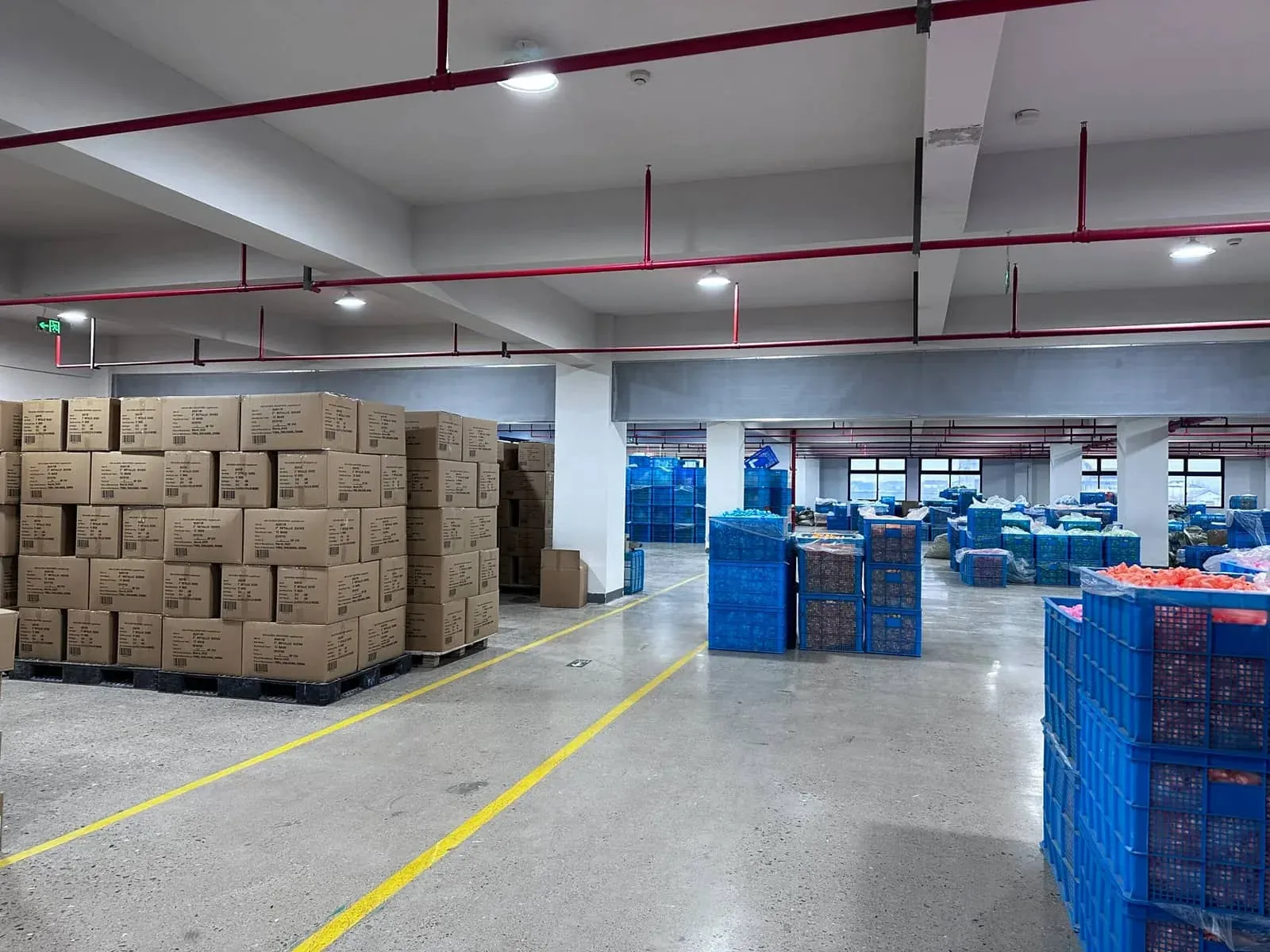
My rule is simple: never approve a range without a packed carton count for every band in it. It takes one question, and it is the only line on the page that tells the buyer how the range will move rather than how it is made. The carton specification notes cover how the count, the marks and the pallet fit together, and the print method comparison covers the last decision that belongs on the same page.
Five questions that sort a duck range
- What job does each duck have to do, and which band does that job point to?
- Are the steps between the bands close enough that one design still reads as one range?
- Is the theme one family plus an accent, and does every shade have a numbered reference and a chip?
- Does the use require a sealed body, and does the age guidance change the material or the file?
- Has anyone counted how many of each band fill a carton before the first tool is cut?
Five answers take an afternoon. They are also the difference between a range that reorders cleanly and a bag of ducks with no plan between them.
Frequently Asked Questions
What size duck should a first order start with?
Start with the band the channel already sells. A promotional buyer usually needs the standard band, a gift shop may want the large band, and a race or a party favour wants the mini. Add a second band once the first one has sold, because two bands prove the mapping and five bands prove only that the catalogue was large.
Can one design cover the mini, standard and large bands?
Yes, with a separate mould for each band. The silhouette, the character and the artwork transfer, but the wall, the print area and any accessory are re-engineered per size, and the mark is re-approved at each one. That is why the map is built from rows rather than from a single hero duck.
Does a theme need a new mould?
No. The tool defines the shape, so the body colour, the outfit and the print can change on the same duck. A theme refresh is a palette, proof and approval decision, which is why a seasonal row can sit on the anchor's tool for years without a new investment in tooling.
What has to match between the bands in one range?
Three things: the design language, the colour reference and the print position relative to the duck. Keep the retained unit from each first run and compare a new band against it rather than against a screen, because a screen flatters a shade and hides a print edge.
Final Note
A range that reorders cleanly is a small piece of paperwork that was done before anybody drew anything. The ducks themselves are ordinary, and that is the point: the map does the work, and the objects only have to match it.
I would rather approve five rows I can defend than twenty that look impressive in a catalogue, because the five rows are the ones a buyer can reorder without a conversation. The map also survives staff changes, which is the part nobody plans for: the person who built the range leaves, the rows stay, and the next buyer can see why each duck exists without asking anybody.
Sort the range, then cut the tool. The order is the whole method, and it is the only part of the work that cannot be fixed later without paying for it twice.
Key takeaways
- A catalogue is not a range; a range is one duck per job.
- Size, theme and use are a sequence, not a checklist.
- Use decides the body, the body decides the material and the file.
- A theme refresh does not need a new mould; a new size does.
- One family plus an accent keeps the range related.
- A new size is a new article for the safety file.
- Approve one band at a time and keep the retained unit.
- Never approve a range without a carton count for every band in it.