Skip to content
The giant rubber duck is not a novelty, it is a land use decision, and the cities and malls that keep booking it are making a math-driven call about foot traffic, media, and dwell time.
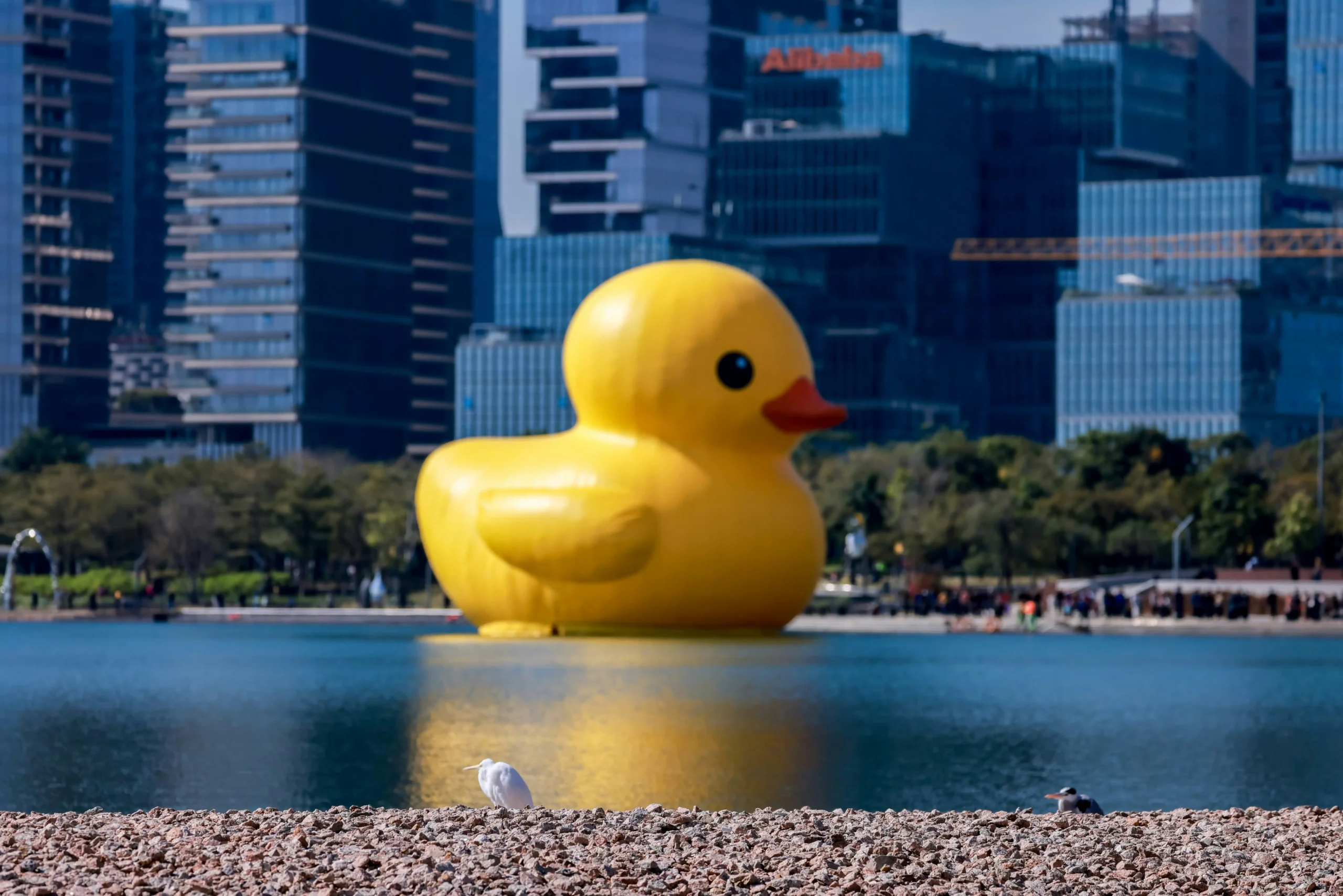
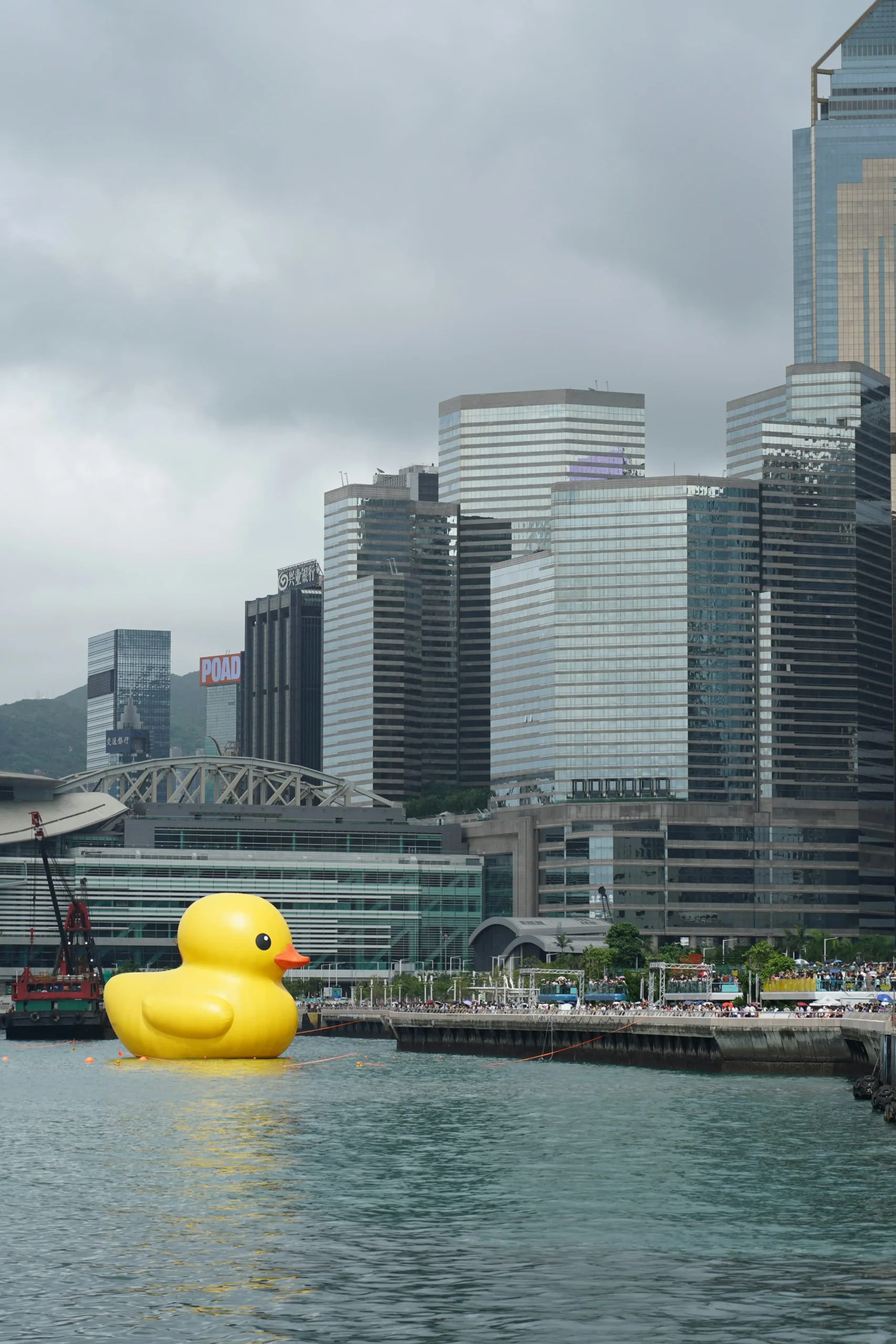
A five-meter inflatable duck parked beside a river turns a public space into a destination for the weekend, and the reason it keeps working is that the cost sits against the foot traffic and the press coverage it pulls, not against the duck itself. For a mall operator, a tourism board, or an events agency weighing a large duck on a harbor or a plaza, this guide breaks down why the format keeps getting booked, the sizes and the budgets a buyer actually quotes, the weather and anchor risk that decides whether an install is safe, and the production path from a custom mold to a certified inflatable. The artist whose installations started the modern wave is documented by Florentijn Hofman, and the anchor and material logic is the one our giant duck line and the sizing guide in our size chart are built around.
1. Why the giant duck keeps getting booked
The duck works because it converts a location into a photograph. A city or a mall books it for a window, and in that window the object does three jobs: it pulls a crowd that would not otherwise come, it gives local media a visual that runs for free, and it stretches the time a visitor stays. A standard duck race draws the people who already come; a giant duck draws the people who drive over to see it, and it is that new traffic that a tourism board is paying for. The same pull is what our foot traffic giveaways guide describes at a smaller scale, and the media hook is the reason the format survives year after year.
2. The sizes and the budgets a buyer quotes
Large rubber ducks split into a few useful bands rather than a single spec. A promotional-scale duck runs about 1.5 to 3 meters, a large custom duck runs 3 to 5 meters, and an installation-scale duck runs 5 to 10 meters or more, with the big public-domain pieces reaching tens of meters and the giant inflatable version running to several meters before any fan is switched on. The budget follows the size and the structure: a stock inflatable is the cheapest and fastest path, a custom mold adds a tooling cost and a 6-to-8-week clock, and a certified outdoor inflatable adds a material and anchor specification that changes the quote. The weight bands behind each size are mapped in our landed cost guide, and the quote logic is the same one our price tier guide applies to any bulk duck run.
| Scale | Approx. height | Typical booking | Budget driver |
|---|---|---|---|
| Promotional | 1.5-3 m | Store in-store display, small event | Stock inflatable, no mold |
| Large custom | 3-5 m | Mall center court, festival stage | Custom mold + branded skin |
| Installation | 5-10 m | Harbor, plaza, city tourism drive | Certified outdoor inflatable + anchor |
| Giant icon | Tens of meters | Landmark-scale public art | Design, engineering, permits |
3. The anchor and weather risk that decides an install
The honest risk in a giant duck is not the skin, it is the wind and the anchor. A big inflatable catches a lot of air, and the load on a tether grows with the exposed surface area and the square of the wind speed, so an installation that works at 20 km/h can become unsafe at 40 km/h. The practice is to design for the local design wind, to spread the load across multiple anchor points, and to have a wind-out threshold where the structure is deflated and secured. A certified outdoor duck carries the anchor and the material specification on the quote, and a buyer who skips that to save money is taking the weather risk instead of the supplier. The engine and the blower set a minimum continuous power, and the pump-and-fan rule is the same one we treat as a controllable line in our weight guide.
4. The production path: custom mold or certified inflatable
Two production routes exist, and the choice is not about which is bigger, it is about whether the duck needs to be a branded shape and whether it needs to be a safe outdoor object. A custom route starts with a mockup, then a mold, then a durable skin, and a 3D prototype and a sample settle the design before the run, with a 6-to-8-week mold clock on a bespoke shape. An inflatable route starts with the material, the seams and the blower rating, and it takes the outdoor certification. The material side is the same PVC and TPR split we compare in our material comparison, and the mockup is where a large duck’s print and Pantone are locked before any tooling is cut.
5. Pricing the duck against the event window
A duck is rented or bought against a window, usually a weekend or a two-week season, and the sensible question is the cost per visitor. If a 5-meter installation with a branded skin books for a set fee and the event pulls a given number of paying or visiting people, the operator can compare that cost per head against a banner ad or a marquee act, and the duck often wins because it is a physical draw that also makes media. On the buy side, the MOQ is the thing a first-time buyer trips on: a custom large duck needs a minimum run to justify the mold, and the same MOQ logic that governs a 1,000-unit giveaway governs a giant duck’s tooling. Reach the placement list and the fixture budget before the quote, and the window becomes the value unit.
6. How to spec a giant duck without overbuilding
Spec the duck in writing and the install stops being a gamble. Put the height band, the material and the outdoor certification, the anchor method and the wind-out threshold, and the blower rating, and confirm all of it on the approved sample rather than on a generic catalog figure. Then put the window, the expected foot traffic, and the media value on the same proposal page, so a plaza owner can see the cost against the return. That is the way a giant duck stops being a bit of fun and becomes a booked, repeatable, defensible event, and it is the same discipline our custom duck program applies to any scale of order.
Frequently asked questions
Why do cities and malls keep booking a giant duck?
Because it converts a location into a photograph, pulling new foot traffic, free local media, and longer dwell time against a short event window.
How big does a giant duck actually get?
Operationally a large duck runs 3-5 m, an installation-scale duck 5-10 m, and the big public pieces reach tens of meters, each with its own budget and anchor spec.
What is the riskiest part of an install?
The wind and anchor, not the skin, because a tall inflatable catches air whose load grows with exposed area and the square of wind speed, so a wind-out threshold is essential.
Should a city buy or rent a giant duck?
Most book a certified inflatable for a window and compare the cost per visitor against other draws, reserving an owned custom duck for a repeat flag or a flagship event.