A duck's shelf life is a storage question rather than a manufacturing one, because the duck that leaves the line is not the duck that arrives at an event two seasons later. Vinyl does not expire the way food does, so stock gets handled as if time cannot touch it, and the changes that do happen are quiet: appearance and fit. Both are decided by where the cartons sat, not by anything that happened at the mould.
In short: bulk ducks keep for years when the room stays moderate and stable, the rack stays out of direct sun, cartons stay sealed until picking, and stacks stay within what the box can carry. Rotate first in, first out, label every carton with a receipt date, and open one carton per batch before the season. What fails first is appearance and fit, not the vinyl itself.
A stored duck ages in appearance, not on a calendar
Nothing in a stored carton announces that it has turned. The body stays soft, the eyes stay set and the print stays where it was placed. What changes is the surface: paint flattens, a printed detail dulls, a seam that was tight can lift, and an attached piece can sit less square than it did. None of that shows on a delivery note, and none of it is visible until a carton is opened.
The order of failure is fairly consistent. Seams and attached parts go before the finish, and the finish goes before the colour. That order is useful in a storage room because it tells a buyer where the first ten minutes are best spent. If a seam has opened, the print underneath is a second question; if the seam holds and the print has dulled, the conversation is about a coating and not about the body.
The useful conclusion is that shelf life is not one number. It is a set of conditions, and the conditions decide whether the same batch looks new or tired after the same length of time.

Heat, light, pressure and moisture are the four causes
Four conditions do most of the aging, and only one of them is about the calendar. Heat softens the body and works on the print, light moves the pigment in painted detail, pressure flattens what sits at the bottom of a stack, and moisture traps damp inside a bag. A room that is warm and swings with the weather is worse than a room that is merely warm, because the material has to absorb the change as well as the temperature.
| Condition | What it does to stored stock | What to check |
|---|---|---|
| Heat | Softens the body, works on the print and ages the squeaker | Whether the room is stable, not only whether it is cool |
| Light | Moves the pigment in painted detail | Whether daylight reaches the rack |
| Pressure | Flattens the bottom layer and leaves a set | How many cartons sit in one stack |
| Moisture | Traps damp inside a bag and feeds mould | The vents in the bag and the leaks in the room |
The test is not whether the room feels warm on the day of the visit. It is whether the room changes. A stable interior rack beats a cooler corner that swings with the season, and a dry rack beats a sealed room that holds damp against the cartons.

What the carton already does, and what it cannot
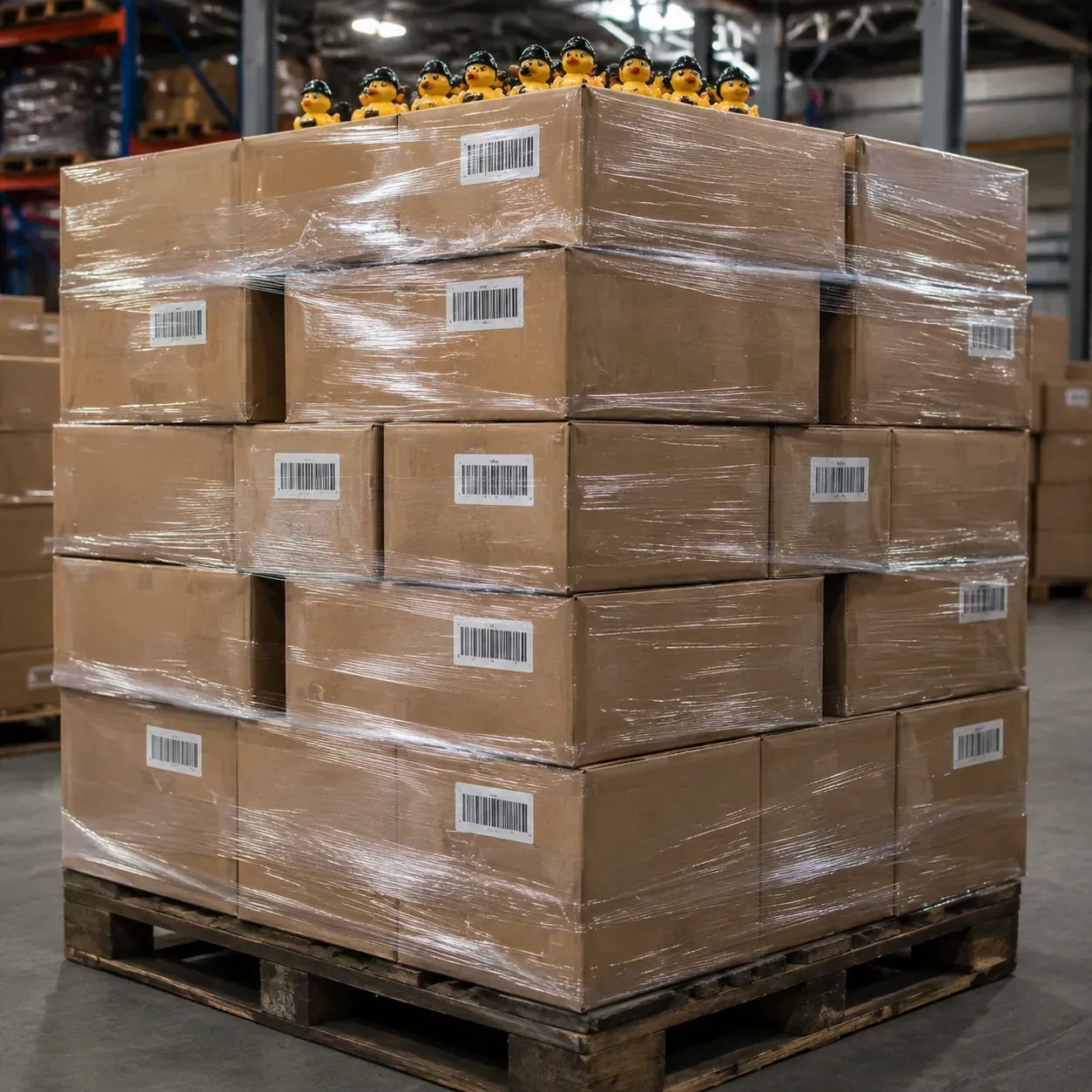
A carton is a storage decision before it is a shipping decision. Ducks are bagged or boxed so the print is not rubbed against a neighbour, cartons are marked with the style and the destination, and mixed orders are packed by store, region or event so a delivery can be split without opening every box. That work is done at packing, and it keeps working on a rack months later.
What the carton cannot do is keep stock identifiable if nobody writes on it. A box that says only a quantity becomes the one at the back of the rack that nobody opens until it is two seasons old. A box that carries the style, the batch and the date it arrived can be put in the right place and picked in the right order. Sealing matters for the same reason: a bag keeps dust out of the seams and keeps the count honest, but a carton opened for a photograph stops being sealed stock the moment it is closed again.
Stack height is pressure that leaves a set
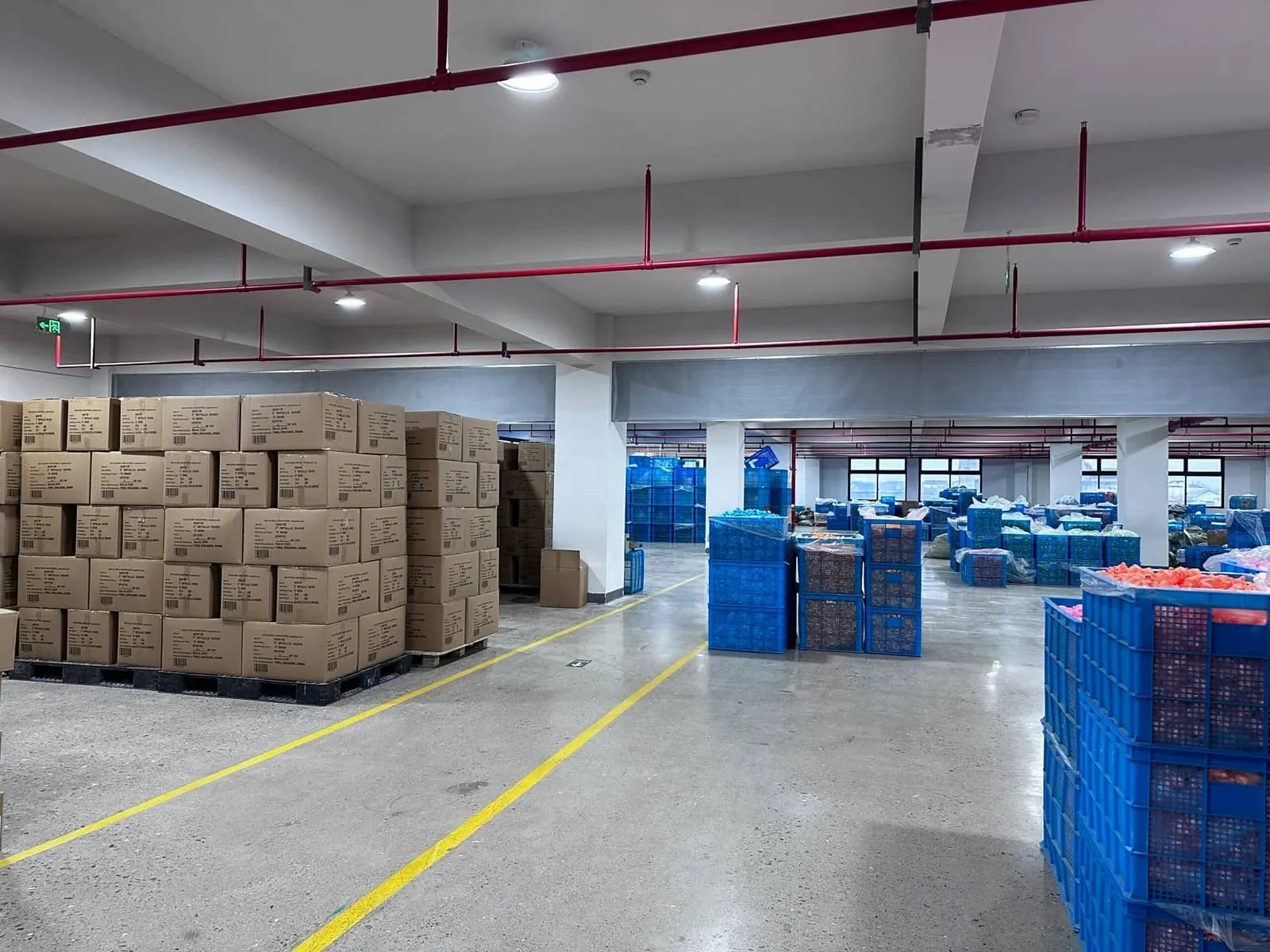
A duck body has a memory, which is why it returns to shape after a squeeze. The same property makes it vulnerable to a long, steady load. A carton stack that exceeds what the box can carry flattens the bottom layer, and a duck compressed for months may recover slowly or not at all. The rule is short: keep the count per stack within what the box can carry, put the heavier stock at the bottom, and do not let a seasonal pallet grow a second storey because the rack ran out.
The failure is easy to find once you know where to look. Open a carton from the bottom of a stack and check the ducks along the base of the box: a flat edge on a tail or a wing means the stack told you something about itself. The ducks above are usually fine, which is why the problem survives a walk around the room and only appears when the last carton is finally used.
Stack height also interacts with heat. A dense stack holds warmth longer than a single layer, so a pallet parked near a door is both compressed and warm, and the two effects arrive together. A giant duck is a different load again, because one body can weigh more than a carton of mini ducks, and the large duck packaging notes cover the sizes that need a box of their own.
First in, first out that a busy season can follow
First in, first out is the oldest rule in storage and the one most often painted on a wall instead of written into a routine. The version that survives a busy season has three parts: every carton carries a receipt date, the rack is loaded from one end, and the picker takes from the other. No memory, no judgement, and no argument about which pallet looks newer.
A batch mark is what makes the routine checkable. The CPSC's toy safety guidance describes the producer marking rule for a toy's product or packaging, and the CPSC's tracking label guidance explains the permanent distinguishing marks that make the location, date of production and batch or run number ascertainable. For storage, the useful consequence is narrow: a carton can point to a batch rather than to a delivery note, so the oldest box can be found without opening everything on the rack.
A damp room turns a cosmetic problem into a total loss
Moisture is the condition that changes the size of the problem. A polybag without vent holes holds damp around the duck, and a room with a leak or a cold wall gives that bag something to hold. The result is not a dull print but a spotted surface, a musty smell and, in the worst case, mould on the bag and the carton. The fix belongs to the pack specification and the room, not to the duck.
The practical order is to keep the room dry first, then specify the bag, then check the stock. A vented bag in a wet room still ends badly, and a dry room with a sealed bag only delays the moment the bag is opened. Where stock has already been in a damp corner, the cleaning question comes before the selling question, and the bulk cleaning notes set out what can be recovered and what should not be placed in front of a customer.
The check that takes ten minutes per batch
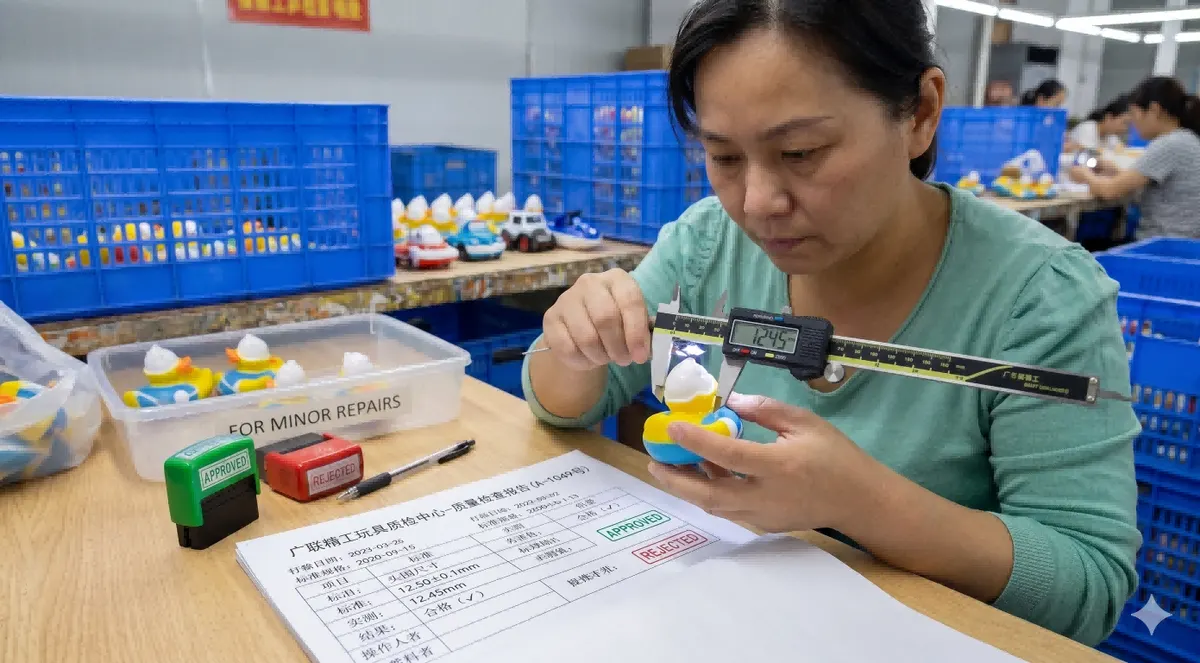
One carton per batch, opened before the season, answers most of the questions a storage room raises. Look at the seam, then the attached parts, then the print, then the colour. Bend a duck gently and let it return. Check the base of the carton for a flat edge. Smell the bag. That is ten minutes, and it is the difference between finding a problem while there is still time to react and finding it on the morning of an event.
The check is also a record. Write the date, the carton, the batch and what was seen. A record turns a single inspection into a comparison, and the next check has something to measure against. The durability test notes explain what each of those checks is actually looking for, which helps a buyer describe a problem to a supplier in terms the supplier can act on.
What the check cannot fix
A check can tell you the state of the stock, and it cannot put a batch back the way it was. If the print has dulled across a layer, no amount of rotating will restore it, and a duck that has taken a set will not straighten because the carton was moved. The honest limit of any shelf life promise is that it describes conditions rather than a date, and a promise that ignores the room is not a promise.
That is why the check should happen before the order is placed as well as before the season. If the room cannot hold a batch well, the right answer is to hold less stock for less time, not to add a second rack in the same corner. Storage planning and order planning are the same conversation, and the demand forecasting notes explain how the end date of a season changes the size of the batch a buyer should hold.
Four questions before the cartons go on the rack
- Which wall or corner will the cartons sit against, and does daylight reach it?
- How many cartons will one stack carry, and what is at the bottom?
- Does every carton carry a receipt date and a batch mark that a picker can read?
- What will be checked before the season, and who writes the record?
A storage plan that answers all four is a plan. One that answers two is a hope with a rack in it. The answers also set the size of the job: a dry interior wall with a shallow stack needs no extra equipment, while a room that swings with the weather needs a different location rather than a better label. Write the answers down, put the date on the carton, and keep the record with the batch.
Frequently Asked Questions
How long can bulk rubber ducks be stored?
There is no single number, because the room decides more than the calendar. A batch held in a moderate, stable, dry space out of direct sun and within its stack limit can stay usable for years, while the same batch in a warm corner by a loading door can look tired within a season. Treat any stated period as a condition dependent figure and check a carton before relying on it.
Does a vinyl duck expire?
The vinyl itself does not expire on a date. What ages is the appearance and the fit: paint and print move under heat and light, seams and attached parts can lift, and a body held under load can take a set. A duck that is still soft, still sealed in its bag and still square after storage is doing what the material is supposed to do.
Should stored ducks stay in the sealed bag?
Sealed until picking is the default, because the bag keeps dust out of the seams and keeps the count honest. The exception is a bag that traps damp, which is why the pack specification should name the film and the vent holes rather than leave the bag to chance. Once a carton is opened for a sample check, treat it as open stock and use it first.
Can a duck that sat in a damp room be recovered?
Sometimes, and the surface decides. A dull print or a light dust film can often be cleaned, while a spotted surface, a musty smell that stays after airing, or mould on the bag and carton is a different answer. Where the stock is going in front of a customer, the safe route is to set the batch aside and treat the storage problem as the cause rather than the duck as the fault.
Final Note
A stored duck is not waiting for a date. It is waiting for a room, a stack and a bag that either protect it or do not. The work that keeps bulk stock ready is unglamorous: a stable dry space, a sealed carton with a date on it, a stack within the limit of the box, a rotation order that a picker can follow without asking, and one carton opened per batch before the season.
None of that needs a warehouse system. It needs a decision about where the cartons sit and a habit of writing the date down. When the season arrives, the batch that was stored this way is the batch that needs no explanation, and the carton specification notes are the place to start if the boxes themselves are the weak point.
Key takeaways
- A stored duck ages in appearance and fit, not on a calendar date.
- Heat, light, pressure and moisture are the four conditions that do the damage.
- The carton protects only as far as it is sealed and marked.
- Stack height is a load, and a long load leaves a set.
- Label every carton with a receipt date so first in, first out can be followed.
- Open one carton per batch before the season and write down what you see.
- A carton opened for a sample becomes open stock and should be used first.