Squeeze, drop and submerge run in that order because each check loads a different joint. A report describes one sample on one date; the batch still has to survive a year of baths.
A report answers for one sample on one date; the seam, the face and the fill hole have to be checked on a duck out of the carton.
In short: squeeze the body and watch whether it returns to shape, drop it onto a hard floor and look at the seam and anything attached to the face, then squeeze it under water and watch the seam, the fill hole and the vent for bubbles. Run all three on a duck out of a packed carton, write each result as a line the factory can pass or fail, and keep the duck you tested.
Why the order of the three checks matters
A test report answers a different question from the one most buyers are asking. The report asks whether the product can hurt a child in the ways the standard describes, on the sample that was submitted. It does not answer whether the seam still holds after a season in a bathroom, because a report is a dated statement about a sample rather than a prediction about a batch. The bench checks exist for the second question, and each one is aimed at a different failure. A squeeze reads the wall and the return, a drop reads the seam and the parts attached to the face, and a submerge reads the joints that are supposed to keep water out.
The order matters because each check prepares the next. A duck that has been squeezed hard has already worked its seam. A duck that has been dropped has already put load on the fill hole. A duck that goes into the water last is the one that shows you where the air escapes, and it will show you in a minute rather than in a week. Run the water first and a slow leak can look like a clean pass.
The squeeze test reads the wall and the return
Grip the body hard enough to deform it, hold for a second, release, and watch what happens next. The interesting part is not the squeeze; it is the recovery. A moulded vinyl body has a shape memory, and a duck that comes back to its moulded form will keep that form in a hand, on a shelf and in a warm car. A duck that stays creased has told you something about the wall or the compound, and it will look tired long before it leaks.
We run five checks on a duck: pull, drop, squeeze, water ingress and colour fastness. The drop test uses four to five angles from one metre, five drops per position, then we look for permanent deformation; the squeeze test holds about 110 N on a flat table for 10 seconds and checks recovery. For water ingress we cover the air valve, put the duck under water, release it and watch for a steady stream of bubbles.
A wall measurement is a useful input and a poor specification on its own. A caliper reads one point at one temperature, which describes the spot the jaw touched rather than the duck. What a buyer is trying to buy is behaviour over time, so the line that belongs in the specification is a minimum wall by zone plus a recovery check, and the two are verified in different ways. The wall thickness page sets out why an average figure hides the thin spots, and the hardness note explains what a durometer reading does and does not tell you about a body.
A body that passes the squeeze can still fail later at the seam, because a squeeze loads the whole shell while the seam takes the same load on a thinner edge. That is why the second check is not another squeeze.

The drop test is a seam test
Let the duck fall from bench height onto a hard floor, then pick it up and look along the line where the shells meet. A hollow duck is two or three moulded pieces joined at a seam, with a fill hole and, on a bath duck, a vent. Every one of those joints is a place where the material is thinner than the body, which is exactly where a tool wears. Wear shows up at the parting line as flash: a ridge of material that should not be there, sitting where the two halves are supposed to close flush.
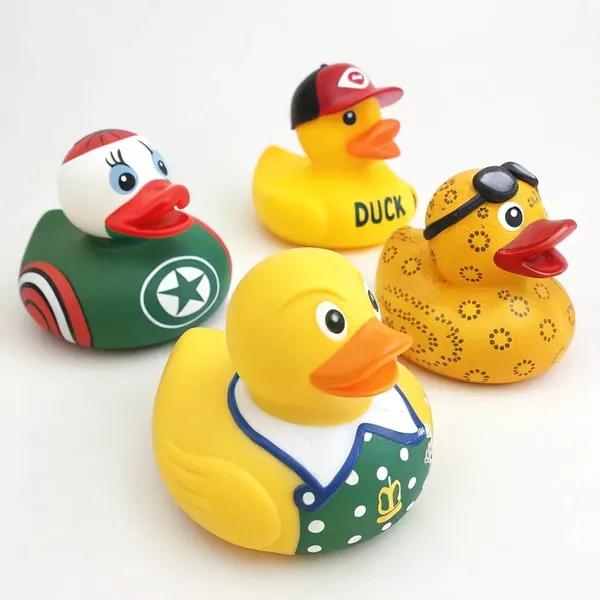
The face carries its own version of the question. Eyes and beaks are either moulded as part of the body or attached as separate pieces. A moulded eye cannot come off, because it is the body; a posted eye has an anchor that passes through the shell and locks inside; a glued eye depends on an adhesive bond that has to survive water and time. A drop is the quickest way to find an anchor that was never seated, because the load goes straight into the part standing proud of the surface.
The drop also finds a squeaker that has started to move in its seat. Drop the duck, then squeeze it, and listen: an insert that has shifted will sound different, and the water check that follows will confirm it. The squeaker and valve page covers the constructions, because a moulded reed has nothing to walk out of its seat and a sealed body has nothing to seat at all.

The seal test decides whether the duck stays a float
Put the duck under water, squeeze it and watch where the bubbles come from. A duck floats for one reason: a sealed hollow body holds air. If the seam or the fill hole is not closed, the air leaves and the water takes its place, and the duck sits low or takes water within minutes. Bubbles at the seam point at the join; bubbles at the fill hole point at a plug that is not seated; bubbles at the valve seat on a vented duck point at the reed unit rather than at the shell.
A quick dunk is a weak test. Leave a production duck under water overnight as well, because a slow leak can pass a one minute squeeze and still fill the body over a season of baths. Once water is inside a hollow body it does not fully drain through a squeaker hole, and the reed sits wet, so the duck goes quiet long before it looks damaged to anyone opening a carton. A duck that takes water is not the same as a duck that floats badly: float and balance is a separate question about shape and centre of buoyancy, and it can fail on a body that is perfectly sealed.

What the three checks do not prove
None of the three replaces the toy standard, and the standard does not replace them. In the United States, section 106 of the CPSIA made ASTM F963 a mandatory consumer product safety standard for children's toys, codified at 16 CFR part 1250, and the Commission defines a toy as an object designed, manufactured or marketed as a plaything for children under 14 (CPSC toy safety). That framework is about hazards, not about how long a seam holds.
Material rules sit outside the bench as well. The Commission restricts children's toys and child care articles to no more than 0.1 percent of eight phthalates in an accessible plasticised component, and it gives a children's rubber duck as its own example of a product that may contain them (CPSC phthalates). A duck that survives the squeeze, the drop and the seal can still fail a material rule, and a duck that passes every material rule can still split at a seam. The safety testing page covers what belongs in the report; the bench covers the years after it.
Run the checks on a duck from the packed carton
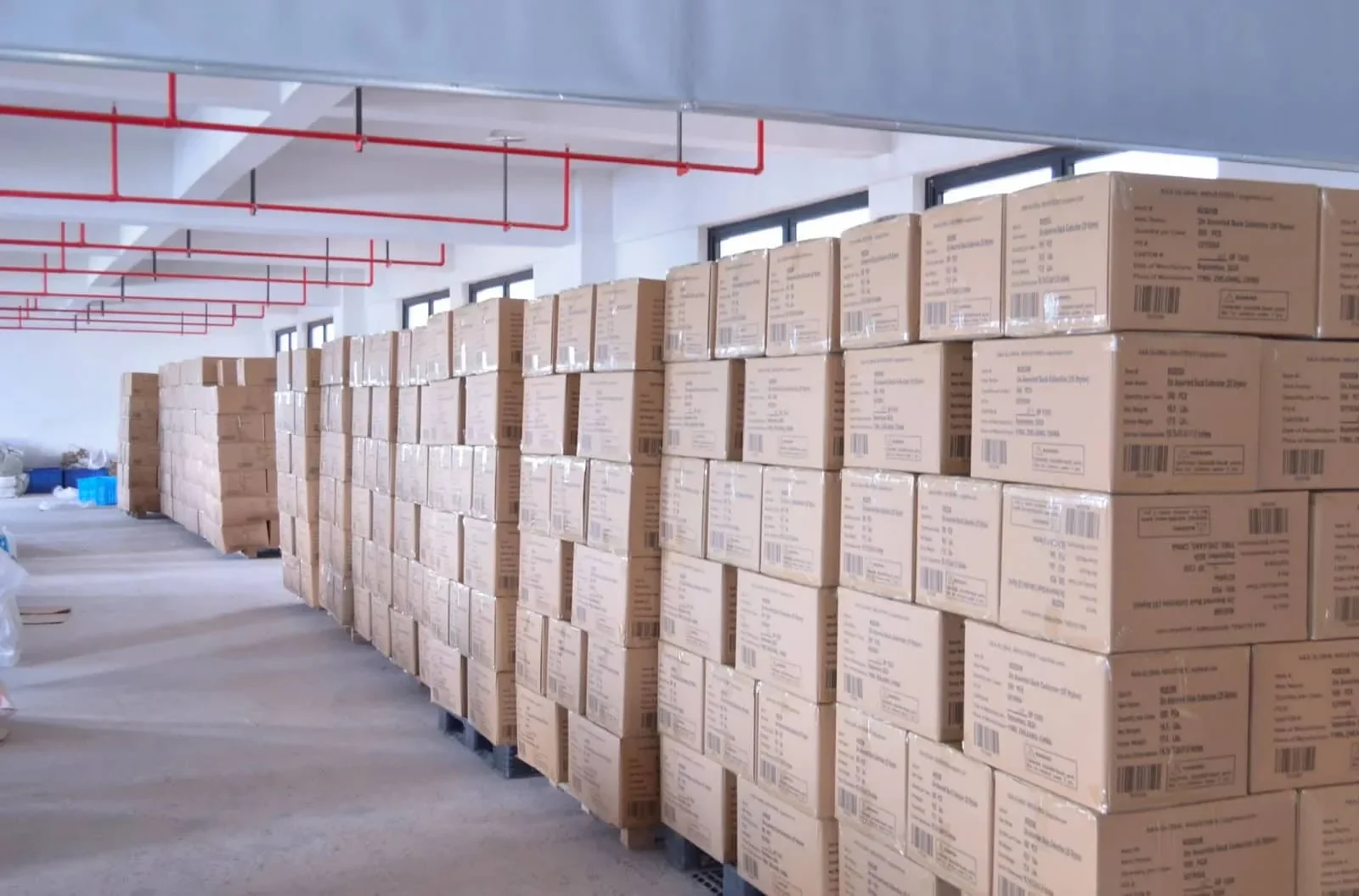
The duck in the sample room has been handled once and has travelled nowhere. The carton has. A squeaker can shift in its seat under the weight stacked above it, a seam can take load in a container, and a print can lift after a temperature swing that no sample room ever sees. So open a carton from the middle of the pallet rather than the top, take the duck that sat under four others, and run the three checks on that one.
The order of failures is worth knowing because it tells you where to spend the ten minutes. If the seam fails, nothing downstream matters. If the seam holds and the print lifts, the conversation is about a coating rather than a body. A printed mark is a layer on top of the vinyl rather than part of it, and a coating that looks even on a stiff body can craze on a flexible one, which is why the finish and fading page belongs next to this one. The inspection note covers where in the run the checks should sit, and the sample inspection guide covers the same logic one step earlier.
Write each check as a line the factory can pass or fail
A line that says durable is an opinion. A line that says squeeze the body, release it and compare the recovery with the retained duck is a test. The difference between those two sentences is what a buyer argues against six months later, and it takes one row on the sheet. The table below is the version I would put in a specification, because each row names the check, the joint it reads, the sentence to write and the object to keep.
| Check | What it proves | What you write | What you keep |
|---|---|---|---|
| Squeeze | The wall and the compound return to shape instead of creasing | A squeeze and recovery line beside the minimum wall by zone | The retained duck and the name of the person who compared it |
| Drop | The seam, the fill hole and the face survive load | A drop from bench height, then a squeeze and a listen | A photo of the carton duck before and after |
| Seal | The seam, the fill hole and the vent stay watertight | A submerge and squeeze, then an overnight soak | The dated record of the duck left in water |
The fail rule belongs in the same paragraph as the table. A fail is a departure from the agreed specification: a print off position, a sharp seam edge, a colour outside its tolerance. A buyer who prefers the duck softer has an opinion, and an opinion has to become a specification before it can fail a batch. Writing that down protects both sides, because it turns a disagreement about taste into a check that anyone can repeat.

Five questions before you sign a receiving note
By the time a carton is open, the paperwork has been read and believed, so the questions below are deliberately answerable with a duck in the hand. Each one maps to a row in the table above rather than to a claim on a website, and a supplier who cannot answer one of them has told you something useful about the other four.
- Has the duck you approved been re-checked out of the carton rather than off the sample shelf?
- Is the seam on this batch the seam that was signed off, or is there flash along the parting line?
- Does the body still return to shape after a hard squeeze, or does it stay creased?
- Did anyone leave a production duck under water overnight, or was it only squeezed for a second?
- Is the retained duck still on file, with the date and the name of the person who compared it?
Final Note
Durability is not a property a duck has; it is a set of questions a buyer has decided to ask. The three checks are small, they need a sink and a hard floor, and they find the failures a clean test report was never designed to catch. A report is a statement about a day, a split seam is a statement about a year, and a buyer who understands the difference stops asking whether a duck is durable and starts asking which checks the batch has actually had.
Three unglamorous checks on a carton duck prove more than a perfect report about a sample that never left the sample room. The checks take ten minutes and they leave a record, and a record is what turns an opinion about quality into a specification that survives the next batch.
Frequently Asked Questions
Can a duck pass the three checks and still fail in a bath?
Yes, and time is usually the reason rather than a single fault. A duck can pass a squeeze, a drop and a quick seal check on the day it is packed and still take water through a slow leak after weeks of flexing, because the seam is the thinnest part of a hollow body and every squeeze works it a little. An overnight soak catches more than a dunk, and keeping the tested duck is what makes the difference visible later.
Why does a duck split at the seam and not somewhere else?
Because the seam is where two moulded shells are joined, the wall is thinner there than on the body, and tool wear shows up at the parting line as flash. Flash concentrates stress, so a seam with flash fails before a smooth one. A fill hole that is not fully closed is the other end of the same problem, because water that gets in works the seam every time the duck is squeezed.
Should the check use a sample or a duck from the packed carton?
Use the carton, and take the duck from the middle of the pallet rather than the top. The sample has been handled once and has travelled nowhere; the packed duck has sat under weight, in a container, through a temperature swing. A squeaker can move in its seat in transit, and a duck that was fine in the sample room can arrive silent for a reason that has nothing to do with the reed.
Do the three checks replace a toy test report?
No. A report is a dated statement about a sample, run against the sections of a standard, and it is designed to find hazards rather than to age the product. The bench checks cover the service life question the report does not answer. A buyer needs both, and needs to read the report's scope, section, sample and date before treating it as proof of anything.
Key takeaways
- Why the order of the three checks matters: each check loads the joint the next one reads.
- The squeeze test reads the wall and the return: a caliper reads a point, not a duck.
- The drop test is a seam test: flash at the parting line concentrates stress.
- The seal test decides whether the duck stays a float: bubbles tell you which joint is open.
- Write each check as a line the factory can pass or fail: an opinion has to become a specification.