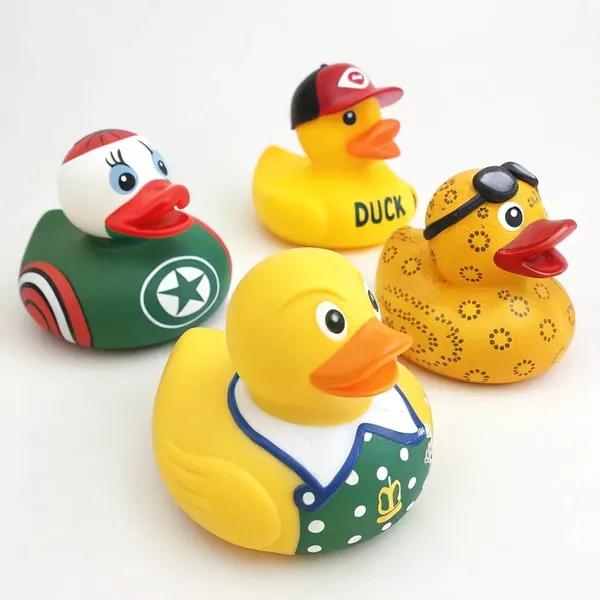
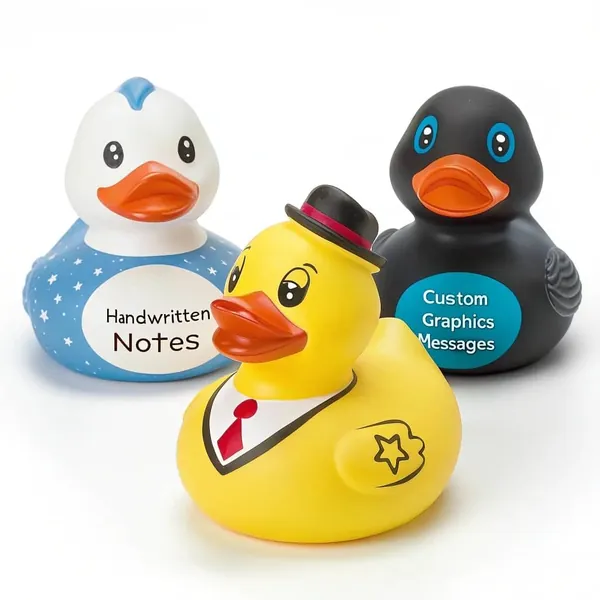
The sound comes before the shell. A squeaker is not an accessory dropped into a finished duck: it is a small assembly, a seat in the mould and a path for air, and each of those has to be designed before the tool is cut. A buyer who leaves the sound until the sample stage is usually choosing between a compromise and a new tool.
The reason is that a duck which makes a noise is a duck that is not sealed. Air has to leave and come back for a reed to speak, and the moment air has a path, water has a path too. That single fact decides most of what follows.
In short: a rubber duck squeaker works by pushing air past a reed, and the air needs a way back in. That return path is either a second hole, a valve or a plug, and it is the part that decides whether the duck is sealed, whether it takes water on and whether it can be sold as a bath toy. Choose the sound option first, then design the seat and the air path around it.
How the chirp is actually made

A squeaker is a housing with a thin reed inside. Squeeze the body and the air pressure rises; the reed flexes and vibrates as the air escapes past it, and the vibration is the sound. Let go and the body has to refill, because a shell that stays compressed cannot speak again.
That refill is the design problem. If the only opening is the squeaker itself, the reed becomes the return path and it is not built for that: it is designed to vibrate one way, not to act as a check valve in both directions. So the duck needs a second path, usually a small vent hole, a drain hole or a valve seat in the base.
Three parts, then: the reed, the housing and the air path. A buyer who only thinks about the first one is buying a noise, not a product.
Four options on one ladder
| Option | Parts | Air path | Water risk | Typical use |
|---|---|---|---|---|
| Single reed squeaker | Housing and reed | Vent hole or a loose reed seat | Moderate, water can enter the body | Classic bath duck |
| Double or module squeaker | Larger housing, two reeds or a bellows | Dedicated vent | Higher, more openings | Louder novelty duck |
| Silent, sealed shell | None | None | None, the shell is closed | Baby gift, shelf duck |
| Silent with a plug | A removable plug | A hole with a plug | Low while the plug is in | Ducks that must drain |
The table reads top to bottom as a trade between sound and sealing. Every option that makes a noise opens the shell somewhere, and every opening is a place water can enter and stay.
What the reed does and what the valve does
A reed is a thin tongue held at one edge. It speaks when the pressure difference across it is enough to make it flutter, and it stops speaking when the pressure equalises. That is why a duck that has been squeezed hard can go quiet for a moment: the pressure inside has to recover before the reed will flutter again.
A valve is a different part doing a different job. Its task is to let air in and keep water out, and it does that with a flap, a lip or a membrane that closes when the pressure is outside rather than inside. A valve is what lets a duck be both squeezable and reasonably water-resistant, and it is the part that most often fails first because it is the softest component in the assembly.
The shore hardness note matters here, because a valve's seal depends on the shell around it being able to hold its shape. A body that is too soft will distort the seat and let the valve leak.
The hole that lets air back in
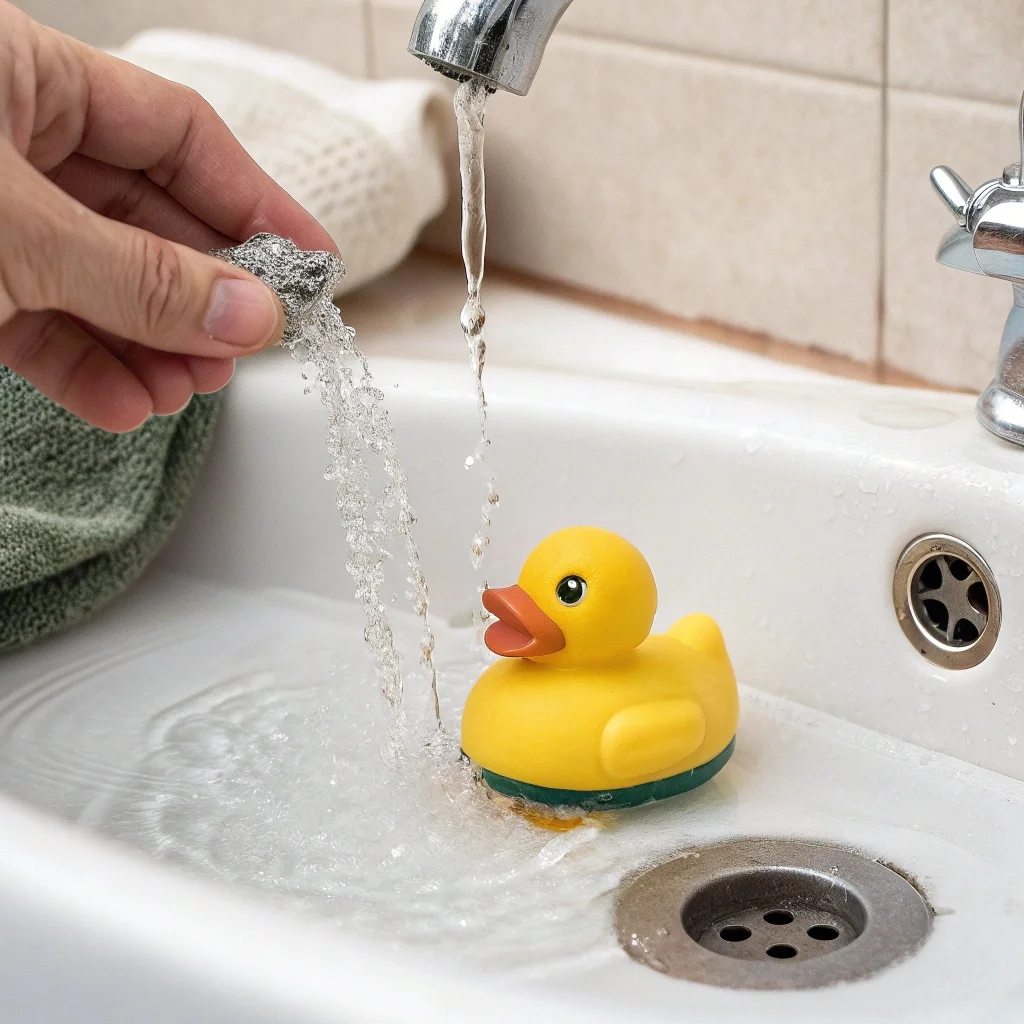
The vent and the drain hole are often the same hole, which is efficient and confusing in equal measure. It lets air back in so the duck can speak, and it lets water out so the duck can dry. Those two jobs pull in opposite directions when the duck is in water, because the same opening that admits air will admit water.
Where the hole sits decides how bad the trade is. A hole on the base, under the waterline, takes water in as soon as the duck is squeezed under. A hole high on the body is less exposed and less effective at draining. There is no position that is good at both, which is why the choice belongs in the brief rather than on the bench.
The durability tests are where that trade gets measured, and the cleaning note covers what happens to a duck that keeps water inside between uses.
What fails first, and why

The first failure is a duck that goes quiet, and it is usually water rather than a broken part. Water sits against the reed and the reed stops vibrating cleanly; the duck wheezes or goes silent until it dries. That is not a manufacturing fault and it is not fixable by squeezing harder.
The second failure is a squeaker that comes loose. A housing that was pressed into a seat can work its way out under repeated squeezing, and a part that comes out of a duck is a small part. The age grading note and the facial detail note both deal with the same category of risk, because eyes and squeakers fail in the same way.
The third failure is the valve sticking. A flap that has taken a set, or that has a grain of grit under it, stops sealing and the duck takes water on with every squeeze.
What to check at sampling
A sampler should squeeze the duck at least as many times as a child will in an afternoon, not once. A reed that sounds right on the first squeeze and flat on the twentieth is a reed that will be a complaint.
The second check is the seat. Pull gently on the squeaker in the direction a small hand would, and look at whether the housing moves. A housing that shifts is a housing that will eventually come out, whatever the drawing says.
The third check is water. Fill the duck, squeeze it under water and watch where bubbles come from, then let it drain and squeeze again. The bubbles tell you which opening is the return path, and the second squeeze tells you whether the duck dries well enough to speak again.
The fourth check is the base. A vent on the base of a duck that floats is a vent that is under water whenever the duck is used in a bath, which is worth seeing before a batch is packed.
Where the valve meets the safety file
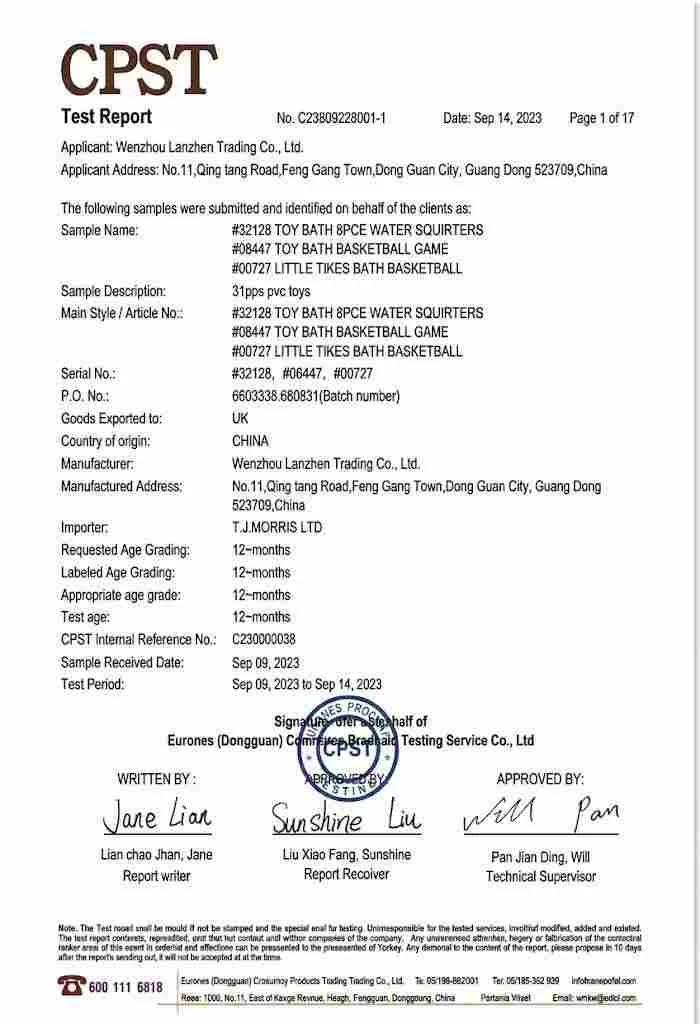
A squeaker is a small part before it is a sound, and small parts are regulated. In the United States, the eCFR text of 16 CFR Part 1501 sets out the method for identifying whether a toy intended for a child under three presents a small-part hazard, and a squeaker that can be pulled free is the case that method exists for.
CPSIA section 106 duties are summarised in our toy safety guide.
The practical consequence is that the squeaker decision belongs in the compliance conversation rather than the novelty conversation. A silent duck is easier to certify, and a squeaker duck has to prove it keeps its squeaker.
How to write the sound into the brief
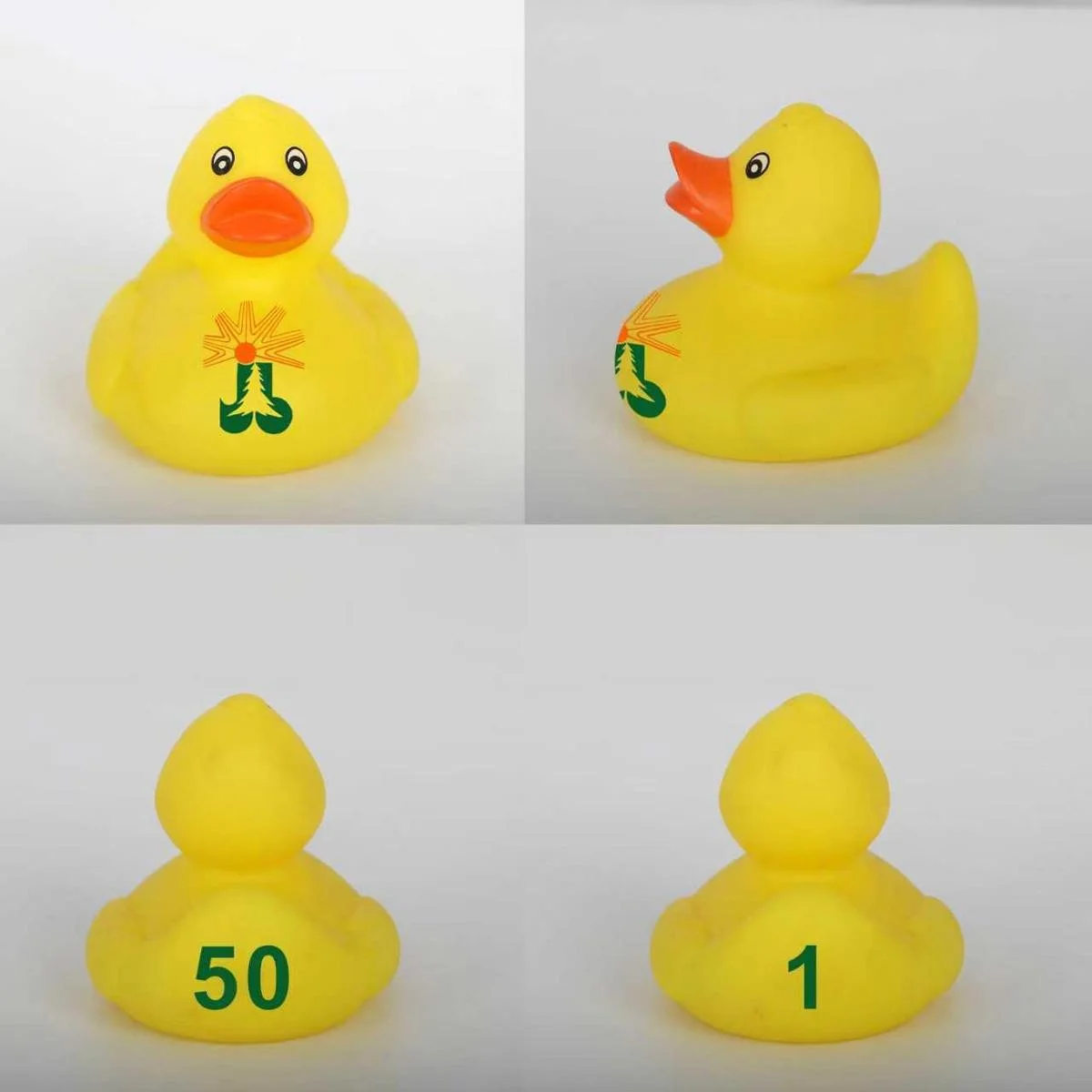
A brief that names the sound option saves a round of tooling. Four questions decide it, and each one has an answer that points at a different shell.
- Is the duck a sound product or a silent one, and does the tooling reflect that answer?
- If it squeaks, which construction is it, and where exactly is the seat?
- Has anyone squeezed it fifty times and compared that with the first squeeze?
- Does the age grade in the file match the age the duck is actually sold for?
The process note explains why a hollow shell is the natural home for a squeaker, and the multi-part note covers what changes when the squeaker becomes a separate assembled part.
Frequently Asked Questions
What makes a rubber duck squeak?
Air forced past a thin reed makes it vibrate, and the vibration is the sound. The body has to refill afterwards, so a duck that squeaks needs a second air path, which is the vent, the drain hole or the valve.
Can I have a rubber duck with no squeaker?
Yes, and a sealed silent duck is the simpler product. It needs no vent, no reed and no valve, so it does not take water on and it does not go quiet after a bath. The trade-off is that the duck has no sound at all, which is a design choice rather than a fault.
Why did my duck stop squeaking?
Almost always because water reached the reed. A wet reed does not flutter cleanly, so the duck wheezes or goes silent until it dries out with the opening facing down. A part that is broken rather than wet is a different problem and needs the housing checked.
Are squeaker ducks safe for small children?
They can be, and they carry one more risk than a silent duck: the squeaker is a part that can be pulled free. That is a small-part question decided on the assembled object, so the age grade and the retention check have to be settled before the label is written.
Final Note
The order is to ask what the duck is for before asking what it should sound like. A bath toy that squeaks is a product with a designed opening, and a shelf duck that stays silent is a product with none. Both are honest; mixing them up is what produces a complaint.
The sound is the easy part. Keeping the sound without keeping the water is the design.
Key takeaways
- How the chirp is actually made: A squeaker is a housing with a thin reed inside.
- Four options on one ladder: The table reads top to bottom as a trade between sound and sealing.
- What the reed does and what the valve does: A reed is a thin tongue held at one edge.
- The hole that lets air back in: The vent and the drain hole are often the same hole, which is efficient and confusing in equal measure.
- What fails first, and why: The first failure is a duck that goes quiet, and it is usually water rather than a broken part.
- What to check at sampling: A sampler should squeeze the duck at least as many times as a child will in an afternoon, not once.
- Where the valve meets the safety file: A squeaker is a small part before it is a sound, and small parts are regulated.
- How to write the sound into the brief: A brief that names the sound option saves a round of tooling.