Halloween duck orders are calendar problems with a material question hiding inside them, because the theme is the easy part and the dates are what break the campaign. Halloween rubber duck promotions are usually briefed as a colour and a character, and they arrive at the plant as three deadlines: when the design is fixed, when the print is approved, and when the cartons have to be on a shelf. Miss the third and the first two stop mattering.
In short: a Halloween duck promotion works when the theme is chosen from a small range that survives production, the glow decision is made as a material choice rather than a paint choice, the age grade is settled before the design is drawn, and the run is stored so that leftover stock can be sold down in November. The date is the constraint that orders those four decisions, not the character.
Why October behaves like no other season
October is short and it is crowded. A Halloween promotion competes with every other seasonal item in the same aisle, and the window in which a buyer will look at a duck is a few weeks rather than a quarter. That changes the shape of an order: fewer designs, smaller quantities per design, and a stronger need for the item to read instantly from a metre away.
The seasonal calendar that matters most runs from Christmas and Halloween through Easter and Valentine’s Day, with summer events and Independence Day in the middle of the year. Halloween leans on pumpkins and witches, Christmas on Santa and festive outfits, Easter on spring colour and Valentine’s on hearts and gifts. Corporate buyers use these ducks for staff and client gifting, while retailers and distributors build them into seasonal ranges or collectible series.

It also changes what a late change does. A spring order that slips a week is a week of selling lost. A Halloween order that slips a week can lose the entire season, because the shelf space has already moved on to the next holiday. That is why the plant treats a Halloween date as fixed and works backwards from it, rather than treating it as a target.
The third difference is the audience. Halloween buying splits between party hosts, schools, offices and parents filling trick or treat bags, and those groups want different objects from the same theme. A duck that suits an office desk may be the wrong duck for a child's bag, and the split has to be decided before the artwork rather than after the cartons arrive.
Three theme families that survive production
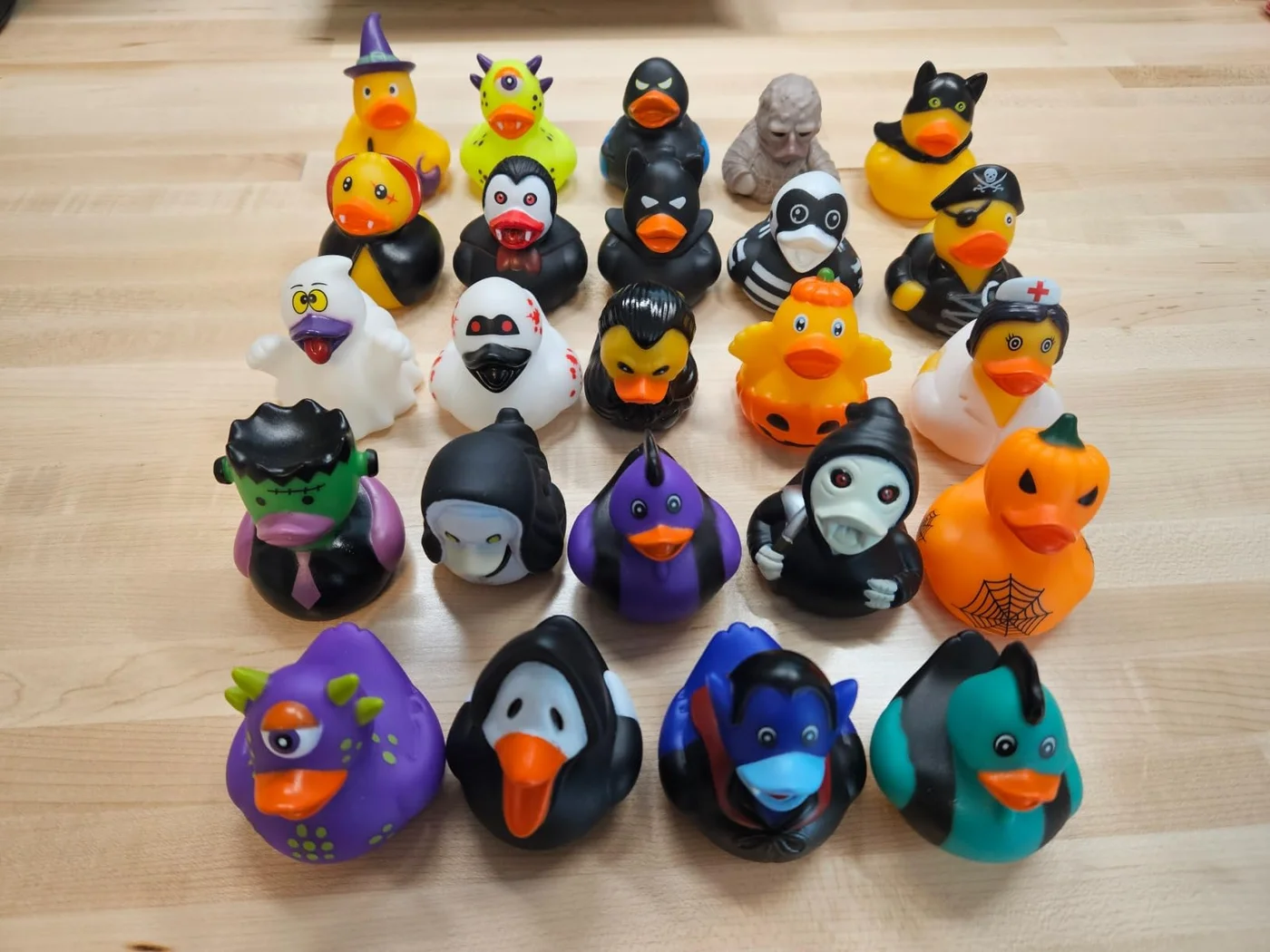
Themes that work as an outfit on paper do not all work as a moulded and printed duck. The ones that survive production tend to fall into three families, and each has a different production behaviour.
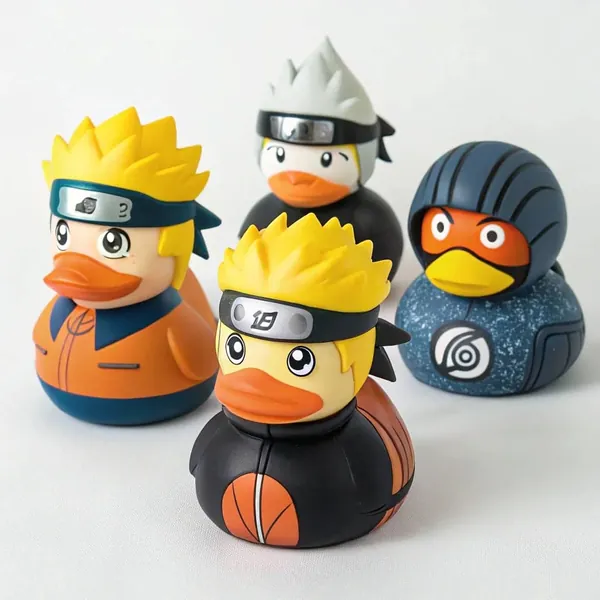
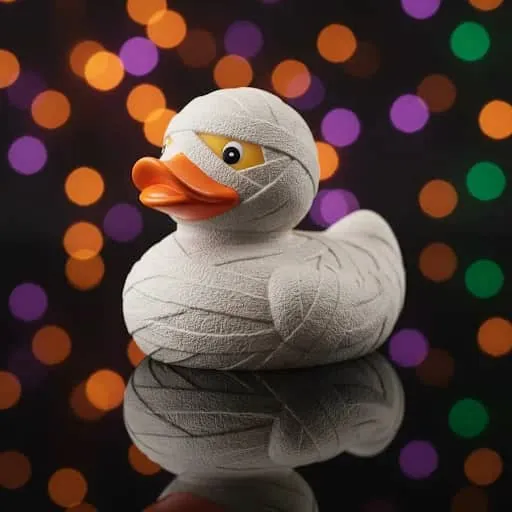
The first family is the body shape theme: a pumpkin body, a ghost body, a bat wing moulded into the sides. These read without any print at all, which makes them strong at a distance and expensive in tooling, because a new shape is a new tool. They are the right choice when the duck has to be recognisable across a shop window.
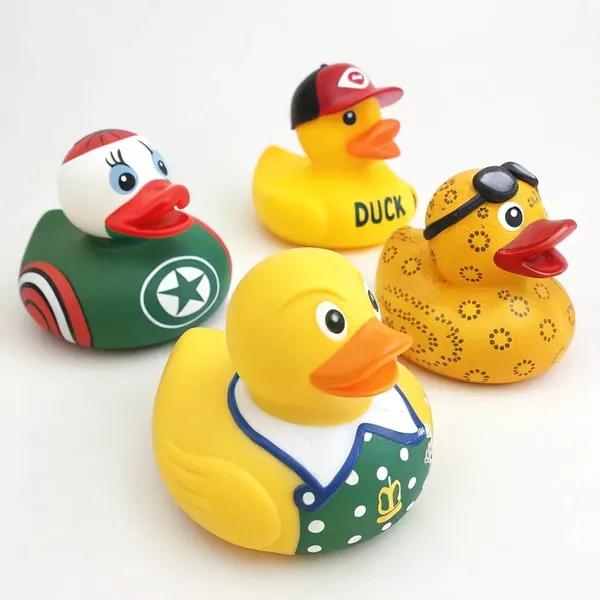
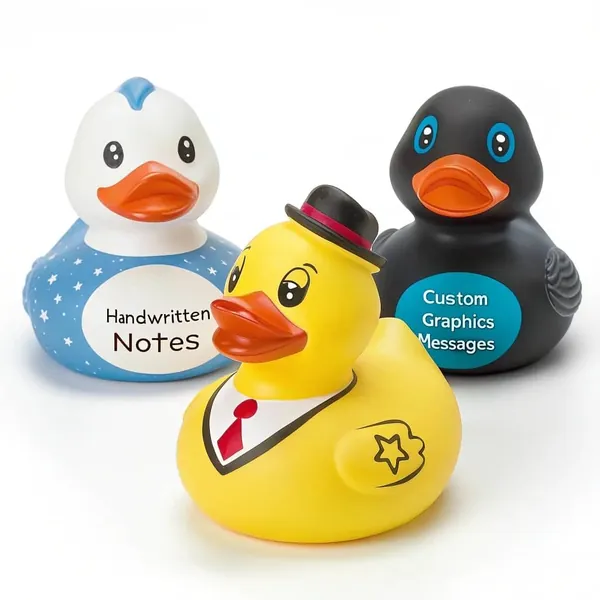
The second is the printed theme: a plain body with a printed face, a printed hat, a printed slogan. This is the most flexible option and the fastest to change, because the design lives in the artwork rather than the tool. It is also the family that depends most on the print method and the body colour, since a pale face on a yellow body has to work harder than a dark one.
The third is the accessory theme: a moulded hat, a cape, a small prop that is fixed to a standard body. This gives a strong silhouette while keeping the body tool standard, and it is the family with the most small parts questions, because an attached piece is a separate object on a toy.
| Theme family | What carries the theme | Production behaviour |
|---|---|---|
| Body shape | The mould itself | Reads at a distance, needs a new tool |
| Printed design | The artwork on a standard body | Fastest to change, limited by the print |
| Attached accessory | A separate moulded piece | Strong silhouette, raises the small parts question |
Glow is a material decision, not a paint job
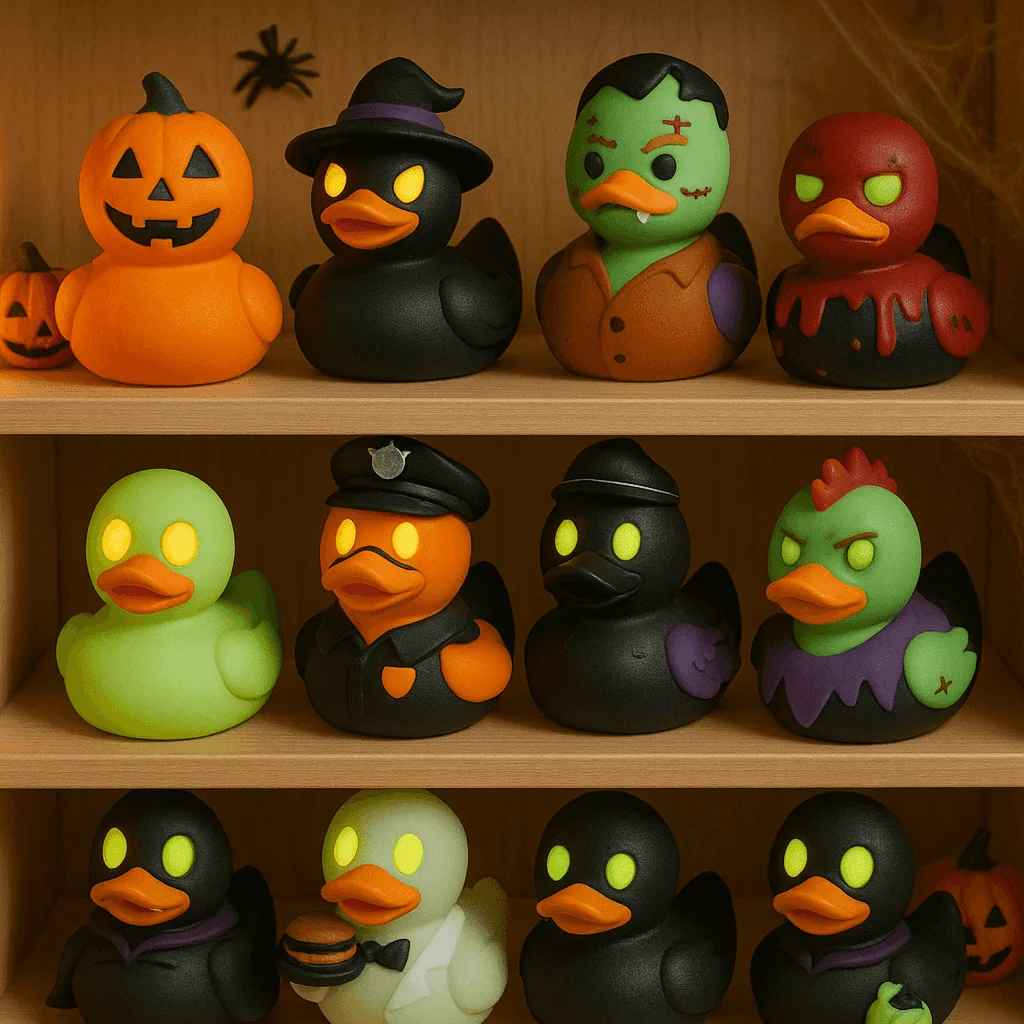
A glow duck is one of the most requested Halloween items and one of the most misunderstood. The glow effect is not a finish applied on top of a normal body; it is a property of the material, and it changes the compound that goes into the tool.
That matters for three reasons. A glow compound is a different material line, so it is a decision made at the moulding stage and not at the print stage. It behaves differently under light and after it, which means the buyer's approval should happen under the condition the duck will actually be judged in. And it interacts with any print on top, because a printed mark can cover the part of the body that would have glowed.
The practical rule is to decide the glow question before the artwork, not after. A glow body with a printed face is a different object from a printed face on a glow base with an unprinted shell, and the difference is visible in a dark room where the campaign photograph will be taken. The glitter and metallic notes cover the same principle for a different finish: the effect is in the material, and the print sits on top of it.
A gift first, a decoration second
The merged gift angle on this season is worth keeping: most Halloween ducks are bought as a small gift, not as a decoration. They go into a party bag, a desk drawer, a teacher's gift or a trick or treat bucket, and the moment of handing over is the moment the item is judged.
That changes the pack. A hang tag with a short message does more for a gift duck than a larger print on the body, because the tag is read in the hand rather than at a distance. A small box or a printed header card turns a loose duck into a present, and both are decisions that have to be made before the cartons are ordered. The hang tag notes cover the tag itself, and the retail box notes cover the display end of the range.
The gift frame also settles the design argument. A duck that a host hands to a guest can be charming and simple. A duck that a shop sells as a gift has to survive being picked up, turned over and put back. Those are different objects even when they share a theme, and the difference is usually in the finish rather than the character.
Small painted features have a floor
Every Halloween theme wants detail: a stitched mouth, a tiny bat, a spider on the hat. Detail is where a design meets the floor of the process, and the floor is not the same for a moulded feature, a printed feature and a painted one.
A moulded feature can be small and still read, because it is part of the body and it catches light. A printed feature has a minimum size below which it fills in or breaks up, and that minimum depends on the print method and the body colour. A painted feature, applied by hand, can be finer than either, and it is the least consistent of the three across a large run.
The design decision is therefore about which details are load bearing. A face that has to read as a face needs a moulded or printed structure, not a painted line. A small accent can be printed. A one off highlight can be painted, as long as the buyer accepts that no two units will be identical. The design revision notes describe how that acceptance is written into an approval.
The calendar has a hard stop
Halloween has a fixed date and a moving shelf. Retail shelves set the season weeks before the night, which means the duck has to be in a carton before the customer starts thinking about pumpkins. Working backwards from the shelf date gives three internal deadlines, and each one has a different owner.
The design deadline is the buyer's. The artwork, the theme and the age grade have to be settled before anything is ordered, because a change after that point either forces a new tool or a new print approval. The print deadline is the plant's, because the mark has to be proved before the run. The carton deadline is the freight's, because a carton that arrives after the shelf date is stock for next year.
The merged seasonal page framed this as picking the theme before the calendar, which is the same rule from the other direction. A theme that cannot be produced inside the window is not a theme, it is a wish. The factory capacity notes describe how a run is planned against a fixed date rather than an open one.
Claims that survive a challenge
Seasonal promotions attract claims, and Halloween attracts more than most: glow that lasts all night, non toxic paint, safe for children, eco friendly. Each of those is a claim about a material or a test, and each one has to be backed by something the buyer can show if it is questioned.
The rule is to claim what the file says. A glow claim should name the material and the condition. A safety claim should name the age grade and the standard the product was assessed against. An environmental claim should name the material content rather than a mood. A claim written as a feeling cannot be tested, and a claim that cannot be tested becomes an argument in November.
That is also why the seasonal brief should carry the claim, not just the design. A duck designed to be photographed in the dark is a different brief from a duck designed to be photographed on a shelf, and the claim decides which photographs the campaign can use. The supplier audit notes cover the documents that make a claim checkable.
Age grading comes before the design
A Halloween duck can end up in a child's bag, and that route decides the safety question. Age grading is not a label added at the end; it is a decision about the object, and it is settled before the design is drawn.
The core question is whether the duck can produce a small part. A one piece moulded body with a printed mark cannot break into pieces in normal use. An accessory with an attached hat, a glued prop or a small charm can, and the small parts test is the method used to decide whether a component is small enough to matter. That is a design constraint, not a labelling one.
The second question is what the label has to say. The CPSC toy safety guidance sets out the obligations that follow a product intended for children, and the toy safety label notes describe the marks that carry them. A Halloween duck sold to adults as a desk toy and a Halloween duck sold for a party bag can be the same duck with two different files, and only one of them is ready for the child route.

Store it, then reorder shorter
Halloween stock has a strange second life. A carton that is not sold in October is not waste; it is a duck that can be sold next October if it is stored correctly, which makes the storage decision part of the campaign rather than an afterthought.
Three things decide whether a stored duck is usable. Light is the first, because a body colour that fades in a window is a body that will not match the next run. Heat is the second, because a warm store room softens a body and can distort a thin wall. Pressure is the third, because a carton stacked too high deforms the units at the bottom.
The reorder decision follows the storage decision. A theme that stores well can be reordered shorter next year, because the leftover stock carries part of the demand. A theme that does not store well has to be reordered at full length or dropped. The storage and shelf life notes explain what each of the three conditions does over a season.

Leftover cartons and the January problem
Every seasonal line leaves cartons behind, and how they are labelled in January decides what they are worth in October. A carton that says only a design code is a carton that has to be opened to be understood. A carton that says the design, the date and the location can be counted from the outside.
There is also a design question buried in the leftovers. A duck printed with this year's date is a duck that cannot be sold next year without looking stale, while a duck with a permanent mark and no date is reusable. That is the same trade described in the conference bag notes, and it is worth making deliberately rather than by accident.
The last decision is whether the leftover stock is a second campaign or a write off. A duck that stores well and carries no date is an asset; a duck with a dated print is a collector's item with a short life. Deciding which one the line is should happen before the print, not in January.
Where this page stops
This page covers the theme, the glow decision, the calendar, the claims and the storage of a Halloween line. It is not the page for the print method, the material specification or the safety file itself, and those pages exist. The print side belongs to the UV and pad comparison, the material side to the PVC and TPR comparison, and the safety side to the toy safety label notes.
What is left here is the order of the four decisions: theme, glow, age grade, storage. A buyer who runs them in that order will usually find that the calendar has already answered the theme question, and that the answer is smaller than the first draft.
The questions I would settle before a Halloween line is drawn
- Which of the three theme families fits the shelf the duck will sit on?
- Is the glow effect part of the body, and has it been approved under the right light?
- Will the duck reach a child, and does any component fail the small parts question?
- What has to be printed on the body, and what belongs on a tag instead?
- How will unsold stock be stored, and is the design reusable next October?
The first sketch should wait until the third question has an answer, because the child route changes the object rather than the label. The other four can be settled in a single meeting, and the storage answer is the one most often left until it is expensive.
Frequently Asked Questions
How early should a Halloween duck order be planned?
Early enough that the design is fixed before the print is booked and the cartons land before the shelf date, which usually means planning the season well before the month changes. The exact window depends on the route and the pack, and the safe rule is to treat the shelf date as fixed and count backwards through freight, packing and proof.
Do glow ducks need a different material from normal ducks?
Yes. The glow effect comes from the material rather than from a coating on top, so it is a different compound and a different moulding decision. That also means it has to be approved under the condition it will be judged in, because a glow body looks like an ordinary pale body under normal light.
Can a Halloween duck be sold for children?
It can, when the design has no component that fails the small parts question and the label carries the right age information. A one piece body with a printed mark is the simplest object to place in front of a child. An accessory with an attached hat or a small prop needs the component question answered before the design is approved.
What happens to unsold Halloween ducks?
They can be sold the following season if the body has stored well and the design is not dated. That makes storage part of the campaign: light, heat and pressure decide whether a carton is stock or waste. A dated print shortens that life, which is a reason to keep the date on the tag rather than the body.
Final Note
A Halloween duck is a small object with an unusually hard deadline. The theme is the part everybody enjoys, and the calendar is the part that decides whether the theme reaches a shelf. Between them sits the material question, which is where a glow idea either becomes a product or becomes a photograph of an idea.
A smaller theme approved on time beats a better theme a week late. The duck can be made again next year. October cannot be moved, and the shelf will not wait for a design that was almost ready.
Key takeaways
- October is short and crowded, so the date orders every other decision.
- Three theme families survive production: body shape, printed design, attached accessory.
- Glow is a material decision made at the moulding stage, not a finish applied later.
- Most Halloween ducks are gifts, so the tag and the pack carry the message.
- Small painted details are the least consistent option across a large run.
- Claim only what the file names: material, condition, age grade, standard.
- Age grading is a design decision, not a label added at the end.
- Storage decides whether unsold stock is next year's inventory or waste.
- Keep the date on the tag and off the body if the design should be reusable.