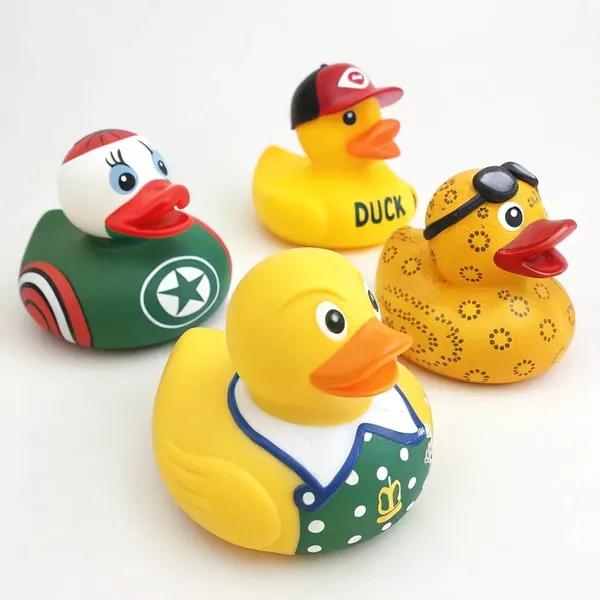
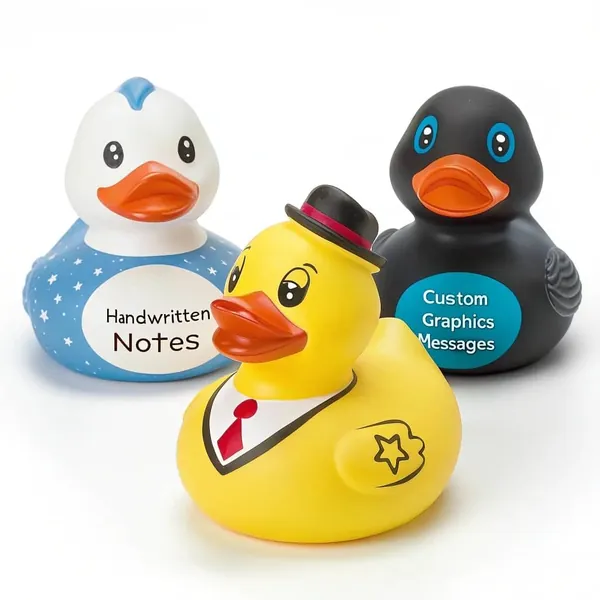
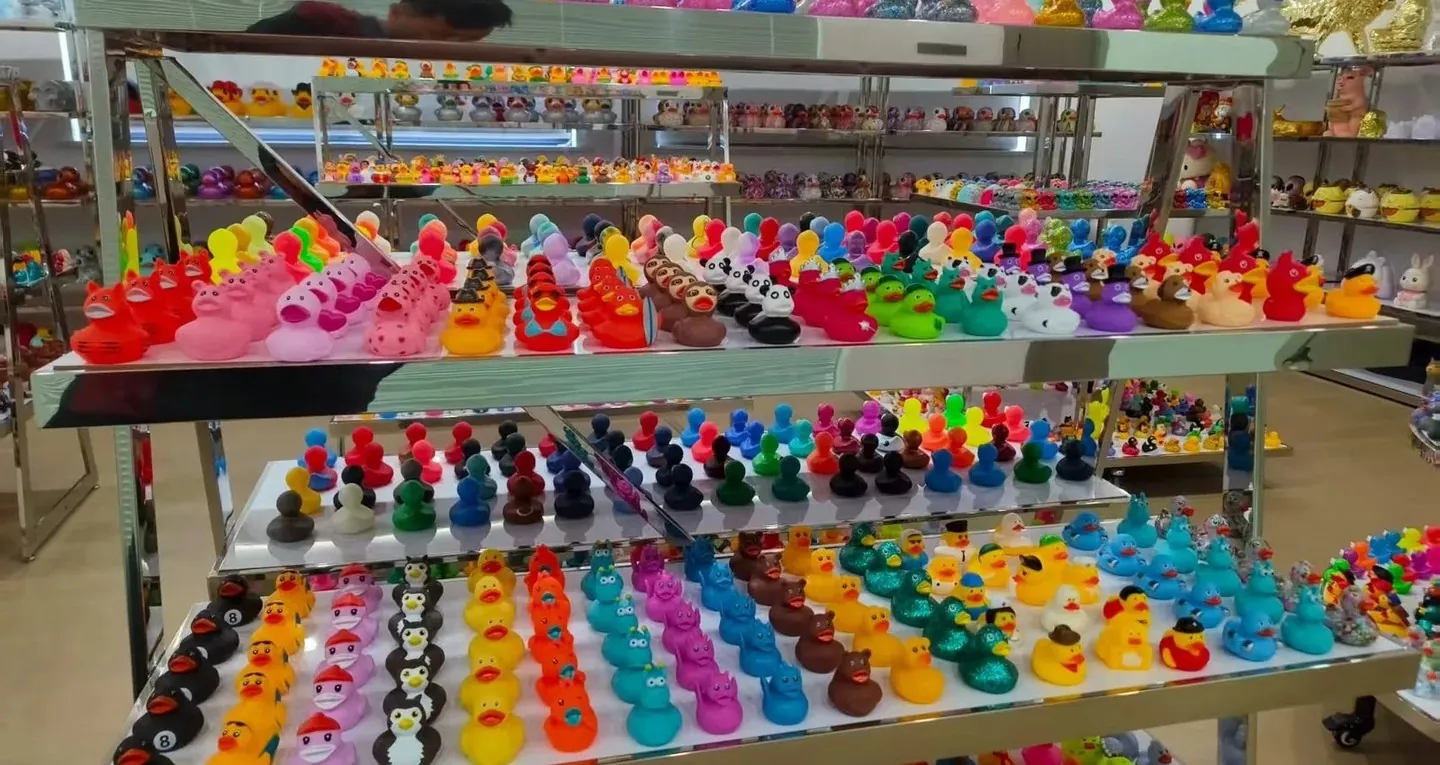
The top tier decides the ladder, because the best gift sets the colour standard, the body and the packaging that every tier below is judged against. A member who reaches a tier is handed something, and that object either looks planned or looks like an afterthought. The mid tier is where the set becomes the point.
A tier ladder is planned from the top gift down, because that object sets the colour and the packaging every tier below is compared against.
In short: a rubber duck works as a tier gift because it is light to hold, impossible to break and visible on a desk for years, which is exactly what a physical reward has to do after the points have been spent. What decides whether it works is the ladder: three tiers need three different jobs, one colour standard, one pack format per tier and one safety file that covers every variant. A programme that orders one duck with three labels is not a ladder, it is a giveaway with a spreadsheet.
Why a physical tier gift holds a member
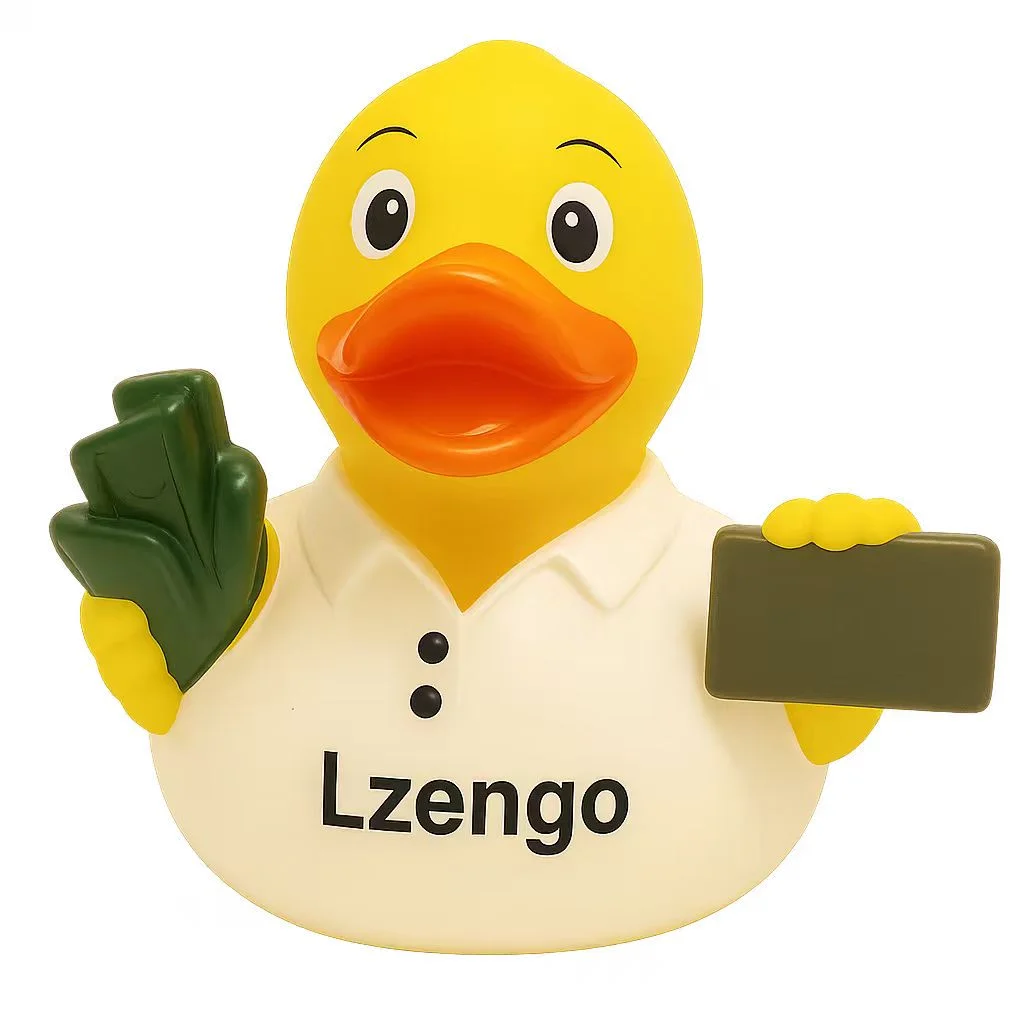
Points disappear into a balance. A physical reward stays in the room, and that is the whole argument for putting an object at the end of a tier. A duck is unusually good at this job because it sits on a monitor stand, a till, a reception desk or a dashboard without needing a stand, a battery or an instruction. It is also hard to break, which matters for a gift that may be handled by a member's child before it reaches the desk.
The second reason is recognition. A reward that could have been bought anywhere reads as a voucher; a reward with the programme's colour and the member's tier on it reads as a decision the member earned. That difference is not about the duck's value, it is about specificity. The tier, the year and the programme mark are what make the object belong to the relationship rather than to the merchandise category.
Three tiers, three different jobs
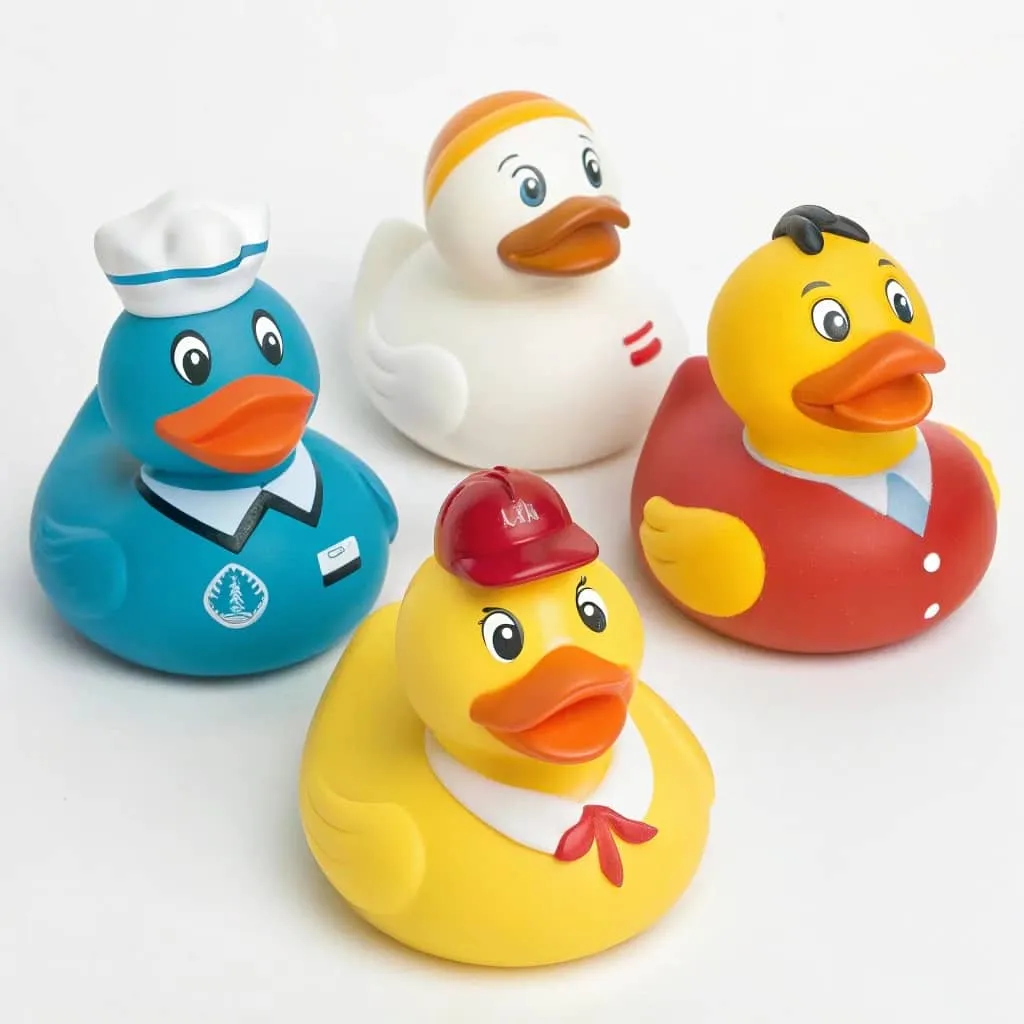
The common mistake in a tiered programme is to change only the label. Each tier is doing a different job, and the object has to do that job before it does anything decorative. The entry tier is a thank you that has to be easy to hand over and safe to give to anyone. The middle tier is a keepsake that has to look like it belongs to a set the member is now collecting. The top tier is a recognition object that has to feel finished, because a member who reaches it has been in the programme for years.
| Tier | What the gift has to do | What the duck carries | What usually goes wrong |
|---|---|---|---|
| Entry | thank the member and be easy to hand over | one body, one colour, the programme mark | the mark is too detailed to read at counter distance |
| Middle | start a set the member wants to continue | a second colour or a moulded prop, plus a card | the second release uses a different body |
| Top | recognise years of membership | a distinct body, a name or a number, a presentation pack | the top tier looks like the entry tier with a better bag |
The table is also the reason a programme should order all three tiers in one conversation. Each tier's body, colour and pack are compared with the tier below it, so a decision taken for the entry tier quietly sets the ceiling for the top one. The appreciation gift note covers the same ladder logic inside a company, and the restaurant branding note covers the counter-scale version of it.
The set is what the mid tier is buying

The middle tier is the one that decides whether a programme has a future, because it is the tier that has to make a member want the next release. That means the mid tier is buying a set, not a duck: one body that will come back next year in a new colour, with a card that says which release this is. A member who receives a second duck in a matching body understands the programme without reading a term sheet.
That is also where most programmes break. A first release is ordered from one supplier and a second release from another, and the body changes by a couple of millimetres in the head or the base. Nobody notices at the counter, and everybody notices on a shelf where the two ducks stand next to each other. Keeping one body across releases is a tooling decision, and it has to be taken before the first release is approved, not before the second.
Colour has to match across the ladder
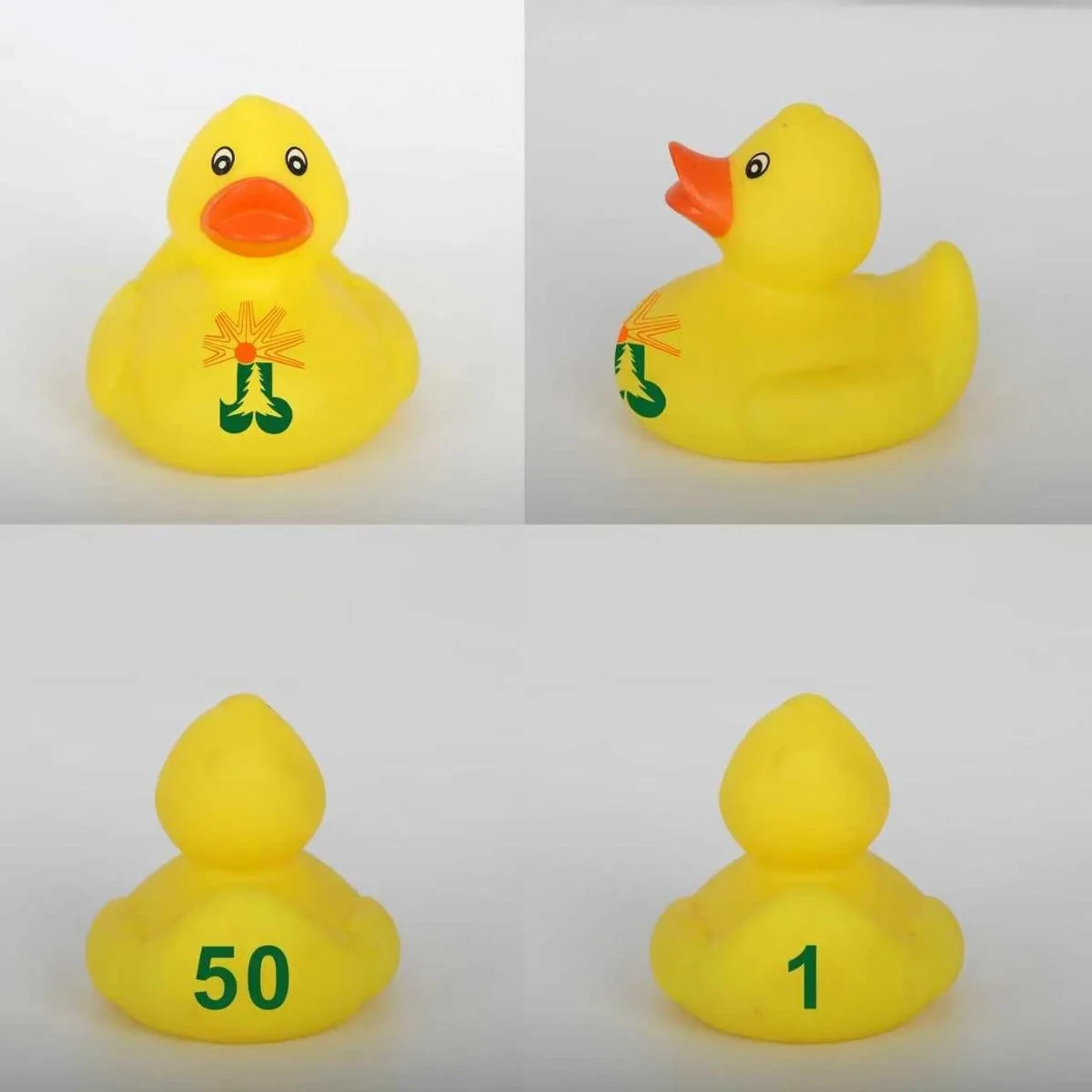
A tier ladder is read through colour before it is read through text. If the entry tier is a warm yellow and the top tier is a lemon yellow, the ladder looks like two suppliers even when the artwork is identical. That is why a programme needs one physical colour standard, agreed once, held for every tier and every reorder, rather than a colour name repeated on three purchase sheets.
The standard also has to survive the materials. A colour matched in a gloss body and repeated in a matte body is not the same colour under a shop light, and a print colour matched to a moulded colour is a third version again. Writing the standard as a physical reference, and stating which surfaces it applies to, is the only way a member sees one ladder instead of three nearly matching objects. The colour matching note covers the measurement side, and the two-tone note covers what happens when a tier needs a second colour in the mould.
One bag, one label, one tier per SKU
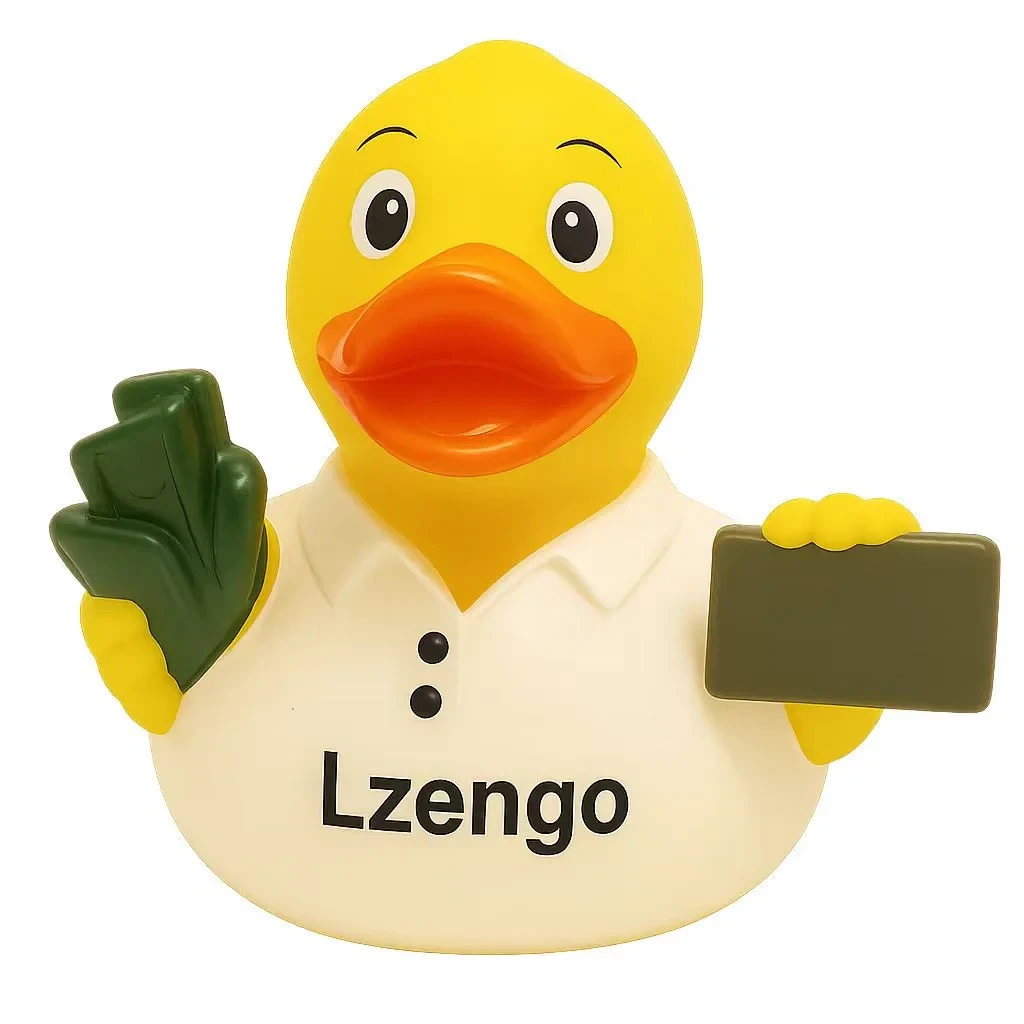
The pack is where a programme either looks organised or looks improvised. A tier that arrives in a plain polybag reads as stock, whatever the duck is worth, and a tier that arrives in a printed sleeve with a card reads as a gift. The practical solution is one pack format per tier, decided with the duck rather than after it: a bag for the entry tier, a card and a band for the middle tier, a box and a card for the top tier.
Two rules keep the pack manageable. The first is that the label carries the tier, not the duck, because the duck is shared and the label is what changes between SKUs. The second is that the pack is approved with the duck inside it, since a box that fits the drawing can still be wrong once the duck is in the bag. The hang tag note covers the tag and band mechanics, and the welcome kit note covers the same pack discipline for onboarding.
Names belong on the top tier only
Personalisation is the fastest way to make a reward feel earned, and the fastest way to turn a programme into a fulfilment problem. A name on every tier means a name list at every release, a check at packing and an exception for every misspelling. A name on the top tier only keeps the personalisation where it carries the most meaning and where the volume is smallest.
There is also a production reason. A printed name is a variable on a fixed body, so it needs a print position that reads clearly and a process that can change one line without changing the rest of the run. A number or a year works the same way and is usually a better fit for the mid tier, because it can be printed on the card rather than on the duck. The alumni merchandise note shows how a year-based line is handled when the class is the unit.
Measure redemption, keeping and repeat
A reward programme is judged by three numbers, and none of them is the unit count. Redemption tells you whether the tier was reachable and whether the reward was worth claiming. Keeping tells you whether the object survived the first month, which for a duck is usually a question of whether it was handed to a child. Repeat tells you whether the second release was anticipated, and it is the only one of the three that proves the ladder is working.
That is why the pack should carry a date or a release number. A member who can see that this is release two has a reason to expect release three, and the programme has a way to measure whether the expectation was real. A tier gift without a release marker is a gift; a tier gift with one is a series, and a series is what a loyalty programme is trying to build.
A reward duck is still a toy
A duck given to a member is a toy whatever the programme calls it, and the rules follow the object rather than the occasion. In the United States, 16 CFR Part 1250 makes the ASTM F963 toy safety specification mandatory, with age grading, warnings and testing attached. In the European Union, the toy rules published by the European Commission set the same kind of frame around a toy placed on the market, including the marking and the age guidance.
Two consequences reach the programme sheet. The age grade has to be chosen for the youngest likely recipient, because a member's child is a realistic holder of an entry-tier duck. And the safety file has to describe every variant in the ladder, because a different body, a different paint or a moulded prop is a different article, even when the programme sees one gift. The safety label guide covers the marks on the pack, and the subscription box note covers the same file question for a series that ships monthly.
Five questions to settle before the ladder
- What does the top tier get that the entry tier cannot, and can a member see the difference at arm's length?
- Which body survives all three tiers and the next release, and who owns the tool when the programme pauses?
- Which colour standard applies to every tier, and which surfaces does it cover?
- Which tier carries a name, and who holds the name list at packing?
- Which variants does the safety file describe, and who signs off a new one when a tier changes?
Five answers turn a reward into a programme with a shape. They also make the pack order possible in one pass, because the tiers, the labels and the cards are decided together rather than one release at a time.
Frequently Asked Questions
How many ducks should each tier include?
One duck per tier is enough when the pack carries the tier and the release. A set belongs to the middle tier, not to every tier, because a set on the entry tier removes the reason to reach the next one. The unit count follows the number of members who will actually reach the tier, not the size of the membership list.
Should every tier use a different body?
No. One body should carry the ladder, with colour, print and pack doing the tiering. A different body belongs at the top tier, where it marks the end of the ladder, and at any tier where a moulded prop is the reason the member is collecting. Changing the body at every tier multiplies the tooling and breaks the set.
Can a member's name go on a mid tier duck?
It can, but it usually should not. A name at the middle tier means a name list at the volume where mistakes are most visible, and it removes the one thing the top tier can still offer. A year or a release number on the mid tier card gives the member a marker without the fulfilment risk.
What paperwork should the factory hold for a reward duck?
The safety file for the article, the colour standard, the artwork and the approved sample. The file has to cover every variant in the ladder, because a new body or a new paint is a new article. A programme that changes a tier without telling the factory ends up with a reward that has no file behind it.
Final Note
A tier ladder is judged at the top and bought from the bottom. The member sees the top tier and decides whether the programme is serious; the buyer places the entry tier first and sets the constraints everything else inherits. That is why the ladder should be designed in one conversation, with the colour standard and the pack decided alongside the bodies.
My own sequence is top tier, colour standard, pack, then the tiers below. It is the order that keeps a programme from becoming three giveaways that happen to share a logo.
Key takeaways
- Why a physical tier gift holds a member: Points disappear into a balance.
- Three tiers, three different jobs: The common mistake in a tiered programme is to change only the label.
- The set is what the mid tier is buying: The middle tier is the one that decides whether a programme has a future, because it is the tier that has to make a member want the next release.
- Colour has to match across the ladder: A tier ladder is read through colour before it is read through text.
- One bag, one label, one tier per SKU: The pack is where a programme either looks organised or looks improvised.
- Names belong on the top tier only: Personalisation is the fastest way to make a reward feel earned, and the fastest way to turn a programme into a fulfilment problem.
- Measure redemption, keeping and repeat: A reward programme is judged by three numbers, and none of them is the unit count.
- A reward duck is still a toy: A duck given to a member is a toy whatever the programme calls it, and the rules follow the object rather than the occasion.
- Five questions to settle before the ladder: The top tier sets the standard every tier below it is compared against, so it is settled first.