Skip to content
Not every duck program needs its own mold. Stock molds, factory-owned duck shapes already tooled and producing, sit one decision away from every buyer, and the choice between stock and custom tooling shapes the budget, the timeline and how differentiated the final duck can look. The honest answer for most first-time buyers: start stock, decorate hard, and move to custom when the program earns it. Here is where the line sits and what each path really costs.

What Stock Molds Actually Offer
We broke the same topic down in a distributor’s ppai expo plan for custom rubber duck sourcing
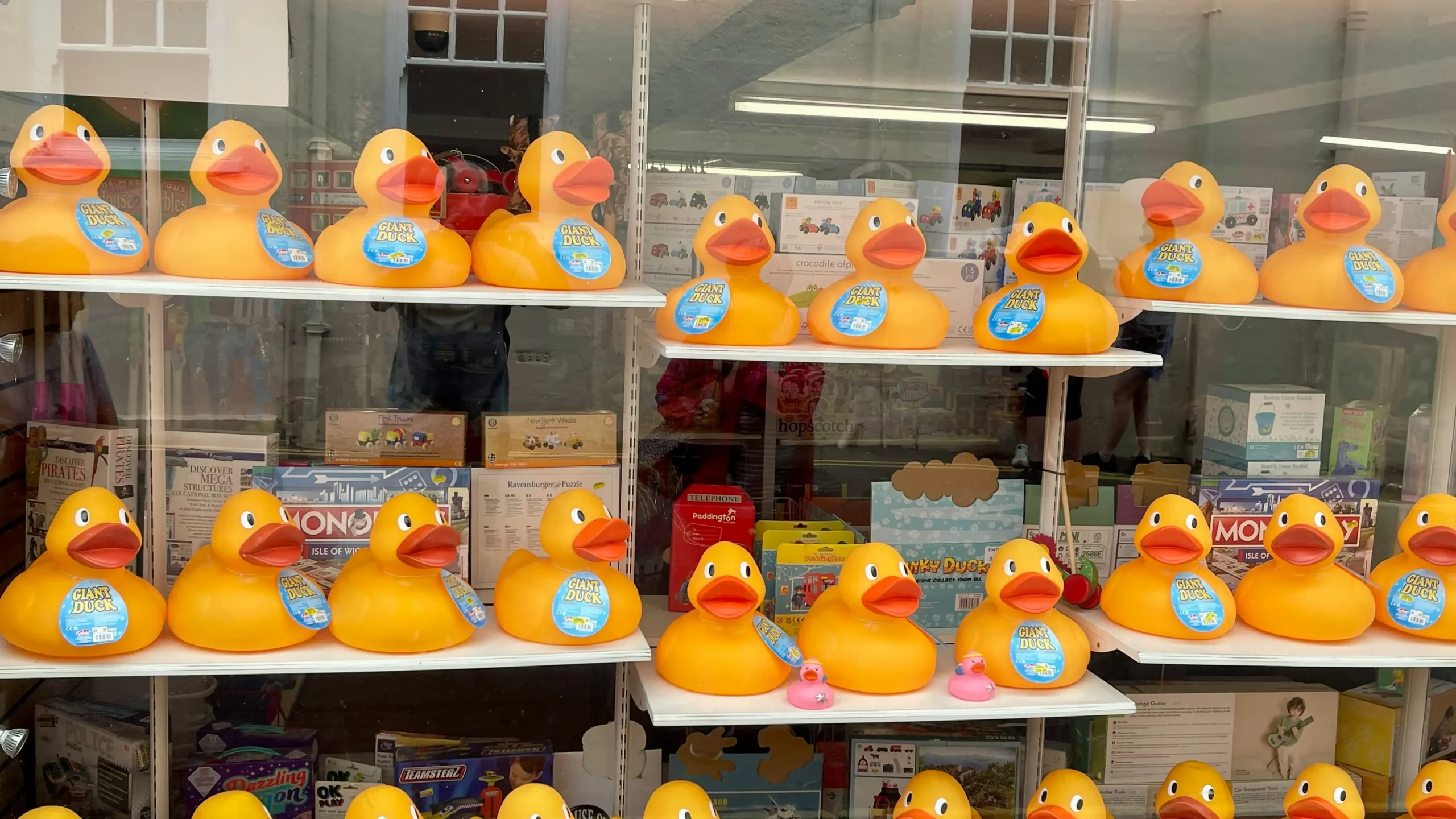
A stock mold program skips tooling entirely: the factory ducks exist as existing shapes, from classic bath ducks to occupational and holiday characters, and your cost enters at decoration. That changes three numbers at once. Price per unit starts near the floor because the mold is amortized across everyone who orders it. Timeline collapses from the 20 to 30 day custom development window to a decoration-led schedule, commonly 10 to 15 days to production depending on paint and packaging complexity. And minimums drop, because you are sharing an existing production run rather than opening one. The constraint is identity: everyone draws from the same shape catalog, so differentiation has to come from decoration, packaging and program design rather than the body itself.
What Custom Tooling Buys
A custom mold is a 1,500 to 4,000 dollar tooling invoice for a duck-sized rotocast tool, plus a development cycle: 3D model, printed prototype, mold steel, first shots. What it buys is exclusivity and shape control, your character is yours, exact proportions, props and packaging logic built around it. The economic crossover depends on volume and reuse: programs above roughly 10,000 units, or any character a brand will reorder across seasons, justify the tool quickly, while one-off events rarely do. Mold ownership and what happens when you switch factories is its own contract conversation, covered in the mold ownership guide, and the cost structure behind each line is unpacked in the quote line items guide.
The Middle Path: Stock Body, Custom Everything Else
Most differentiation lives outside the mold anyway. A stock body with custom paint scheme, custom hat or prop, printed hang tag, themed packaging and a QR campaign reads as a bespoke product at stock-mold economics, the full decoration layer is what catalogs photograph, and buyers comparing program outcomes rarely lose to buyers comparing body shapes. Purchasers protecting a brand on a stock body should still run the claim discipline that protects custom programs: artwork cleared, safety documentation per market, marketing language accurate; the FTC business guidance portal outlines the advertising-claim baseline that keeps custom versus stock distinctions honest in listings.
A Decision Rule in 3 Questions
Question 1: is the duck a character or a carrier? Carriers, giveaways where the message and decoration carry the brand, start stock. Characters, mascots with a designed identity, earn custom tooling. Question 2: what is the honest volume? Below roughly 10,000 units, stock wins on math; above it, custom tooling amortizes fast. Question 3: will you reorder? A shape you will run across seasons deserves its own mold from the first PO, because reordering on a stock shape risks availability drift. Price both paths on real numbers at the bulk and wholesale duck desk, where stock-shape catalogs and custom development run in the same quote cycle.

Video: From Stock Shape to Branded Program
FAQ
Can I customize ducks without buying a mold?
Yes. Stock-mold programs customize paint, props, tags and packaging at stock economics, which is the fastest route to a differentiated duck under roughly 10,000 units.
How much does a custom duck mold cost?
A duck-sized rotocast mold typically runs 1,500 to 4,000 dollars, plus a development cycle of 3D modeling, prototype and first shots before production.
When does custom tooling pay off?
Above roughly 10,000 units, or whenever the character will reorder across seasons: the tool amortizes across runs and the shape becomes an owned asset.
Do stock molds affect safety documentation?
No. The same chemical and mechanical documentation applies; decoration materials and assembled parts carry their own test lines regardless of whose mold made the body.